Pay-per-click advertising: what it is and who needs it
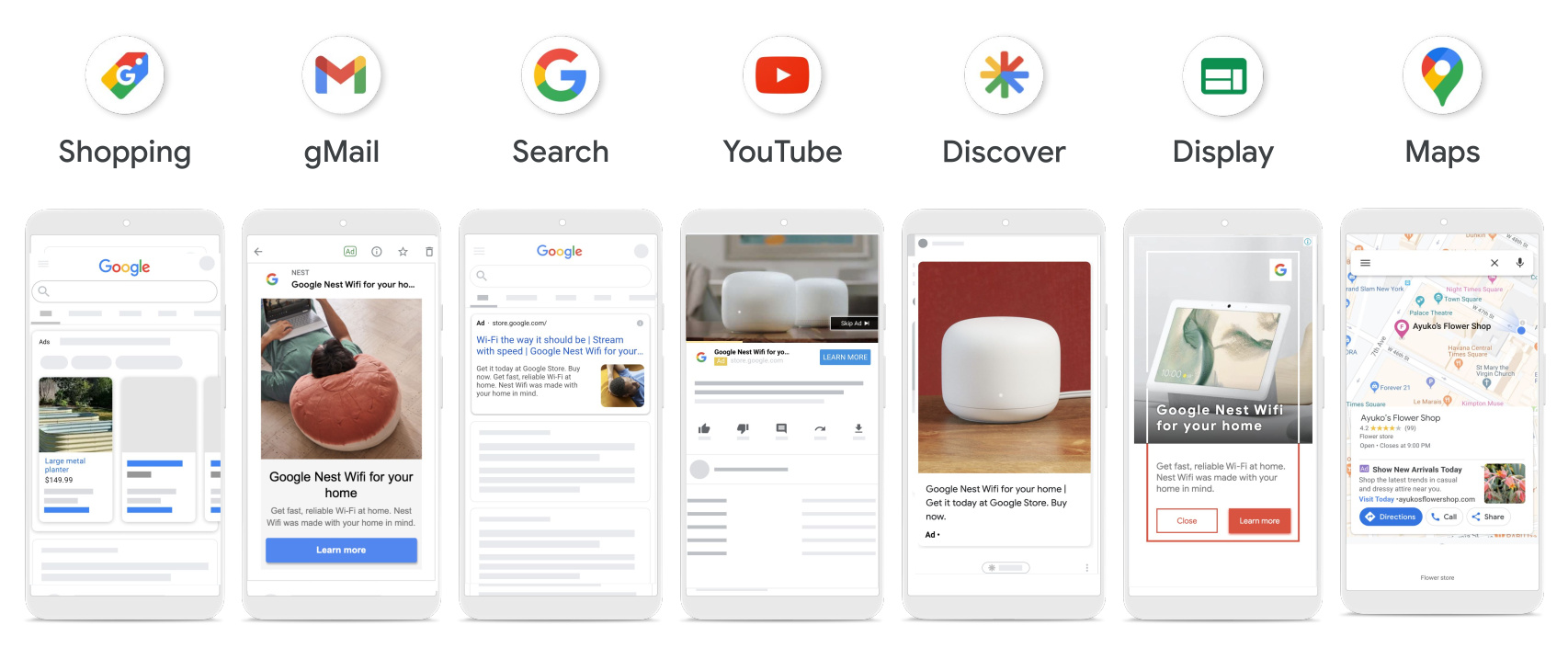
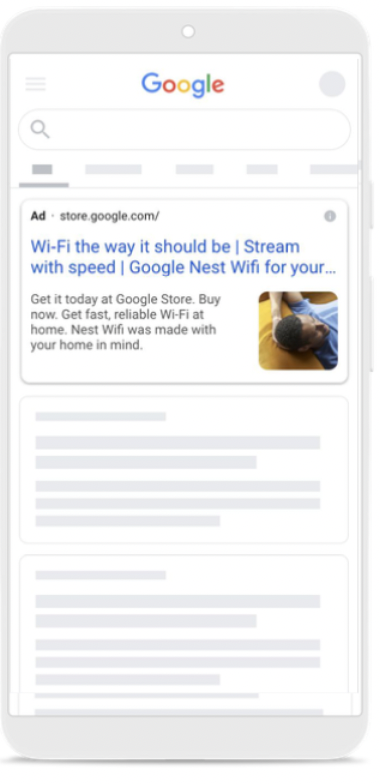
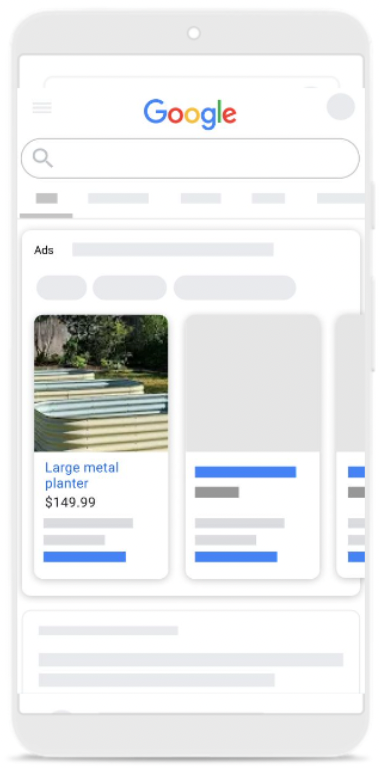
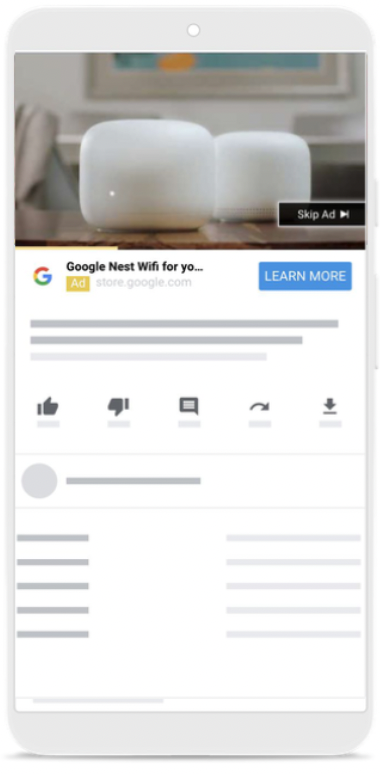
Pay-per-click (PPC) advertising shows your ads to people based on what they are searching for, what they are interested in, or what page they are reading. The dominant platform is Google Ads: your ads can appear at the top of the search results, in Google Shopping, on YouTube, or across partner sites in the Display Network.
The main advantage of PPC is a fast start and precise audience targeting. Campaigns go live within days and immediately reach people who are already looking for your product or service — with none of the waiting that SEO requires.
Main platforms: Google Ads, Facebook Ads, YouTube, Instagram, LinkedIn.
Typical formats: search ads, Google Shopping product listings, display banners on partner sites, YouTube video.
Who PPC advertising is right for
- eCommerce businesses that want to grow online sales and test new product categories quickly.
- Local businesses with a physical presence in a specific city or region.
- B2B companies that need a steady flow of qualified leads rather than mass traffic.
- Startups and new products that need immediate visibility and first data on demand.
- Site owners who do not yet rank on page one, or who are only starting SEO.
- Companies testing hypotheses — new niches, offers, regions — before scaling.
What a PPC specialist actually does
A PPC specialist (from pay-per-click) manages paid traffic: they build, optimise and monitor advertising campaigns. Their job is to get the most out of the advertising budget — bringing in qualified visitors at the lowest viable cost and the highest conversion rate.
The role covers:
- keyword research and clustering;
- writing ad copy that earns a high CTR;
- building campaign structure: Search, Display, remarketing, Performance Max, Demand Gen;
- analytics setup (GA4, Google Tag Manager, Looker Studio);
- optimising bids, CTR, CPA and ROAS;
- creative testing and A/B experiments;
- CRM integration to measure lead quality, not just lead volume.
A PPC specialist works alongside SEO, marketing and sales, so that advertising delivers business outcomes — enquiries, calls, sales — and not just traffic.
What we mean by effective PPC
Search advertising is the fastest way to reach customers at the exact moment they are looking for what you sell. Google Ads listings appear at the top of the results for queries like "buy a smartphone" or "apartment renovation" on the day the campaign launches, and start bringing in interested visitors straight away.
- ROAS of 500–1000% is not an abstract promise — those are figures from our published PPC case studies, complete with the vertical, the period and the actual numbers. We name a realistic range for your niche after the audit, not before it.
- Growth in enquiries, sales and profit within the first weeks.
- A model that pays for itself: every dollar invested works towards a defined outcome.
- Scaling campaigns without losing quality or efficiency.
- Lower cost per lead (CPA) through continuous optimisation.
- Working with the formats that matter in 2026: AI Max for Search, Performance Max with channel-level reporting, Demand Gen, dynamic remarketing and Google Shopping.
How we work
- Transparency: monthly reporting and full access to your advertising accounts.
- Flexibility: strategy adapted to seasonality, shifting demand and market conditions.
- Expertise: 11 years in business, 2,000+ projects, Google Premier Partner 2026 status (the top 3% of Google Partners in the country) and a Diamond Product Expert for Google Ads on the team — more on who will run your account.
You can see what a lead costs today, what it cost last month, and exactly what we are doing to make it cost less next month.
What the PPC service from ITForce includes
Full-service PPC management from ITForce covers the whole lifecycle of your Google Ads campaigns, from audit through to scaling. We handle every stage — account analysis, keyword research, ad creation, analytics setup (GTM, GA4), launch and ongoing testing. The result is a working customer-acquisition system with clear KPIs, transparent reporting and flexible budget control.
1. Audit of your current campaigns
- Analysis of existing campaigns in Google Ads, Meta Ads, TikTok Ads and other platforms.
- Identifying technical faults: duplicate keywords, missing negative keywords, broken ad group structure.
- Performance assessment: CTR, CPA, ROAS and related metrics.
- Pinpointing where budget is leaking and where the optimisation headroom is.
- Specific, actionable recommendations for the campaigns you already run.
If you only need this stage, we offer it separately as a Google Ads campaign audit.
2. Advertising strategy
- Defining campaign goals: lead generation, online sales, phone calls, brand awareness.
- Choosing channels: Google Search, Display Network, YouTube, Demand Gen, Google Shopping.
- Audience segmentation by geography, interests and behavioural signals.
- Choosing formats: text, image and video ads.
- Building the acquisition funnel and the nurture path within it.
3. Campaign setup and launch
- Preparing the assets: copy, creatives, banners.
- Keyword research and negative keyword lists.
- Targeting logic: interests, remarketing, lookalike audiences.
- Technical analytics setup: Google Tag Manager, Google Analytics 4, enhanced conversions, Conversion API (Meta) — available separately as web analytics setup.
- Launch with A/B testing of creatives, audiences and bidding strategies.
4. Optimisation and scaling
- Continuous monitoring of CTR, CPC, CPA, ROAS and Quality Score.
- Driving acquisition cost down and conversion volume up.
- Testing new hypotheses and formats.
- Scaling into new regions, platforms, languages and audiences.
5. Analytics and reporting
- Monthly or weekly reporting in the format you prefer: PDF, Looker Studio, Excel.
- The metrics that matter: clicks, conversions, spend, revenue, cost per conversion, ROI/ROAS, funnel depth.
- Visual dashboards built around your KPIs.
- Strategic recommendations: where to go next and how to improve on the current result.
Why we don’t produce media plans
A media plan forecasting clicks and cost per lead looks convincing during the sales conversation and is worth very little in practice. Two comparable projects in the same vertical produce different results, and that is not chance: Google sets bids algorithmically, separately for each audience and for each conversion type. No spreadsheet can predict that distribution before launch — it can only guess at it.
So we start from your economics rather than from a forecast: cost of goods, margin, profitability, customer lifetime value, repeat purchase rate. Those numbers answer the question that actually matters — how much your business can pay for an enquiry, and for a customer, and still profit from the advertising. That figure becomes the KPI we work towards together, refined against the real data of the first few weeks.
None of this leaves you without reference points. Across 2,000+ projects we have built our own benchmarks by vertical — CPC, CPA, ROAS, cost of acquiring a customer. We check your expectations against them during the sales conversation and tell you plainly whether they are realistic. If the cost per lead you need is half of anything we have seen in your vertical, you will hear that before the contract is signed, not three months into it.
One more thing worth knowing before you start: even in mature accounts, the median month-to-month swing in CPA is around 15%. Judging advertising on a single month is like judging a season on one match. We read the trend, and we review targets on a quarterly horizon.
The distinction matters: a media plan promises numbers nobody controls, whereas working out the economics sets the boundary within which advertising makes sense for your business specifically.
What happens in your first 30 days
- Days 1–3. Brief, access, niche and competitor audit, review of your existing account if you have one. You receive a written findings document before anything goes live.
- Days 4–7. We work through your economics together: cost of goods, margin, profitability, customer lifetime value. From those figures we establish what the business can pay for an enquiry and agree the KPIs we will move towards. Sign-off on keywords, campaign structure and ad copy.
- Days 5–10. Analytics setup: GA4, Google Tag Manager, conversion tracking, enhanced conversions and, where relevant, call tracking and CRM data import. Campaigns go live.
- Days 10–21. Data accumulates; we work the search terms report and negative keyword lists and run the first ad A/B tests. Weekly contact with your manager.
- Days 21–30. First full Looker Studio report, a move to automated bidding once conversion volume supports it, and the optimisation plan for month two.
If anything goes off plan at any stage, you hear it from us first — not from the monthly report.
Why ongoing management matters
Launching a campaign is only the first step. Keeping it effective and producing a steady flow of customers takes continuous management. We track performance, adjust bids, analyse keyword and ad effectiveness, cut spend that does not convert and reinforce what does.
We also monitor measurement integrity separately. The April 2026 GA4 update changed how key events pass through to Google Ads, and failures here are silent — conversions can stop importing and audiences can stop refreshing with no warning in the interface. We check this weekly rather than discovering it when results drop.
The expertise behind your account
The seniority of the person running your account directly affects what you pay per lead. Which is why we do not bury our credentials in the site footer — here is what "experienced team" actually means at ITForce.
Google-verified status
- A Diamond Product Expert for Google Ads on the team. The highest tier of the Google Product Experts programme, awarded for expert contribution to the professional community. The status has been renewed three years running — 2024, 2025 and 2026. There are only a handful of specialists at this level in Ukraine.
- Google Premier Partner 2026. A status awarded each year to just 3% of Google Partners in the country, based on client results and account growth rather than on how much budget passes through. We have held partner status since 2017.
- Two Google Partners Digital Champions — in Smart Bidding and in Performance Excellence and Retail. These are invitation-only Google programmes for specialists with the strongest results in automated bidding and in eCommerce.
- Google Partner by Elevator — a Google programme for leading agencies by performance.
- Google Cloud Partner — for projects where advertising runs alongside custom analytics and data processing.
We learn about Google Ads changes before the market does
Our specialists attend Google’s invitation-only events: Think Measurement (Dublin, 2025), Think Consumer CEE (Warsaw, 2026), Google & YouTube at Cannes (2026) and Google Partners CEE Agency Day (Athens, Prague, Warsaw). Premier Partner status additionally gives us access to Google Ads beta features and a dedicated Google account manager.
In practice that means three things for your project. New formats get tested before they go mainstream. Difficult situations — account suspensions, disputed disapprovals, Merchant Center errors — are escalated straight to Google. And platform changes such as the GA4 measurement update are handled ahead of time, not after conversions drop.
Experience in numbers
- 11 years in business — since 2015;
- 2,000+ completed projects and 100+ published case studies with real figures;
- 100+ active clients every month;
- 30+ specialists on the team — PPC, analytics, SEO, design and development;
- 2,000+ positive client reviews.
Industry recognition
Winners of the TechBehemoths Global Excellence Awards 2025 in the Pay Per Click category, Clutch Champion and Clutch Global (Fall 2024), and the №1 digital agency in Ukraine according to Country’s Choice (2024–2025). We are members of the Kharkiv IT Cluster and the European Business Association.
More about ITForce — or go straight to the PPC case studies, where you will find verticals, timeframes and actual ROAS and CPA figures rather than generalities.
Agency, freelancer or in-house: how to choose
PPC demands precision, disciplined testing and detailed analytics. An agency is a team that covers all of it systematically, rather than whenever there is time.
| Criterion |
ITForce agency |
Freelancer |
In-house specialist |
| Who works on the account |
PPC specialist, analyst, designer, PM, team lead |
One person |
One person |
| Risk of work stopping |
None — cover within the team |
High |
High (leave, resignation) |
| Access to Google beta features |
Yes, via Premier Partner status |
No |
No |
| Escalation to Google |
Direct channel |
General support |
General support |
| Analytics and dashboards |
GA4, GTM, Looker Studio, call tracking |
Depends on the individual |
Needs a separate analyst |
| Experience across verticals |
2,000+ projects |
Limited |
Limited to one business |
| Cost of work |
Setup from $600, management from $550/month |
Lower |
Salary + tax + tooling |
PPC by business model
PPC behaves differently for every business. What produces explosive results for an online store can be ineffective for a B2B or service company. That is why we build PPC strategy from the business model, the sales funnel and the actual goals rather than from a universal template.
PPC for eCommerce and marketplaces
Online store owners need qualified buyers and orders from day one. Google Ads is the most effective tool for online store growth, and we know how to make it genuinely profitable.
- Sales start fast. Campaigns launch within days and traffic arrives immediately.
- Shopping Ads. Product image, price and title, right in the Google results — set up as part of our Google Shopping and Performance Max service.
- Account structure built for thousands of SKUs, including Merchant Center feed management.
- Performance Max with channel-level reporting: since June 2026 you can see spend and conversions broken out across Search, Shopping, YouTube, Display and Gmail — automated campaigns are no longer a black box.
- Analytics and optimisation. GA4, tROAS and dynamic remarketing, with every dollar accounted for.
We report on revenue rather than clicks: we import order data from your CRM and calculate ROAS on orders actually paid for, not merely placed. See eCommerce case studies.
PPC for B2B companies
In B2B, PPC is not about volume — it is about reaching precisely the right audience. Decisions take longer here, so advertising has to build trust and lead quality rather than simply generate clicks.
We build B2B PPC around:
- commercial, high-intent search terms;
- clear messaging aimed at decision-makers;
- minimising irrelevant clicks and wasted spend;
- integrating advertising with analytics and CRM.
The result is fewer leads, but of considerably higher quality, and we measure performance by closed deals rather than lead count. How we build paid search for a long B2B sales cycle is covered on a separate page; it usually runs alongside B2B SEO. See B2B case studies.
PPC for local businesses
A local business needs to be visible at the moment the customer is ready to act, and in the place where they are. We set PPC up so that:
- ads show in the right city or district;
- ads drive calls and enquiries;
- budget is not spent on irrelevant regions;
- campaigns work with Google Maps and mobile search.
Enquiries arrive tagged with the campaign, keyword and region, so you can see which direction brings customers and which only spends budget. See local business case studies.
PPC for service companies
For a service business, PPC means a steady flow of enquiries — provided the messaging and landing pages are right. We build service-business PPC around:
- clear offers without unnecessary complexity;
- ads mapped to specific services and search terms;
- tight control of cost per lead;
- continuous campaign optimisation.
PPC for startups and SaaS
For startups and SaaS, PPC is a way to test hypotheses quickly and find growth levers without a long wait. We help you:
- test different audiences and offers;
- get your first users and first data fast;
- build the statistical base you need to scale;
- combine PPC with content and organic traffic.
PPC + SEO: the strongest combination
The best results come from running PPC and SEO together: PPC delivers fast traffic and data, SEO delivers a durable effect and a falling cost per lead over time. We combine the two to cover search intent at every funnel stage, to test keywords through paid before committing to them in SEO, and to strengthen overall brand visibility. Together, advertising works strategically rather than in short bursts. How we run both channels under one plan, and what it costs, is set out on our SEO and PPC services page.
PPC compared with other channels
| Channel |
First enquiries |
Budget control |
Cost per lead over time |
What it gives you long term |
| PPC advertising |
3–7 days |
Full, down to individual search terms |
Stable, auction-dependent |
A controllable flow of leads and real demand data |
| SEO |
3–6 months |
Partial |
Falls |
Traffic that does not stop when the budget does |
| Paid social |
3–7 days |
Full |
Depends on creative fatigue |
Demand generation and reach |
| PPC + SEO together |
3–7 days |
Full |
Falls as organic builds |
Presence across the entire funnel |
How to improve your PPC performance
Improving Google Ads performance means analysing results regularly and making changes based on data rather than assumptions. Start with an account audit: review campaign structure, ad relevance, landing page quality and keyword efficiency.
CTR benchmarks differ by campaign type, and comparing them against each other is the classic mistake in self-run audits: brand search 15–25%, commercial non-brand search 4–8%, Shopping 0.8–2%, Display 0.3–0.8%. Judge landing page speed by Core Web Vitals: LCP under 2.5 s, INP under 200 ms, CLS under 0.1 — those are the metrics Google actually factors into page experience.
Getting key events in Google Analytics 4 and conversion tracking right is non-negotiable; without them optimisation is essentially guesswork. Google’s own guidance for automated bidding is roughly 30 conversions in the last 30 days for Target CPA and around 50 for Target ROAS. Below that, do not rush into automation — set up micro-conversions and offline conversion import from your CRM first, so the algorithm has enough signal. Switch strategy only after 2–4 weeks of data, and see our note on working with automated bidding strategies.
Segment audiences by intent, device and region — this sharpens targeting and typically cuts CPC by 15–30%. Refresh creative at least every 2–4 weeks and test new formats: video, responsive assets, remarketing. Adding Google Shopping and Performance Max can lift eCommerce sales by 25–60% and accelerate scaling in competitive verticals.
For a business that wants to grow, PPC optimisation is not a one-off task but a continuous process of working with analytics, creative and strategy. That is what keeps cost per lead within KPI and pushes return on ad spend steadily upwards — you can model the numbers with our ROAS calculator.
Why Google Ads is a must-have in 2026
Google holds 89.3% of the global search market (StatCounter, March 2026). That share is slowly eroding — which is precisely why paid results matter more, not less: AI Overviews and AI Mode absorb part of the organic clicks, while ad placements remain above the answer.
Without an experienced PPC specialist, though, campaigns can burn budget with nothing to show for it. Only systematic optimisation, constant analysis and disciplined work with data bring CPC down, lead volume up and ROAS to its ceiling.
Order Google Ads setup from ITForce — we build advertising that brings real customers and sales, not just clicks.
Demand Gen and YouTube: reaching your audience where it actually is
People spend an increasing share of their time in video and feeds — YouTube, Shorts, mobile apps. The Demand Gen format lets you appear in exactly those environments: in 2026 Google expanded YouTube Shorts and in-feed inventory, improved product feed integration for retail, and added reporting that isolates Demand Gen’s contribution from other channels.
The campaign formats support a range of goals, from reach and awareness through to traffic and lead generation. Demand Gen can run standalone or as part of a wider PPC strategy.
ITForce helps businesses use this channel well:
- selecting placements by topic and target audience;
- excluding irrelevant placements to protect the budget;
- producing visual creative and copy;
- tracking performance in GA4, Looker Studio and Firebase.
Your website is the foundation of effective PPC
Even a perfectly built Google Ads campaign will underperform if the landing pages are not built to convert. A slow site, irrelevant content, weak structure or an unclear path through the page all push CPC up and overall efficiency down.
For advertising to pay, the site has to be fast, usable and built around user intent. Which is why the development stage has a direct effect on cost per lead and on campaign profitability.
Planning a Google Ads launch? It is worth seeing how ITForce approaches website development — it will help you get more conversions at a lower cost per click.