



Client
LOR SHOP is a supplier and distributor of specialised medical equipment and consumables.
Key brands in its range include Aokace, ENT, KWS, LAPOMED, Bistos, Biomed and EasyWell. Products are manufactured in and supplied from India, China, Pakistan and South Korea.
The client’s goal was to scale online sales and attract qualified B2B customers.
LOR SHOP specialises in supplying medical equipment and consumables. Its core audience is ENT specialists, surgeons, audiologists, dentists and heads of medical facilities. In other words, it is a narrow B2B segment where the goal is to attract not just site visitors but potential buyers interested in professional equipment and expert advice.
The project was shaped by the specifics of the medical niche, with its strict advertising restrictions, and by a wide product range. This required our team to constantly monitor statuses in Google Merchant Center, check the accuracy of feed data and set up campaigns with great care.
Implementation and setup
We started by identifying the client’s priority product groups. To promote them, we used:
- Google Ads Search campaigns, Google Shopping and Performance Max.
- Web analytics with e-commerce goal tracking.
- Targeting: Ukraine, 24/7 schedule, all device types (desktop and mobile).
Positioning and USPs
In the ads, we focused on the company’s key strengths:
- Specialisation in medical equipment and a wide range of products for ENT doctors, surgeons and hearing diagnostics specialists.
- Complete fit-out of medical offices — selecting equipment for ENT and audiology rooms to match the client’s needs.
- Professional advice and help with choosing equipment.
- An individual approach to ordering specific types of equipment.
- Service support, including installation, warranty and post-warranty maintenance.
- Convenient ordering and fast shipping.
According to the client, online orders placed directly on the website accounted for the larger share of incoming enquiries, about 70%, while direct phone calls made up 30%. The client set a steady increase in profit and sales volume as the main benchmark and key KPI of the project.
To uncover hidden growth opportunities and stop budget leaks on the way to the target KPIs, we carried out a comprehensive audit of the ad account.
Google Ads audit findings
The audit of the LOR SHOP ad account revealed a number of issues that could limit campaign performance, cause wasted spend and distort conversion data.
1. Campaign structure and settings
- Performance Max: campaigns were over-segmented and ran on a target ROAS (tROAS) bid strategy with a low number of purchases. This could make it harder for the algorithms to learn and hit the targets.
- Duplicate products: the same products were used in different campaigns, which made it harder to control their performance and allocate the budget.
- Geotargeting: the “Presence or interest” option was enabled and needed to be reviewed against the actual geography of the target audience.
- Language settings: the selected list of languages could limit reach among potential customers.
- Search campaigns: Display Network placements were enabled, which made it difficult to evaluate search and display traffic separately.
- Search keywords: negative keyword lists needed work, and the keywords included irrelevant and duplicate variants.
2. Product feed and ad assets
- Google Merchant Center: some products had status or settings issues that needed to be checked.
- Performance Max assets: campaigns were missing some ad assets, including headlines and descriptions.
- Search ads: the headline structure, calls to action (CTAs) and presentation of the company’s strengths needed to be reviewed and improved.
3. Conversion tracking
- The hover_phones event: hovering over the phone number was counted as a conversion, even though it did not confirm an actual call.
- Call value: the call tracking conversion had no value assigned, which limited the ability to assess the contribution of calls to advertising results.
Based on the audit, we set the priority areas for optimisation: tidying up the campaign structure, cleaning up traffic, improving ad assets and setting up conversion tracking correctly.
Account optimisation and changes made
After the audit, we moved on to optimising the campaigns, the product feed and analytics. We took into account the performance of individual product categories and the quality of qualified enquiries.
1. Google Merchant Center and the product feed
- We submitted products rejected with an “adult” label for review and got them unblocked.
- We reorganised how products were split between campaigns to reduce internal duplication.
- From then on, we regularly checked product statuses, updated the range in campaigns and adjusted how products were split between main and test campaigns.
2. Optimising Performance Max, Search and Smart campaigns
- We paused four underperforming Performance Max campaigns: “Headlights”, “Consumables”, “Suction units” and “Vestibular equipment”.
- We updated Performance Max audience signals using remarketing and relevant medical interests.
- We turned off Display Network placements for text ads and added negative keyword themes to the Smart campaign.
- We removed irrelevant and duplicate keywords and switched some broad match keywords to phrase match.
- We adjusted geotargeting to show ads only to people located in the target region.
- We expanded the list of audiences in “Observation” mode to analyse their performance.
3. Ads and ad assets
- We updated responsive search ad headlines and descriptions, pinning the most important headlines to position one.
- We checked landing pages and that all links worked.
- We appealed restrictions on ad images.
- At account level, we added the logo, business name, phone number, sitelinks and structured snippets.
4. Analytics and conversion tracking
- We reviewed the hover_phones event and moved it to micro-conversions, excluding it from the primary optimisation goals.
- We imported purchase goals, Ringostat calls (Ringostat_calls) and clicks to Viber and Telegram into Google Ads.
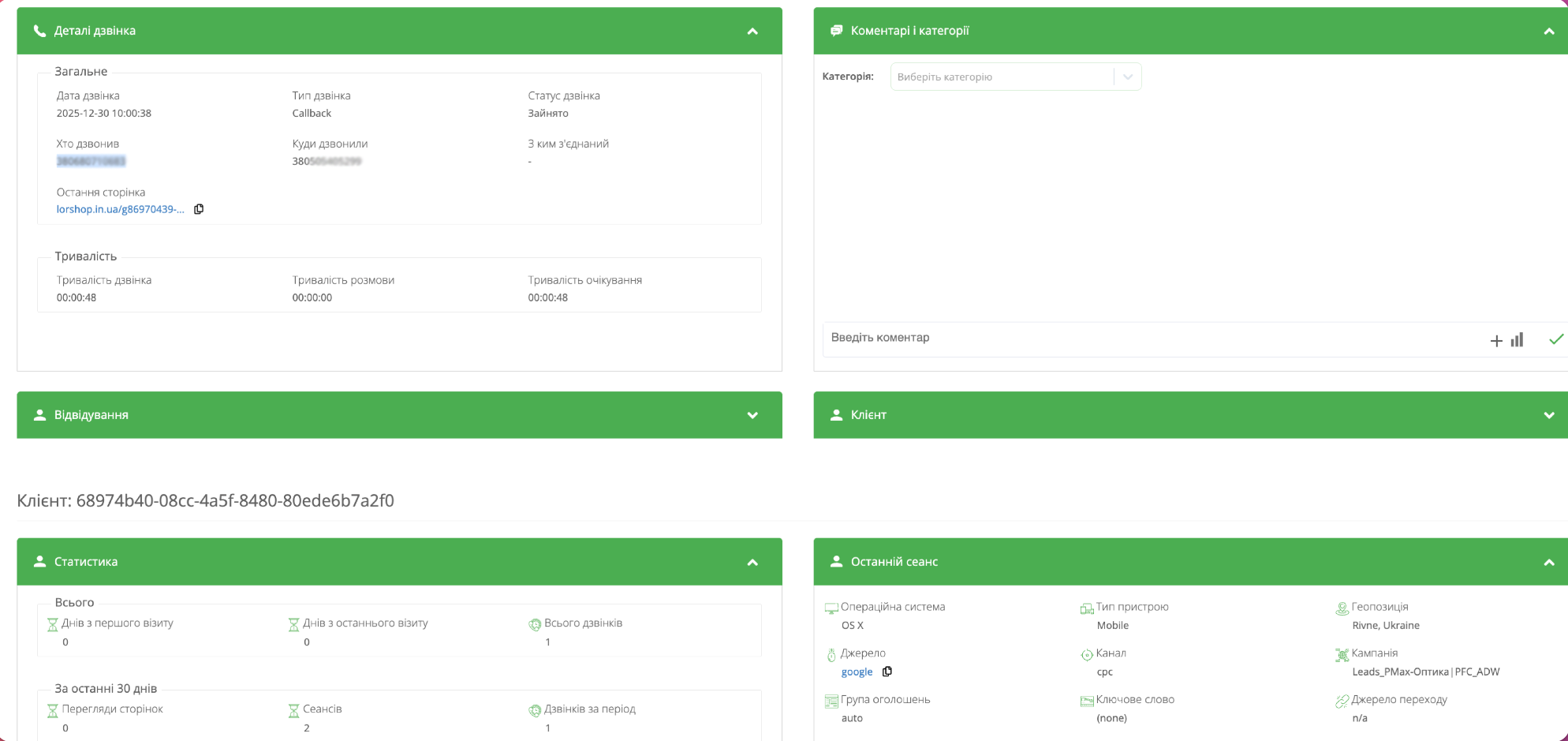
- After the client confirmed that real enquiries were coming in by email, we moved the email_click goal from micro-conversions to the account’s primary goals.
5. Further campaign adjustments
As we continued managing the account, we kept testing and adjusting settings based on campaign results:
- launched separate campaigns for priority product categories;
- moved products between main and test campaigns;
- adjusted Performance Max budgets for seasonality and expected buying activity;
- updated negative keywords, search keywords and ad assets;
- tested bid strategies and adjusted target CPA for individual keyword groups.
This work laid the groundwork for ongoing control of traffic quality, cost optimisation and evaluation of advertising results.
How we checked conversion goals
We imported purchase (purchases), Ringostat_calls (calls) and clicks to Viber and Telegram into Google Ads and set them as primary goals.

At first, we turned off the call_phones goal (click on the phone number): we assumed it duplicated Ringostat_calls, the actual calls recorded by call tracking.
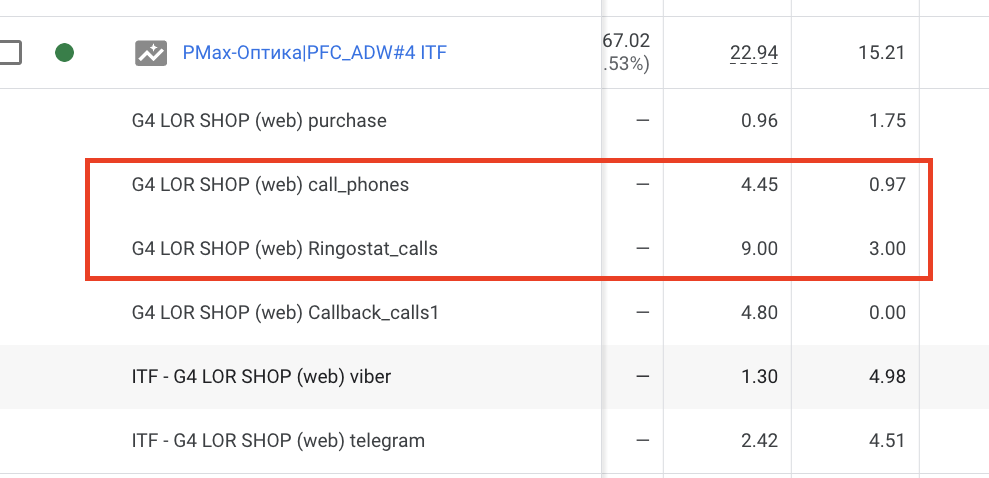
To check this, we requested access to the Ringostat dashboard: these events come into GA4 directly from the service and don’t appear in real time in DebugView. Testing showed that call_phones and Ringostat_calls recorded different data and did not duplicate each other.
In February 2024, we still removed call_phones from optimisation in all campaigns: a click on the number and an actual Ringostat call often record the same enquiry, so automated bidding would count it twice. For Performance Max campaigns, we also removed clicks to Viber and Telegram, leaving PMax with only the most valuable conversions: purchases, Ringostat calls and email enquiries.
After adjusting conversion goals and optimising the campaigns, the value of recorded conversions rose by 34.43%, while ad spend fell by 13.90%. This pointed to better advertising results. At the same time, the change may have been driven both by traffic optimisation and by the adjusted set of conversions used to measure performance.
Ad examples:


In September, we set up and launched a separate Sales-Performance Max campaign for electrical equipment. We created it at the client’s request so that these products wouldn’t take up the entire budget of the main campaigns.
For the New Year holidays, we agreed to cut Performance Max budgets because of the expected drop in demand, to avoid wasting money on display impressions and non-converting clicks. This saved budget during a period of low buying activity, and from January 6 budgets were increased back to their normal level.
Interim results of ad optimisation for the quarter (April–June 2025):


The main source of sales was the google / cpc channel: it generated 210 of 294 recorded purchases (71.4%) and 3,981 key events.
Of the 572.91 total conversions, the main lead sources were:
- Ringostat_calls (calls): 267.58 (46.7% of all conversions)
- purchase (website purchases): 218.38 (38.1% of all conversions)
- Callback_calls1 (callbacks): 78.75 (13.7% of all conversions)
- Viber and Telegram: 7.2 and 1.01 respectively
Despite fewer impressions and clicks, total conversions grew by 8.9%, while cost per conversion and ROAS stayed almost unchanged. This showed that irrelevant traffic was being filtered out successfully. Ringostat calls (46.7%) and direct website purchases (38.1%) accounted for the largest share of conversions.
Project specifics
The main challenge of the project is Google’s strict advertising policies for medical products, which regularly lead to serving restrictions and require constant monitoring of statuses in Google Ads and Merchant Center. On top of that, the B2B audience is narrow (mostly medical specialists and clinic managers), so keywords have to be tuned precisely to professional search queries.
Solutions for scaling campaigns
To allocate the ad budget more effectively and keep cost per conversion under control, we worked on geographic segmentation and the structure of Performance Max campaigns.
- Geographic segmentation. Kyiv was split into separate campaigns as a high-converting region. This made it possible to control its budget separately and adjust spend across regions.
- Segmenting product categories in Performance Max. For certain categories, such as endoscopes and headlights, we set up separate test campaigns with their own budgets. This let us evaluate their performance separately and control costs without mixing the results of different product lines.
Data discrepancies between GA4 and Google Ads
When analysing results, keep in mind that Google Ads and GA4 data can differ in the number and value of conversions. This is due, among other things, to differences in attribution models, conversion counting settings and the rules for crediting results to ad channels. Google Ads shows the conversions and value that the system attributes to interactions with Google Ads, while GA4 lets you analyse the user journey and the contribution of different channels to conversions, depending on report and attribution settings.
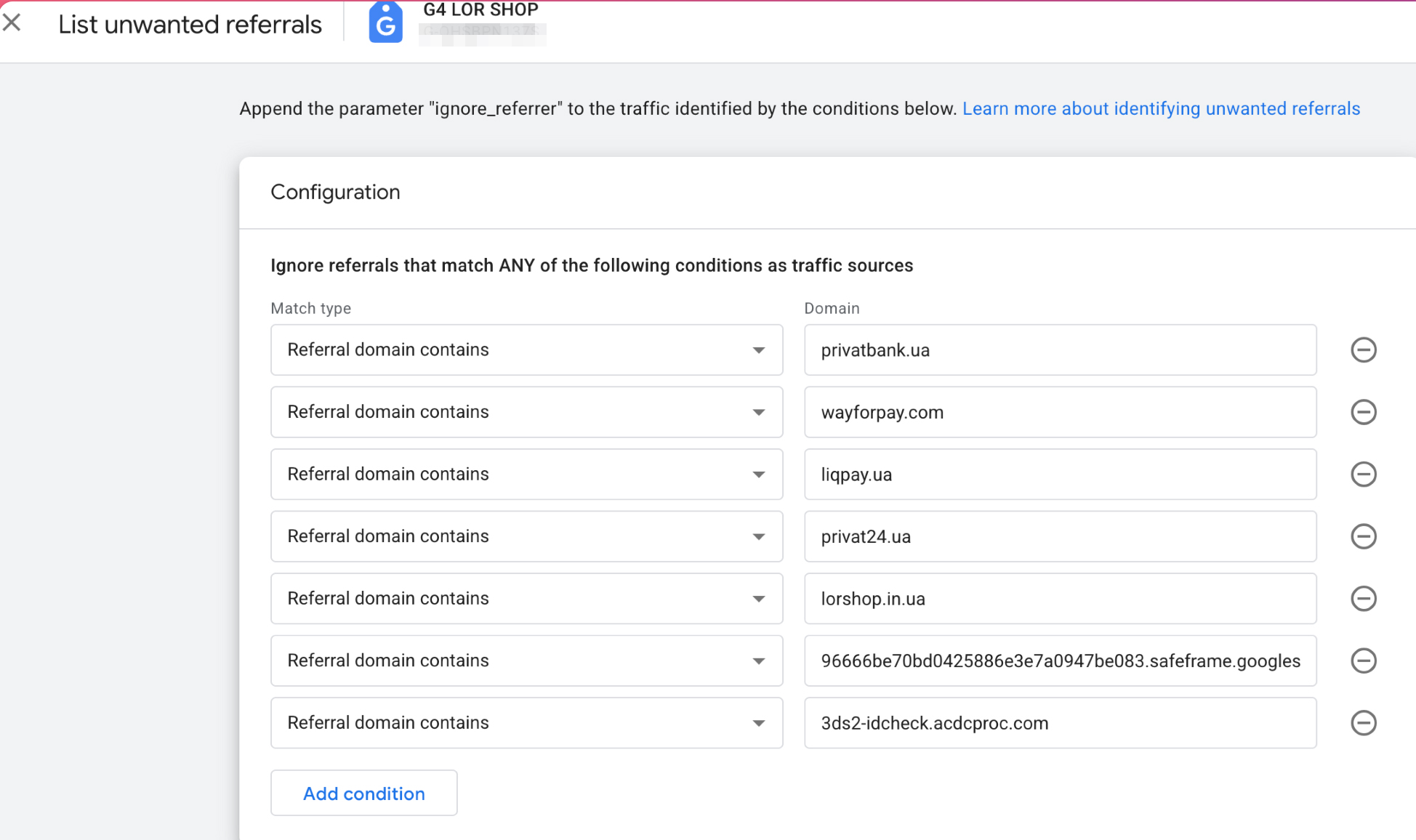
To keep the analytics clean, we added payment gateways and third-party services to the unwanted referrals list. This stopped sources from being overwritten: conversions after payment no longer switch from google / cpc to referral.
Problem: irrelevant calls about car parts and auto service equipment
In December 2025, we noticed irrelevant calls from people looking for car parts and auto service equipment. These enquiries came from Performance Max campaigns, specifically PMax-Optics and PMax-ENT, and the traffic source was display placements rather than search ads.
The analysis showed that one possible cause was incorrect product categorisation in the feed: some products, including inactive surgical washers, had a product type associated with auto service equipment. Irrelevant clicks may also have been driven by the visual similarity of some medical devices to automotive equipment and by the signals used to find audiences.

To reduce irrelevant enquiries, we added account-level negative keywords related to auto service and car parts and replaced the images in PMax-Optics to make the medical purpose of the equipment clearer.
We also recommended fixing the product type in the feed. Overall, we optimised the PMax structure by allocating products according to performance and business priorities. This case showed that with Performance Max it is important to control not only bids and audience signals but also the accuracy of product data and how well ad creatives match the medical context.
Since August 2026, the project’s main KPI has been growing the number of qualified conversions within the approved budget while keeping cost per conversion (CPA) under control.
Google Ads work completed
1. Analytics and conversion tracking
- Checking that conversion tracking in Google Ads and GA4 works correctly; refining goals and pausing incorrect ones.
- Analysing the performance of campaigns, asset groups, products, keywords, ads and placements.
- Diagnosing issues and anomalies in the account and on the website.
- Adding unwanted referrals in GA4.
2. Google Merchant Center and the product feed
- Regular checks of the product feed and product statuses in Merchant Center.
- Submitting rejected products for manual review, requesting site recrawls and filing appeals.
- Updating the range in campaigns: adding new products to rotation, pausing underperformers and retesting previously paused ones.
- Moving products between main and test campaigns depending on performance.
- Grouping products and removing duplicate products and PMax campaigns.
3. Campaign structure and settings
- Creating and testing Search, Shopping and Performance Max campaigns for specific product categories.
- Creating, updating and pausing PMax asset groups based on results.
- Setting up additional asset groups and testing audience signals, including remarketing and interests.
- Adding new dynamic search ad (DSA) targets and updating categories for dynamic ads.
- Testing Final URL expansion in selected PMax campaigns.
- Adjusting geotargeting and location presence settings.
- Analysing ad placements and excluding underperforming sites and irrelevant channels.
4. Keywords and search queries
- Reviewing search terms in Search and PMax campaigns with a script.
- Expanding keywords: adding relevant queries to the right keyword groups and new search themes to PMax.
- Adding irrelevant queries to negative keyword lists at campaign, PMax and account level, including via Google support.
- Pausing underperforming, irrelevant and low-volume keywords and ad groups.
- Adding audiences in “Observation” mode to Search campaigns.
5. Ads, creatives and account quality
- Updating and optimising responsive search ads, PMax ads and ad assets.
- Updating copy and creatives, including materials from the client, and adding new creatives to rotation.
- Adding the business name and logo to the account.
- Reviewing Google Ads recommendations: applying relevant ones and dismissing irrelevant ones.
- Appealing restricted ads and rejected asset groups.
6. Bids and budgets
- Adjusting bid strategies and campaign budgets based on results.
- Testing Maximize conversions and Maximize conversion value, then choosing the more effective strategy.
- Adjusting Target CPA for individual keyword groups to win more auctions.
PPC results
For an objective analysis, we chose the period from April to September 2026. We have worked with the client since late 2023, and this period best reflects how the system performs after irrelevant enquiries were eliminated and targeting was fully fixed.
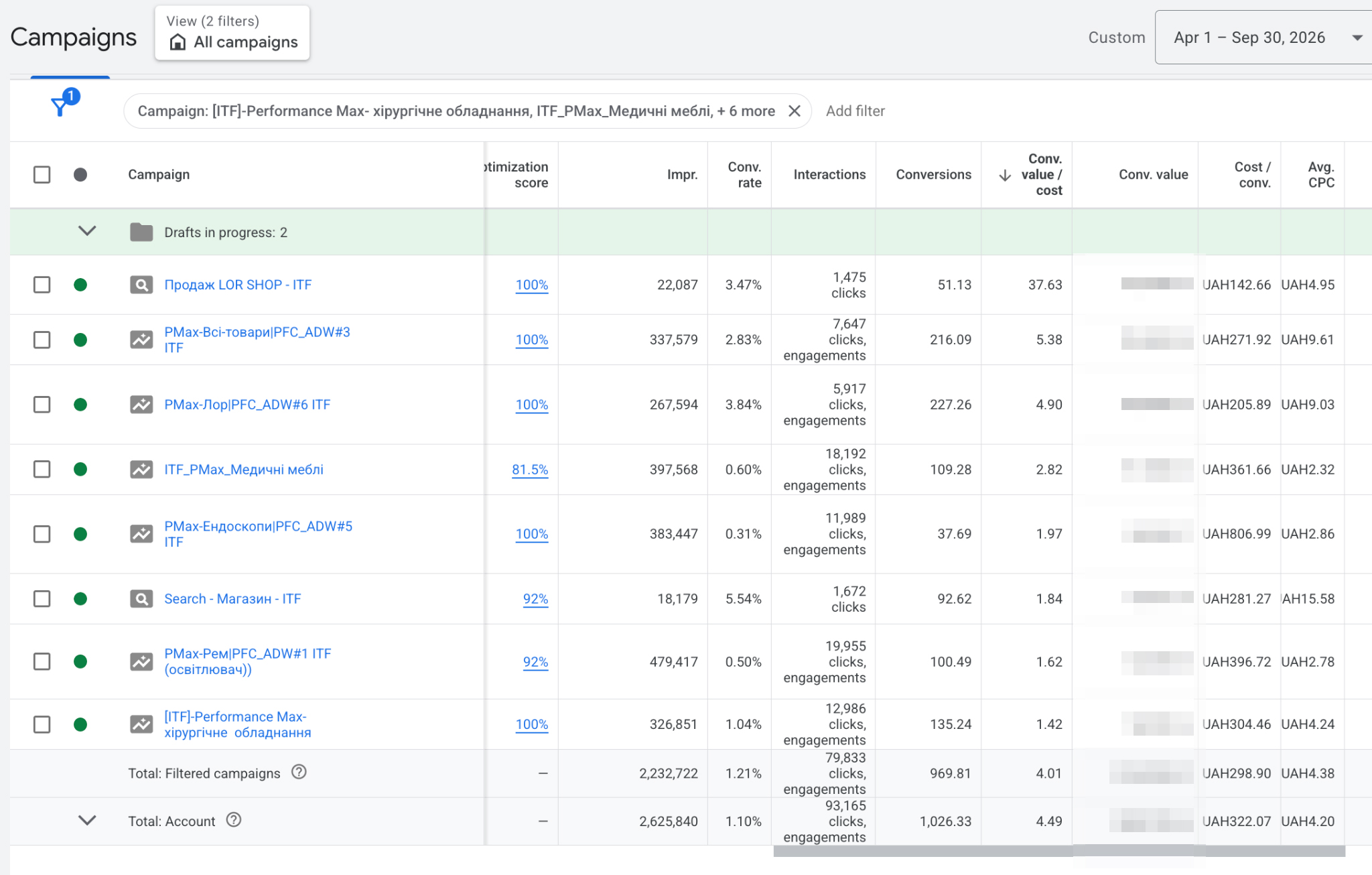
Account totals:
- 1,026.33 — total recorded conversions.
- 4.49 (449%) — ROAS.
- UAH 322.07 — average cost per conversion.
- UAH 4.20 — average cost per click.
Among Search campaigns, “Продаж LOR SHOP - ITF” delivered the highest ROAS, 37.63, with a CPA of UAH 142.66. The Search - Магазин campaign had the highest conversion rate in the account, 5.54%. Category Performance Max campaigns and the Search - Магазин campaign together generated more than 430 qualified actions. These results show that Search campaigns can effectively attract qualified enquiries for professional queries, while Performance Max complements them with reach across product categories.
Our ongoing work on the account focuses on growing qualified conversions within the approved budget, controlling CPA, maintaining tracking quality and reducing irrelevant traffic.