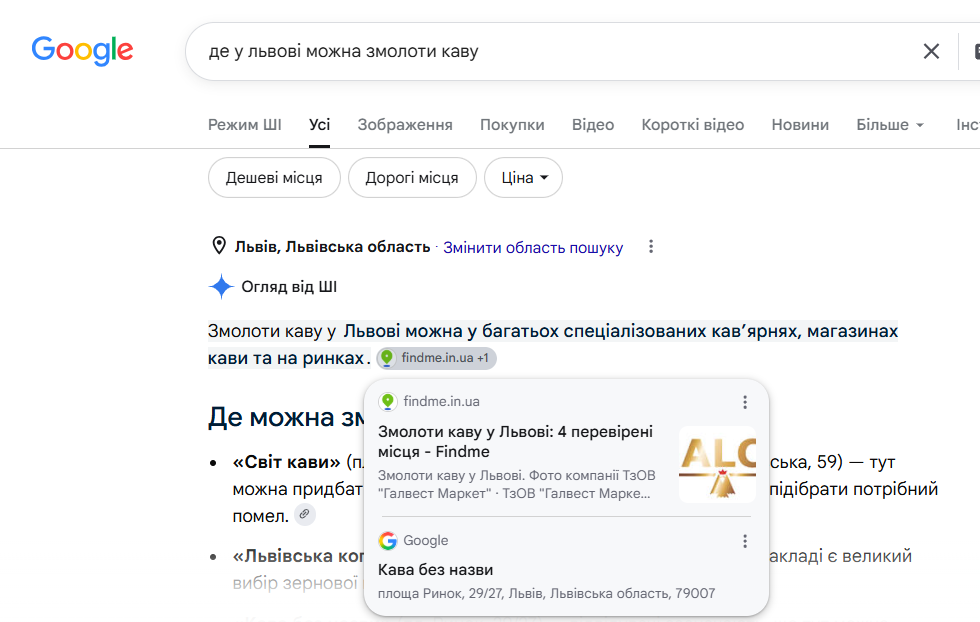
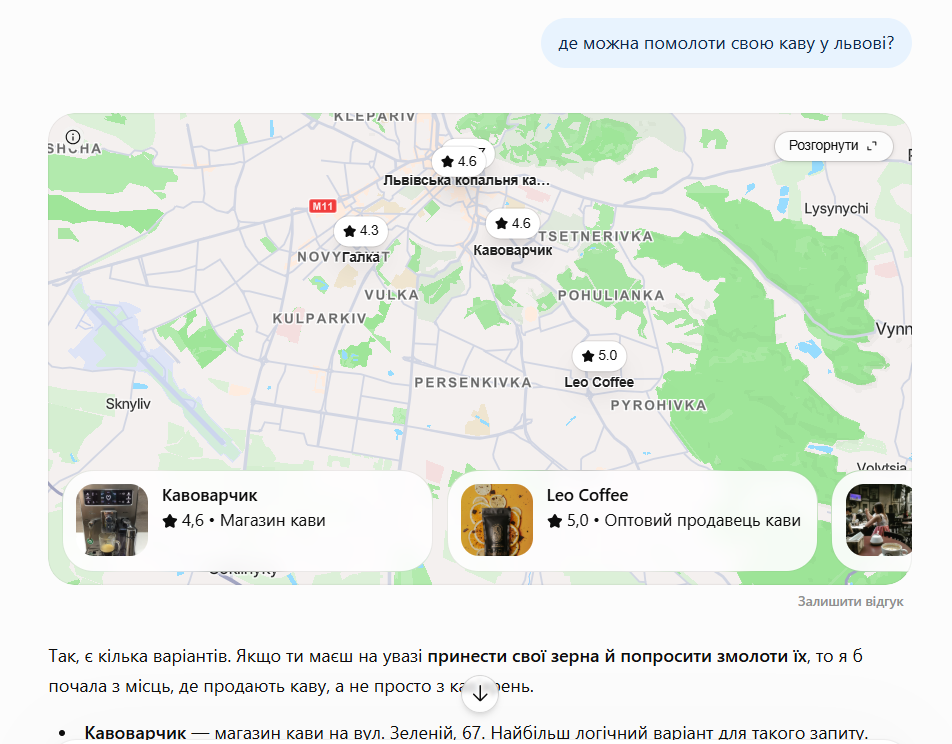
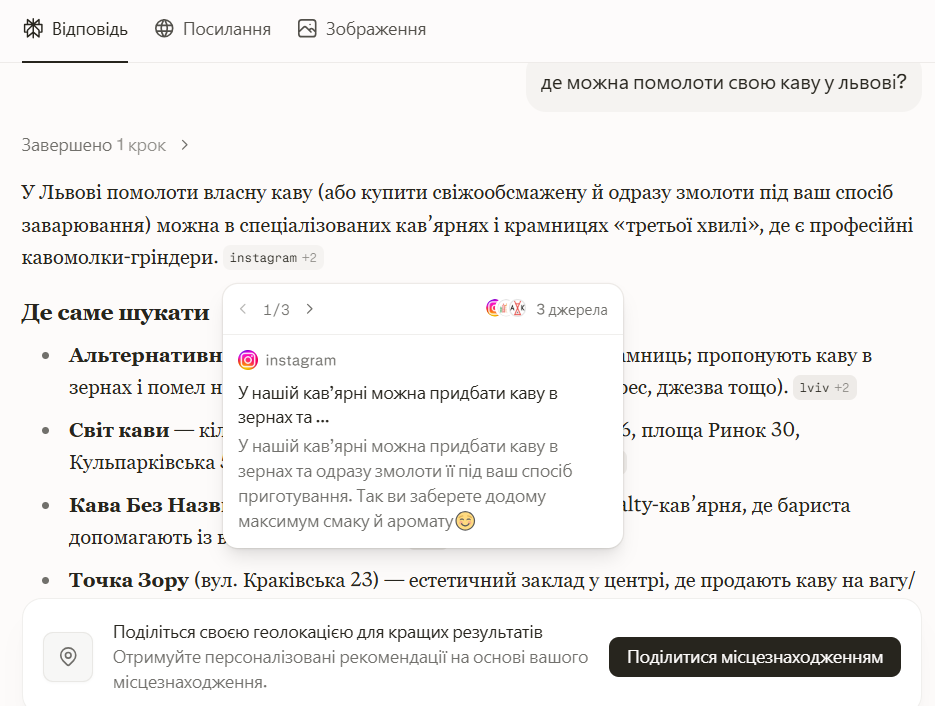
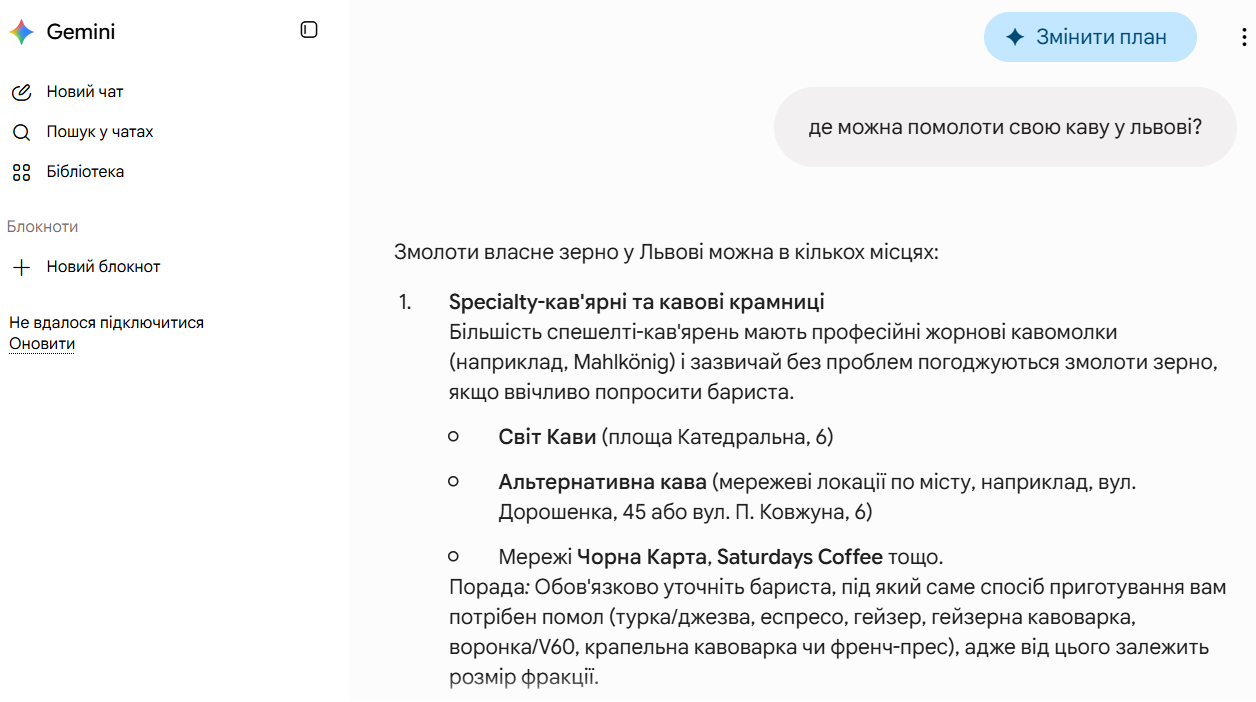
More and more people ask their questions not only in Google but also in ChatGPT, Perplexity, Gemini and other AI systems. Instead of a list of pages, these services produce an answer straight away and may cite specific websites, companies or content. So for a business it is important not only to rank in search results but also to be among the sources AI uses to build its answers. This is what GEO (Generative Engine Optimization), also known as LLM SEO or ChatGPT SEO, is for: optimising content and brand presence online for the way AI search works.
In this article we look at how AI finds and evaluates information, what influences its choice of sources and what to change on your website. We also show how to check brand mentions in AI answers and measure the results of GEO.
1. What GEO is and why it matters
How search is changing: from links to ready-made answers
In classic search, Google shows a list of pages, and users choose a result and find the answer on the website. AI systems such as ChatGPT, Perplexity and Gemini can find information across different sources, summarise it and produce a ready-made answer. For businesses, this means it is no longer enough to appear in search results: you also need to be among the sources that AI uses and mentions.
What GEO and AIO are
GEO (Generative Engine Optimization) – optimising content and a website’s digital presence so that AI systems can find, understand and use this information in their answers. You will also see it called LLM SEO or ChatGPT SEO.
AIO (AI Optimization) – a broader term covering how a brand is presented across different AI systems and use cases.
GEO vs SEO: what stays the same and what changes
GEO does not replace SEO – it builds on it. Both need a technically sound website, quality content, expertise and reliable sources. GEO, however, puts more weight on clear answers to queries, well-structured information, original data, brand mentions on third-party sites and the brand’s overall presence online.
The main goal of GEO
The goal of GEO is to increase the chances that an AI system uses your website as a source, cites it or mentions your brand in an answer. So what matters is not only where a page ranks, but also how visible your brand and content are in AI answers.
Which businesses need it most
SaaS and IT: comparisons, shortlists and searches for alternatives.
B2B and consulting: searches for solutions to specific business problems.
E-commerce: product selection and comparison.
Media and expert projects: earning citations and mentions in AI answers.
2. How ChatGPT, Perplexity, Gemini and other AI systems find information
How AI builds an answer: from training to search
AI systems can answer based on what they learned during training, and in web search mode they can also pull in up-to-date information from the internet.
Model knowledge (training data). The model is trained on large datasets and can answer general questions without searching the web.
Web search. In search mode, the AI finds current pages, analyses their content and uses relevant information in its answer.
Retrieval-Augmented Generation (RAG). An approach where the system first retrieves relevant information and then uses it, together with the language model, to generate the answer. RAG can work not only with web pages but also with other databases and documents.
Why you shouldn’t optimise for just one platform
ChatGPT, Perplexity, Gemini and other systems use different models, search mechanisms and ways of selecting sources. A page that appears in one system’s answer won’t necessarily be used by another. It is more effective to work on overall content quality, technical accessibility and the brand’s presence in authoritative sources.
Which sources can end up in an AI answer
Depending on the query and the system, AI may use:
Company websites: product pages, blogs, FAQs, case studies, documentation.
Industry media: trade publications, news sites and specialist resources.
Reviews and rankings: independent shortlists, service reviews and review platforms.
Research and statistics: scientific papers, reports, studies and primary sources.
Forums and professional communities: Reddit, Quora and other platforms where people share hands-on experience.
Directories and aggregators: structured databases and directories of companies, products and services.
What makes a source more likely to be chosen
There is no universal set of factors that guarantees a page will appear in an AI answer. However, clear, high-quality content, relevance to the query, accurate information and source authority can all make it more likely to be used.
Factor
What to do
Authority
Show your authors’ expertise, cite reliable sources and work on your brand’s reputation.
Relevance
Give a clear answer to a specific query and cover the topic fully.
Accuracy
Use verified facts, figures, research and primary sources.
Freshness
Update content when data, rules, prices or other important facts change.
Structure
Use clear headings, lists, tables, short paragraphs and a logical page structure.
How different AI systems work
ChatGPT
ChatGPT can answer from model knowledge and, when web search is available, find and analyse current pages. In these answers it can show links to the sources it used. Which pages are found and cited depends on the query, the search available and how relevant the sources are.
Perplexity
Perplexity positions itself as an AI search engine and relies heavily on web search to build answers. It usually shows sources right next to the statements they support, so relevance, factual accuracy, accessible content and source quality all matter.
Gemini
Depending on the mode and type of query, Gemini can use Google Search to get up-to-date information. So traditional SEO factors and content quality remain important. Still, a high Google ranking does not automatically guarantee that a site will appear in Gemini’s answer. Google search results also include their own AI answers – AI Overviews and AI Mode.
3. What to optimise on your website: a GEO checklist
3.1. Create content that is easy to use in AI answers
Direct answer: give a short answer to the query at the start of a section, then expand on it.
Clear structure: use H2/H3 headings, lists, tables and short paragraphs so information is easy to find and process.
FAQ: phrase questions the way users naturally ask them and give specific answers.
Conversational and long-tail queries: cover queries such as "how to choose", "what’s the difference" or "what’s better for…", not just individual keywords.
Full topic coverage: create content that answers not only the main question but also related ones.
Facts and original data: add specific figures, definitions, examples, research and results from your own experience.
3.2. Build trust and expertise
E-E-A-T: demonstrate the experience, expertise, authoritativeness and trustworthiness of your website and authors. This is especially important for topics that can affect users’ health, finances or safety.
Transparent authorship: name real authors, with their role, experience and professional profiles.
Primary sources: cite official documents, research, statistics and other reliable sources.
Original content: publish your own case studies, research, statistics, expert commentary and experiment results.
Freshness: review and update content regularly, especially where data, rules or conditions change quickly.
3.3. Make sure your content is technically accessible
Clean HTML: important content should be accessible to crawlers without unnecessary technical barriers.
robots.txt: check that you are not blocking the AI crawlers responsible for search. Most AI systems use separate bots for search and for model training: at OpenAI, OAI-SearchBot controls whether you appear in ChatGPT search, while GPTBot collects data for training; at Anthropic, these are Claude-SearchBot and ClaudeBot; at Perplexity, PerplexityBot. You can block training bots and still allow search bots. Google-Extended only controls whether your content is used to train Gemini and does not affect Google Search or AI Overviews.
Schema.org: use relevant structured data types such as Article, Product, Organization or FAQPage. Markup helps search engines understand the structure and content of a page, but on its own it does not guarantee AI citations.
Speed and technical quality: optimise Core Web Vitals and other basic technical parameters of your site.
Technical optimisation is only the foundation: accessible, well-structured content is more likely to be found and processed, but citations also depend on relevance, quality, accuracy and unique value.
4. How to get AI to recommend your brand
Even a well-optimised website is just one source of information about a brand. AI systems can also take into account other mentions: media coverage, reviews, roundups, directories and discussions on third-party platforms. So for AI visibility, you need to build your brand’s presence not only on your own site but beyond it.
Digital footprint: where your brand is mentioned
Digital footprint – all the mentions, reviews, publications and other data about a brand online. The more high-quality, consistent mentions of a company there are across different sources, the more information AI can use when building an answer.
Key platforms:
Industry media: articles, interviews, expert commentary.
Reviews and rankings: independent shortlists, comparisons and product reviews.
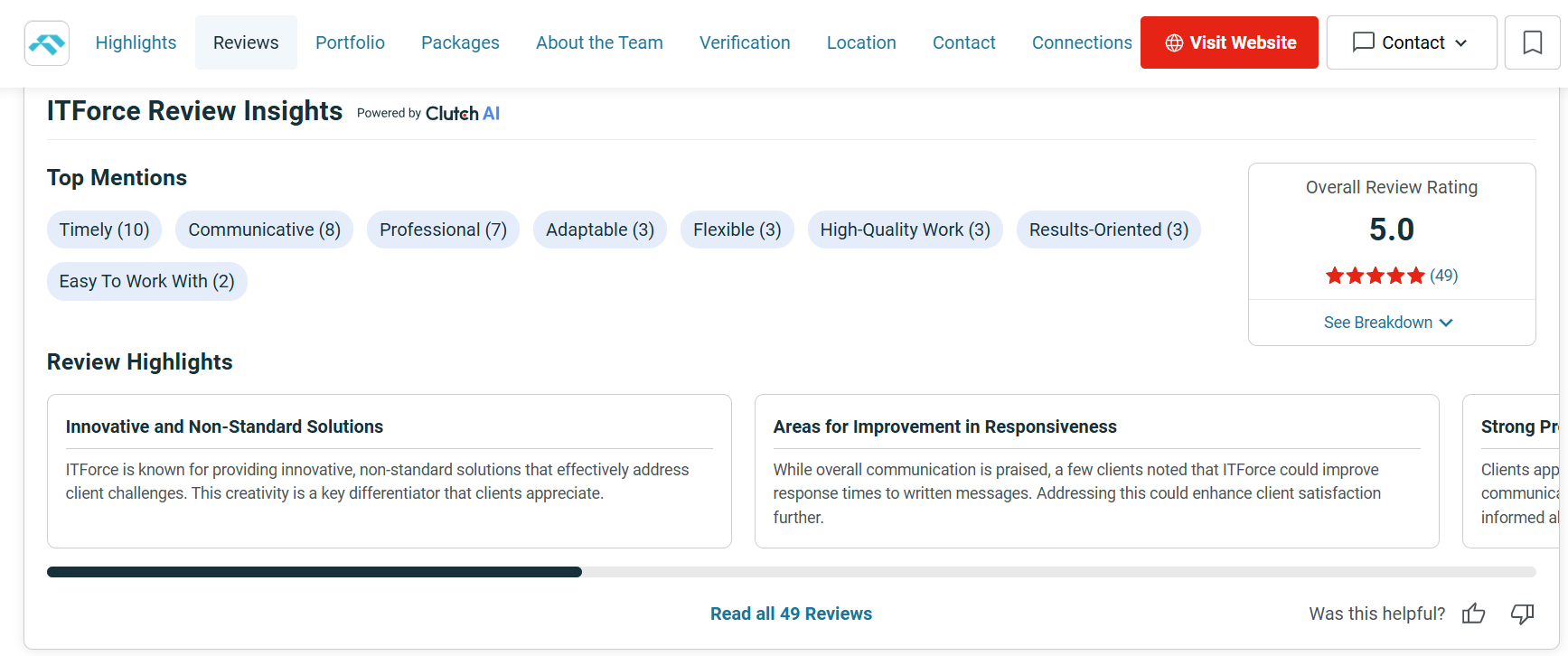
Directories and platforms: G2, Capterra, Clutch, Trustpilot, Google Business Profile and other relevant services.
Professional communities: Reddit, Quora, LinkedIn, GitHub and topic forums.
Why third-party mentions matter
Content on your own website is naturally promotional. Independent publications, reviews and testimonials add context about your brand and can strengthen its authority. So it is important not only to talk about yourself but also to build a quality presence on other sites.
Reddit, Quora and LinkedIn: expertise, not spam
Professional communities can become another source of information about your brand and its experts.
No spam: avoid posting promotional messages in bulk or creating fake mentions.
Helpful answers: take part in relevant discussions and share your experience, methods and practical advice.
LinkedIn: posts by the company and its experts help connect the brand with specific topics and expertise.
Build clear associations: brand → category → problem
For your brand to appear more often in answers to relevant queries, you need to explain clearly what you offer, who it is for and what problem it solves.
Clear positioning: for example, not just "a marketing agency" but "an agency doing CRO audits for e-commerce".
Consistency: use the same names, categories and key brand attributes on your website and on third-party platforms.
Comparison content: create pages such as "[competitor] alternatives", "[brand] vs [competitor]", reviews and comparisons. This helps show more clearly where your brand stands in its category.
5. Optimising for queries where AI recommends brands
How to analyse recommendation queries
In AI systems, people often phrase commercial queries as a request for advice. The main types:
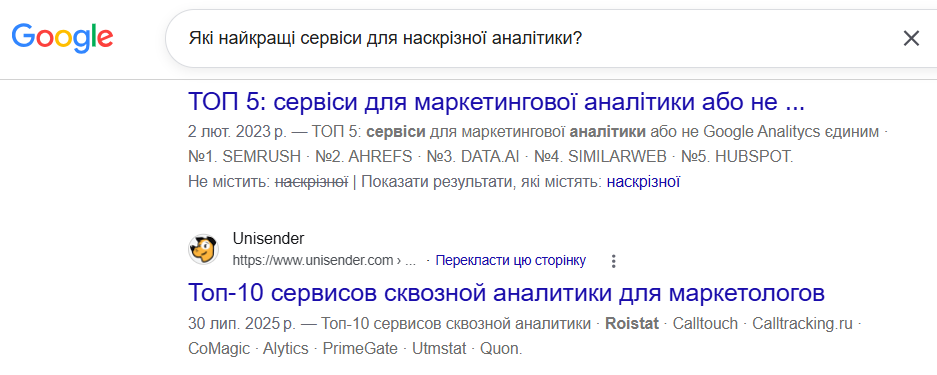
Best-of: "What are the best tools for end-to-end analytics?"
Recommendation: "Recommend a tool for a CRO audit of an e-commerce site."
Commercial category: "Best product marketing agencies in Europe."
Alternatives & comparison: "Hotjar alternatives" or "Ahrefs vs Semrush: which to choose?"
How to analyse them:
Collect variations of the queries your potential customers use.
Test them in ChatGPT, Perplexity, Gemini and other relevant systems.
Record which brands are mentioned, how they are described and which sources are cited.
Analyse these sources and identify what information about your brand is missing.
What content to create
Several formats work well for these queries:
Best-of: shortlists and rankings of solutions with clear evaluation criteria.
Comparison: "Brand A vs Brand B" pages comparing features, pricing, limitations and use cases.
Alternatives: "X alternatives" pages explaining when different solutions may be a better fit.
Comparisons should be as factual as possible. Instead of "the best tool", list specific attributes: pricing, limits, integrations, features and supported platforms. It’s also worth being honest about your own product’s limitations.
Why external mentions matter
Content on your own website is only one of the signals AI may use. External reviews, rankings, testimonials and discussions add context and can increase trust in your brand.
So a GEO strategy may include:
Industry media and roundups: expert articles, rankings, case studies.
Review platforms: G2, Capterra, Trustpilot, Clutch and other relevant sites.
Professional communities: genuinely useful participation in discussions on Reddit, Quora, LinkedIn and topic forums.
A GEO example
Query: "Which agencies are best for CRO audits for e-commerce?"
Test the AI answers.
Check the query in several AI systems and record the brands and sources mentioned.
Analyse the sources.
Identify which rankings, media, case studies or discussions shaped the answer.
Strengthen your own content.
Create a page such as "How to choose an agency for a CRO audit" with clear criteria, methodology and examples.
Work on your external presence.
Develop expert publications, case studies, profiles on relevant platforms and helpful participation in professional discussions.
Test again.
After a while, check the same queries again and compare mentions, brand position, reasoning and sources. GEO is an ongoing process of testing and improvement, not a one-off optimisation.
6. How to check whether AI sees and recommends you
How to test your brand in ChatGPT, Perplexity, Gemini and other AI tools
Regular testing helps you understand whether AI systems mention your brand and how they describe it.
Basic rules:
Start a new chat: don’t reuse a previous conversation, so its context doesn’t affect the result.
Test several systems: check your brand in ChatGPT, Perplexity, Gemini and other relevant AI services, especially in web search modes.
Use neutral prompts: phrase them the way a potential customer would, without steering the AI towards the answer you want.
Which prompts to check
Create a set of prompts and repeat the tests regularly:
Brand awareness: "What is [brand] and what services does it offer?"
Category & intent: "Recommend the best solutions for [task/problem]."
Comparison & alternatives: "What are the alternatives to [competitor]?" or "Compare [brand] and [competitor]."
What to analyse in the answers
Brand mention: whether your brand appears in the answer.
Position: where it sits among the recommended options.
Links: whether the AI links to your website or specific pages.
Sources: which sites, media, reviews or other resources were used.
Competitors: who the AI recommends instead of you or alongside you.
Brand description: which strengths, weaknesses and attributes the AI associates with your product.
How to track AI traffic in GA4
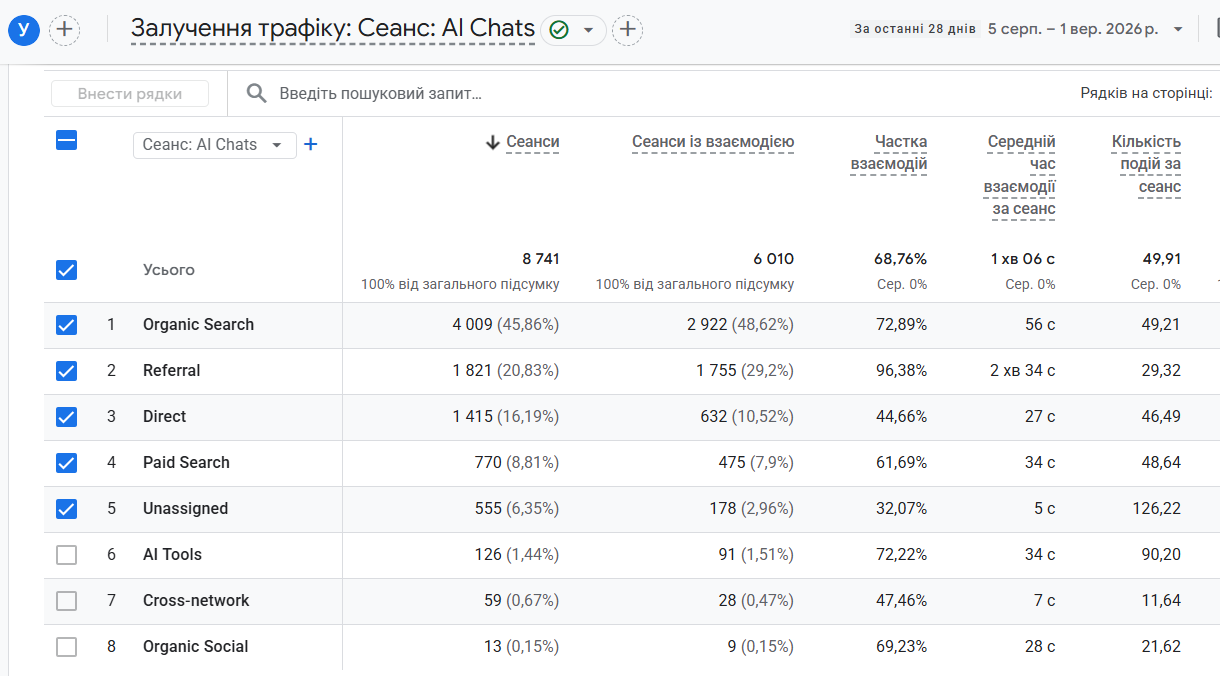
Since May 2026, GA4’s default channel group has included a separate AI Assistant channel. Visits from ChatGPT, Gemini, Claude and other AI assistants that GA4 recognises automatically get the medium ai-assistant and are grouped into this channel – no setup required.
Google doesn’t publish the full list of services GA4 recognises, so it’s worth also checking the Session source / medium report: some visits from AI services may still show up as referrals. For a fuller picture, you can create a custom channel group with a rule based on AI service domains, as in the example below.
Domains worth adding to such a rule:
chatgpt.com
perplexity.ai
gemini.google.com
claude.ai
copilot.microsoft.com
It’s important to look not only at the number of visits but also at engagement, conversions and traffic quality. This shows whether AI visibility actually delivers business results. If the figures look implausibly high – for example, dozens of events per session – check whether bots or internal traffic are getting into the report.
7. How to measure GEO performance
Key GEO metrics
To assess GEO results, track not only visits to your site but also how often and in what context AI mentions your brand.
AI visibility: the share of relevant queries whose answers mention your brand.
Share of voice (SOV): your brand’s share of mentions compared with competitors for the same set of queries.
Citation rate: how often AI cites your website or specific pages.
Mention quality: the context, sentiment, strengths and attributes AI associates with your brand.
AI referral traffic: visits to your site from ChatGPT, Perplexity, Gemini and other AI services.
Conversions: enquiries, purchases, sign-ups and other goal actions by users who came from AI.
How to set a baseline
Before starting GEO work, record your starting point:
Build a prompt set: 20–50 brand, best-of, category, comparison and alternatives queries.
Test the AI systems: run these prompts in the main relevant services.
Record the results: brand mentions, position, links, competitors and the sources AI uses.
Record AI traffic in GA4: use the AI Assistant channel, referral sources and conversions.
Repeat the measurements: monthly or quarterly, using the same prompt set so the results are comparable.
Why AI traffic is not the only metric
Visits from AI don’t capture the full impact of GEO. A user may see your brand in an AI answer without clicking, then later find your site through Google, visit it directly or contact the company another way.
So GEO should be assessed as a whole: AI brand visibility + share of mentions + citations + traffic quality + conversions.
GEO performance is not a single metric but the trend in your brand’s presence in AI answers and its impact on business results.
8. GEO vs SEO: do you need to optimise separately?
GEO does not replace SEO – it extends it. Technical quality, accessible content, relevance and authority matter for both. The difference lies in the focus and in what counts as a result. For a detailed technical comparison, see our article GEO vs SEO: How Search Optimization Differs from Optimizing for AI.
Criterion
SEO
GEO
Focus
Page visibility in search
Brand and content presence in AI answers
Content
Optimisation for search queries
Clear answers, facts, structure, context
External signals
Links and mentions
Brand mentions, reviews, media, testimonials and other sources
Result
Rankings and search traffic
Mentions, citations, recommendations and AI traffic
How to combine SEO and GEO
You don’t need separate content for each AI system. Most changes can be built into your existing SEO strategy:
Structure your content: start sections with a clear answer, then add details, examples and evidence.
Use Schema.org: apply relevant structured data types such as Article, Product or Organization. They help search engines understand page content but don’t guarantee appearing in AI answers.
Work on your external presence: combine link building with PR, expert publications, reviews and brand mentions on relevant sites.
Update your content: add current data, comparisons, examples and FAQs where they genuinely help users.
Bottom line: SEO remains the foundation of search visibility, while GEO extends optimisation to scenarios where users get a ready-made answer from AI. They work best as a single strategy rather than two separate efforts.
Conclusion: how to get into AI answers
GEO is not a set of short-term technical tricks but systematic work on content quality, expertise and your brand’s digital presence. The best strategy is to create content that is useful to people, clearly structured and backed by verified facts.
Before publishing, check the basic GEO factors: a clear answer to the query, a logical HTML structure, up-to-date data and clear authorship. It is also important to make content accessible to relevant search and AI crawlers and to use appropriate Schema.org markup, which helps search engines understand the page.
Your brand’s presence beyond your own website matters just as much – in industry media, reviews, testimonials and professional communities. Together, these factors can increase the chances that AI systems will find, use and mention your brand in their answers.
If you want to build this work systematically – from analysing how AI currently describes your brand to content and external mentions – see our Generative Engine Optimization service for the format and pricing.