




Building strong, trust-based relationships with clients is a key part of the collaboration process. Long-term cooperation allows for a deeper understanding of the client’s goals and needs, which significantly enhances both the effectiveness of the work and the quality of services provided. It’s equally important to remain flexible and responsive to situational requests, showing professionalism and reliability in solving urgent tasks. We value every client and strive to build long-term partnerships, remaining a dependable partner both in daily operations and in unexpected scenarios.
This case focuses on the setup and optimization of advertising campaigns for a client who chose a model of periodic collaboration with our agency to address their marketing goals.
We already had experience working with paid advertising for musical instrument stores: paid advertising for an online music store and ppc for a musical instrument shop.
About the Client - Online Store for Musical Instruments
The Client soundmaster.ua is an online store specializing in the sale of audio equipment and musical instruments. In addition to a wide range of products, the store also offers repair and maintenance services for audio gear.
Store Advantages:
- Original products
- Free Nova Post delivery: to the branch (from 3,000 UAH) or to your address (from 5,000 UAH)
- Official manufacturer warranty
- Payment options: installments and credit
- Online payment via Nova Pay
- Bank transfer with VAT
- Customer discount program
- Pickup point in central Kyiv
- 5% cashback for a Google review
- 10% discount on all accessories with a purchase
- The most reliable consultation on the market — provided by professional musicians.
The store also offers gifts with the purchase of certain types of musical equipment. For example, when buying a synthesizer priced from ₴5,000, the customer receives a free stand for the instrument.
Business specifics and challenges
The musical instrument market is highly niche and deeply segmented. The target audience includes professional musicians, hobbyists, children just starting their music education, and group buyers such as schools and music institutions. Each user group has its own needs and search behavior. Sales of musical instruments are also subject to seasonal fluctuations influenced by the start of the academic year, holidays, and other timing-related factors.
Key characteristics of the client’s store operations:
- Complex product structure:
- A deeply layered category system;
- A large and diverse product range;
- Constant need to update product information (a previously resolved issue with Google Merchant blocking).
- Sales specifics:
- High market competition;
- Pre-sale consultations are often required to help customers choose the right instrument;
- A wide variety of target audiences.
- Demand characteristics:
- Musical instruments are not essential goods;
- Purchases often involve a long decision-making process.
Given these specifics, the contextual advertising strategy for this business must be both comprehensive and flexible.
Contextual advertising setup
Our collaboration with the client began in 2021. At that time, the client already had a Google Ads account and was considering creating a new one to manage campaigns separately. However, after a thorough analysis, our specialists decided to continue working within the existing account, as there was no strong reason to start from scratch.
At the start of the project, we conducted a full audit of the client's advertising account. Based on the findings, we launched new campaigns and optimized the existing ones. The main goal of the campaigns was to drive orders from website visitors.
Types of configured ad campaigns:
- Search
- DSA (Dynamic Search Ads)
- Shopping
- Remarketing
Devices: Mobile and desktop. The advertising budget started at ₴1,000 per day. Currently, monthly ad spend is approximately 40,000 UAH.
From 2022 to 2024, the collaboration with the client was mostly based on short-term contracts. We managed and optimized the ad account for one month at a time, after which the client would pause the campaigns and return after 2–3 months.
We consistently recommend that our clients run ad campaigns every month to achieve stable and scalable results. However, in this case, the ads continued to perform well, so the workflow was adapted to the client's specific needs. We update campaigns as needed or when new ideas arise.
In Q2 2023, we optimized the client’s analytics setup by migrating from Universal Analytics to Google Analytics 4. For the new property, we configured goals that mirrored the previous Universal Analytics setup. Key user actions tracked included:
- Form submissions (Contact page, One-click order, Purchase with cashback).
- Callback requests via Binotel.
- Purchases and other eCommerce events
At the same time, we configured and launched a new type of advertising campaign, Performance Max, aimed at increasing the number of leads and sales.
This case study covers the period of our work from August 28, 2024, to September 27, 2024.
The client provided the following tasks:
- Review the campaigns previously active in the account
- Develop recommendations regarding structure, budgets, and general settings
- Reactivate some of the previously paused campaigns
- Set up new ones
The initial stage involved a comprehensive audit, based on which we developed a detailed action plan and shared recommendations with the client. As a result of the audit and in coordination with the client, we paused a portion of the active campaigns to optimize the advertising budget, which was adjusted to approximately 1,630 UAH per day.
Next, we configured the purchase event tracking directly from the website. At the client’s request, we also launched new campaigns for products in the Power Stations category. During the pause in our collaboration, the client made significant changes: the website structure was updated, and promotional priorities shifted. This prompted us to conduct a full review of all advertising campaigns. As a result:
- We deactivated a number of ads, ad groups, and campaigns.
- For the active ones, we optimized budgets and other configuration settings.
Specifically, we:
- Reviewed system recommendations
- Paused ad groups with no active keywords or outdated targeting
- Added audiences for observation
- Analyzed search terms, added negative keywords, and excluded a query with an abnormally high CPC
- Removed outdated conversion events from the account
- Updated a portion of the ads and improved their quality scores; paused those that contained outdated information and couldn’t be edited
- Verified the accuracy and relevance of URLs used in the campaigns.
As of September 2024, the client’s account includes active Search, Standard Shopping, and Performance Max campaigns. Search campaigns are segmented by product categories, while the Shopping campaigns place a specific focus on guitars.
The key events currently tracked as conversions in the account include:
- Transactions
- One-click orders
- Submitted contact forms
- Callback requests
The ad campaigns are scheduled to run only on weekdays (Monday through Friday); no ads are shown on weekends.
Ad examples:
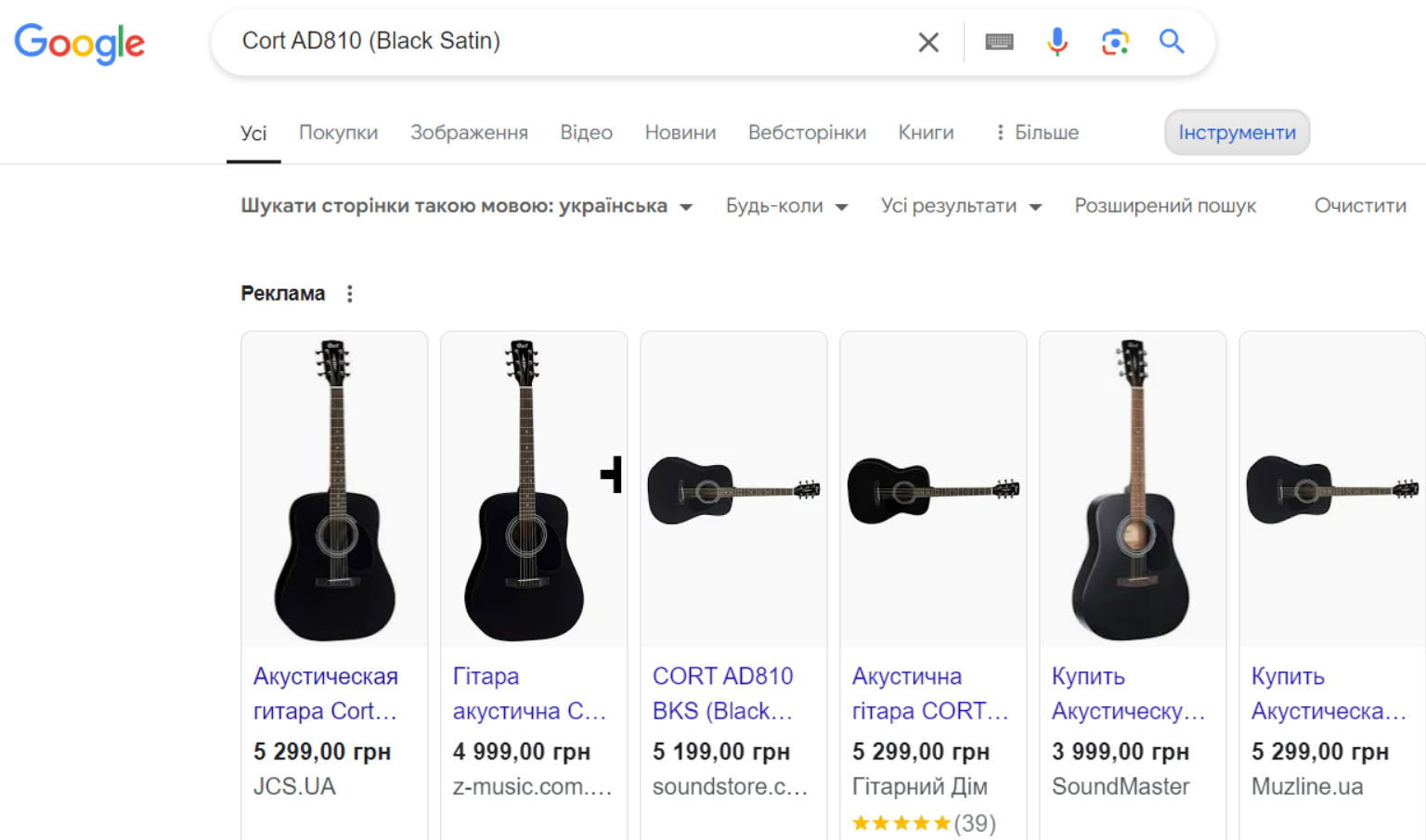
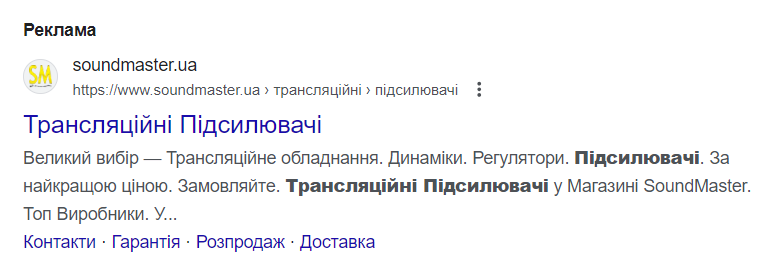
Fig. 1 – Examples of Configured Ads
The client provides prompt feedback on keyword selection and clarifications, responds quickly to comments regarding account structure, campaign status, and other settings, and is receptive to recommendations. Website edits required to comply with Merchant Center policies tend to take more time and effort, so they may be implemented gradually. However, we always manage to align on priorities and find a mutual understanding.
The current advertising goal for today is to maintain the number of conversions and increase them if possible, while working to reduce the cost per conversion and optimize overall ad spend.
Results of Contextual Advertising
This case focuses on the phase of partnership renewal after a short pause. Therefore, it’s important to analyze various traffic acquisition channels, with particular attention to the performance of paid advertising.
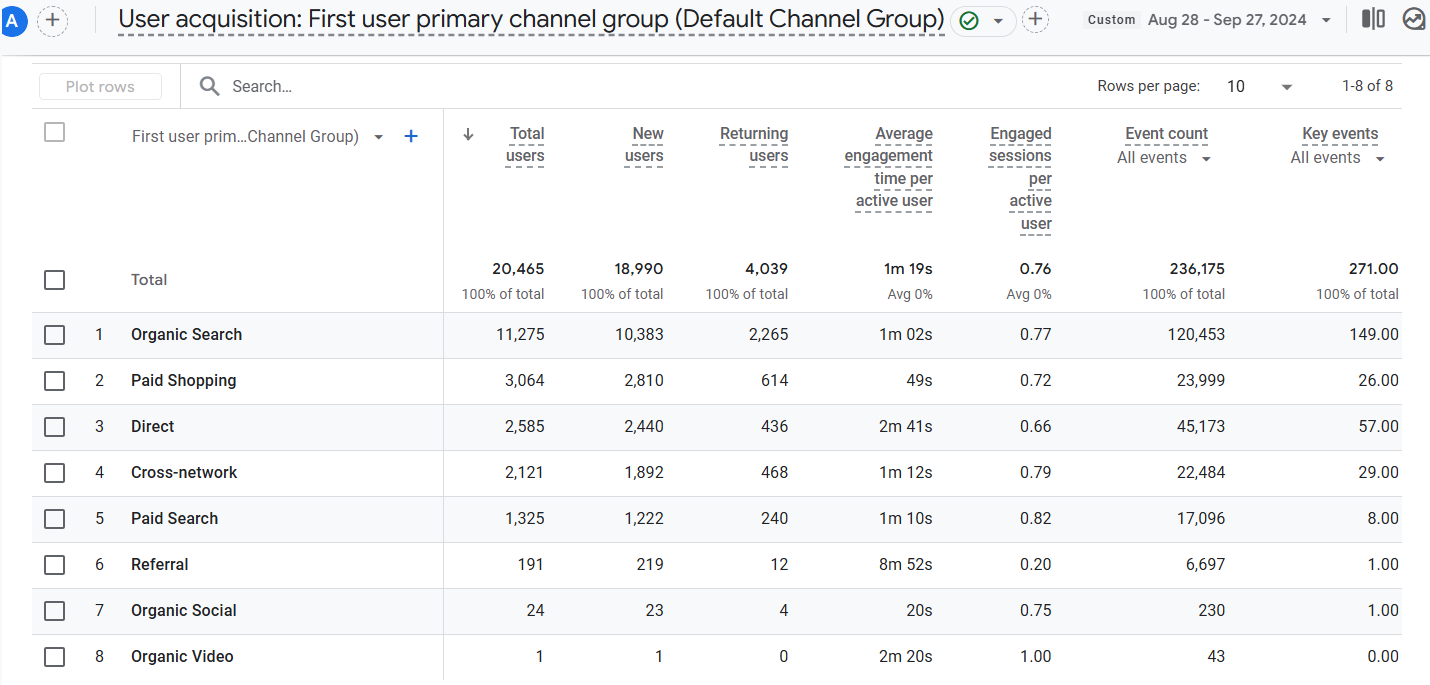
Fig. 2 – Audience acquisition channels
Within one month of resuming the partnership, contextual advertising (through Paid Shopping, Cross Network, and Paid Search channels) brought 6,510 users to the client’s website. While this number is about half that of organic search, it still highlights the strong performance of the configured campaigns. Paid advertising ranks as the second most effective source among all traffic channels tracked in Google Analytics.
Another important factor is the role of paid ads in the customer journey toward purchase:
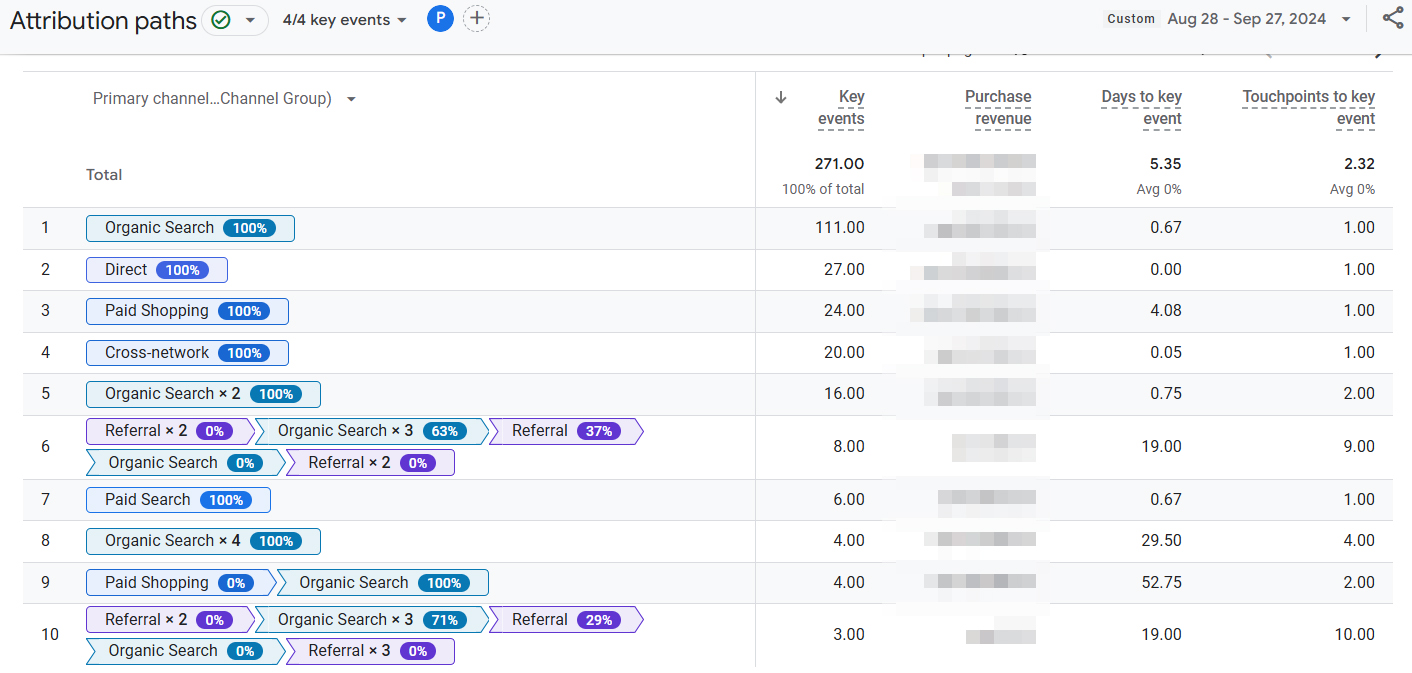
Fig. 3 – Path to Purchase
We can see that contextual advertising (via Paid Shopping, Cross Network, and Paid Search) plays a role in many conversion paths. Among these channels, Paid Shopping generates more primary events and revenue than Cross Network. However, the time to conversion is longer for Paid Shopping—users typically take more days before completing a conversion. In contrast, Cross Network tends to drive conversions on the same day the user interacts with the ad.
Сampaign performance metrics (one-month period):
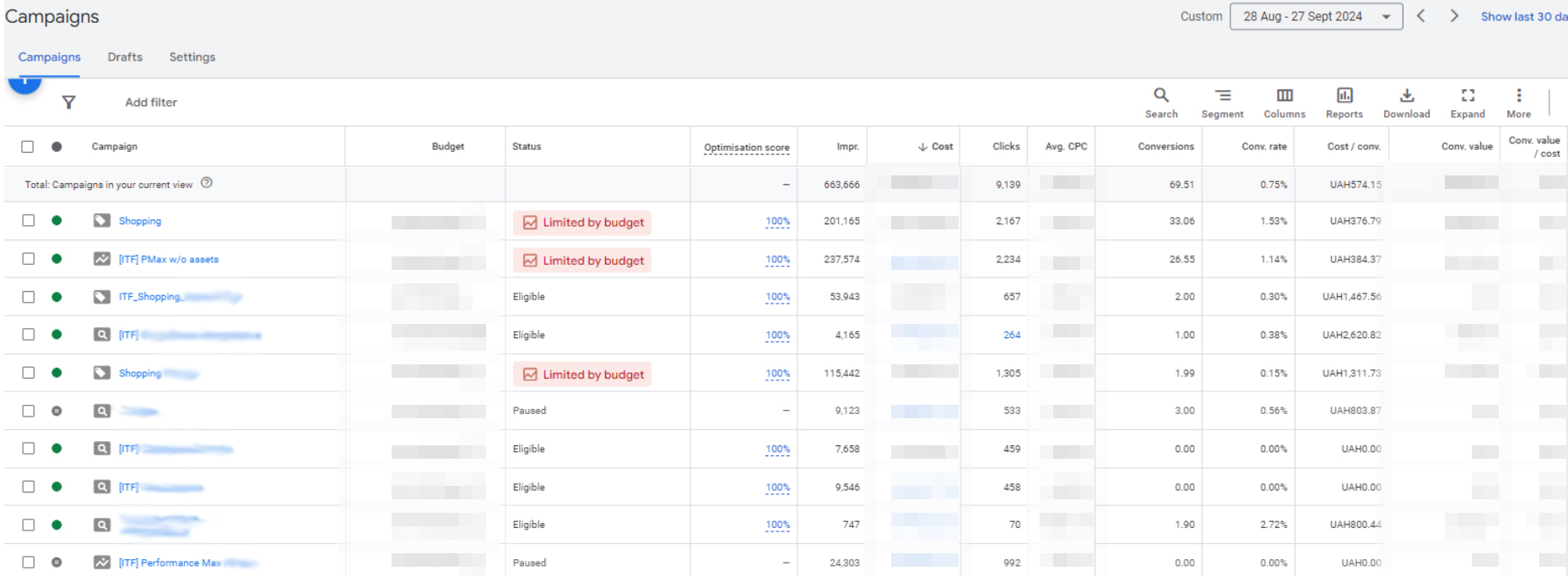
Fig. 4 – campaign performance metrics (monthly)
The advertising data shows that the two most effective campaigns in the account are Performance Max and Shopping. Overall, the campaigns delivered the following results:
- 9,139 ad clicks (2,234 from Performance Max, 2,167 from Shopping)
- 69.51 conversions (33.06 from Shopping, 26.55 from Performance Max)
- 574.15 UAH average cost per conversion across the account
– 376.79 UAH for Shopping
– 384.37 UAH for Performance Max
Analysis of ad campaign performance compared to the previous period:
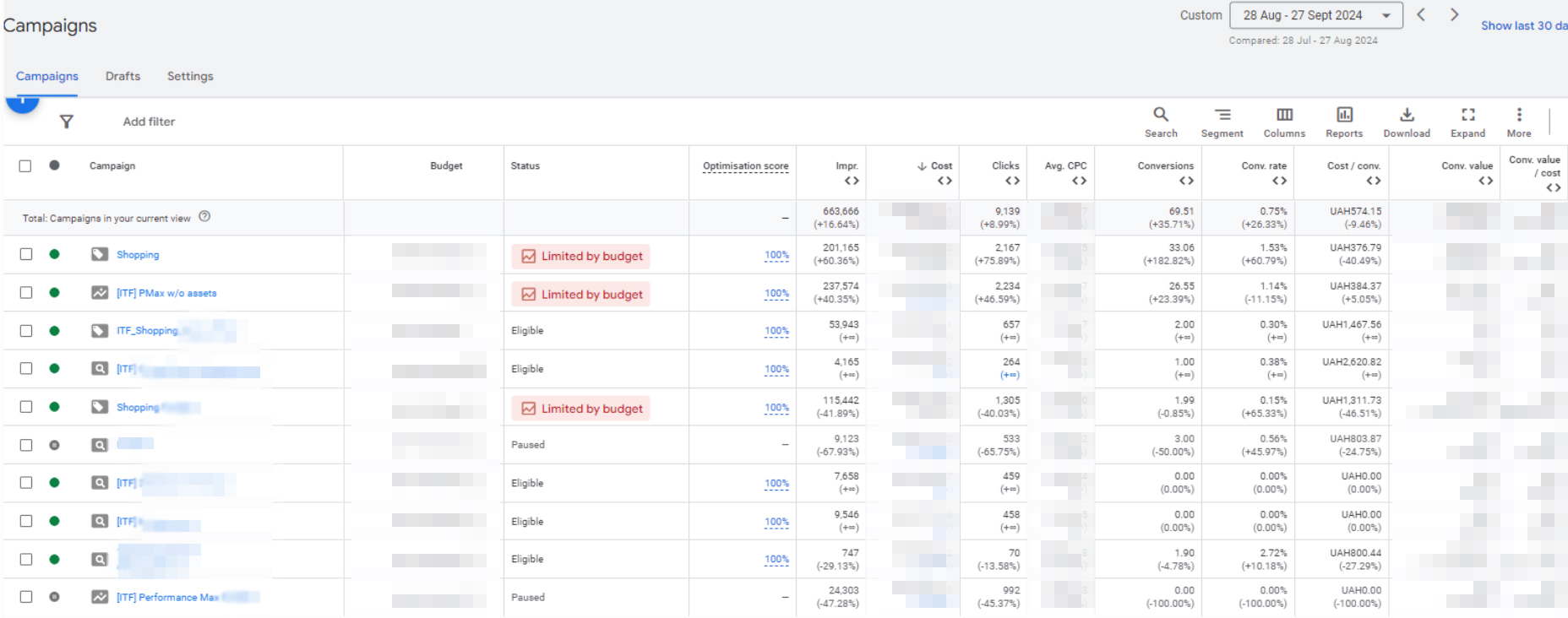
Fig. 5 – campaign performance comparison with the previous period
- +35.71% total conversions (+182.82% from Shopping, +23.39% from Performance Max)
- –9.46% cost per conversion (–40.49% for Shopping, +5.05% for Performance Max)
- +8.99% ad clicks (+75.89% for Shopping, +46.59% for Performance Max)
Compared to the previous period, ad spend increased by 22.87%, driven by campaign optimization, budget reallocation in favor of higher-performing campaigns, and structural changes within the account. The goal of this approach is to achieve maximum efficiency by generating more ad impressions and conversions.
Сonversion value data for the account:
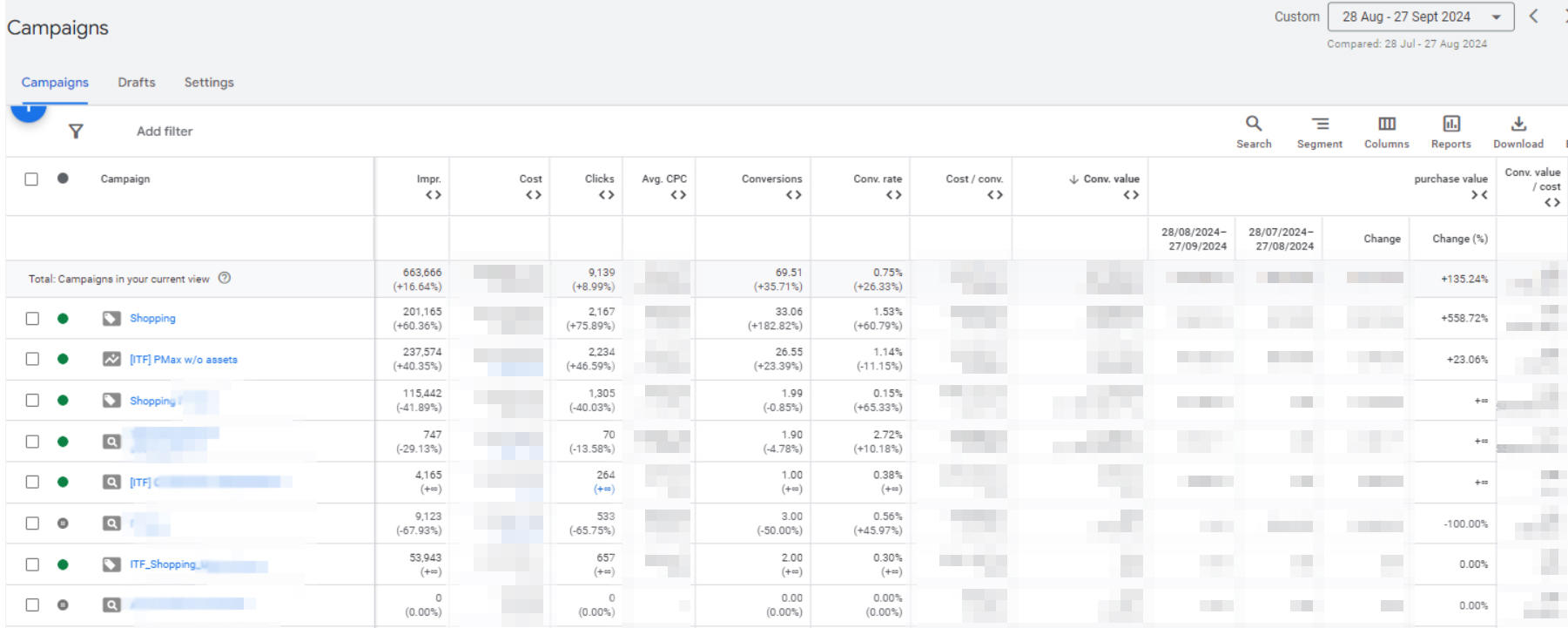
Fig. 6 – conversion value of configured campaigns
- +633% current ROAS
- +135.24% total increase in transaction value
- +558.72% from the Shopping campaign
- +23.06% from [ITF] PMax w/o assets
All performance metrics have shown significant growth, with Google Shopping proving to be one of the most effective campaigns in the account: every dollar invested in advertising delivers a high return.
As part of our campaign optimization efforts, we regularly analyze user search queries. Based on these insights, we build and continuously refine a list of negative keywords, helping to maximize the efficiency of the ad budget and prevent irrelevant impressions. We also monitor campaign performance and adjust bidding strategies accordingly.
The client’s primary objective - attracting new customers and driving sales for the online store - has been successfully achieved. Additionally, we managed to slightly reduce the cost per conversion. Overall, the ongoing optimization of paid advertising continues to bring in new customers and contribute to revenue growth. Our collaboration with the client remains active and aligned.