Paid advertising to increase sales for a branded clothing and footwear store




The branded apparel and footwear market is highly competitive. Promoting a new store in such an environment is a challenge for anyone. The market is dominated by well-established players with strong brand recognition, making it much harder to attract new audiences.
However, with a clearly defined target audience, a well-structured strategy, and the right marketing tools, it’s possible not only to compete with industry leaders but also to carve out your niche. This case study explores exactly how that was achieved.
About the Client
The client is a multi-brand platform offering footwear, clothing, and accessories for various needs.
The brand is a perfect fit for those who value quality, comfort, and strive for success, because a stylish appearance is an essential part of that journey. Ensuring customer comfort is the store’s core mission. The assortment features over 200 global brands, offering products for the entire family, from toddlers to adults. A well-designed filtering system makes it easy to find exactly what you’re looking for.
Orders are delivered promptly both across Ukraine and internationally. Customers can exchange or return purchased items following Ukrainian law. The store also offers a loyalty program with bonus conditions, including cashback on purchases.
Paid advertising setup
Our collaboration began in June 2024. The key objectives were:
- Reducing the cost per conversion while maintaining current performance metrics.
- Scaling advertising campaigns to boost sales, with tight cost control, and maintaining an optimal cost per conversion.
Before our collaboration began, the client already had active advertising campaigns managed by an in-house PPC specialist. Our first task was to conduct a full audit of the ad account. We performed a detailed analysis of all active campaigns to identify pain points and growth opportunities. As a result, we prepared a report outlining key observations and actionable recommendations.
The client responded positively to our approach and decided to move forward with us for full management of their Google Ads account. The workflow began with a phased execution of tasks, coordinated closely with the in-house specialist and the client’s marketing director. We regularly monitored performance and made adjustments along the way. At the same time, we explored additional optimization opportunities to maximize campaign efficiency. Within just two months, we fully took over the management of the advertising account, ensuring ongoing communication and alignment on all key changes. This allowed us to effectively manage a large volume of active campaigns in the client’s ad account and achieve noticeable performance improvements.
Initial campaign setup steps:
- development of search campaigns
- configuration of Performance Max
- later, we added a video campaign and experimental Display Network ads to boost brand awareness.
During our work, we:
- merged campaigns in different languages into a unified structure and tested asset groups without creatives;
- suggested the client export separate feeds with new IDs for more precise segmentation;
set up a branded search campaign as well as a competitor brand campaign; - developed Performance Max campaigns with creatives tailored for sales and seasonal promotions;
- added broad match keywords to expand reach.
To stay on top of KPIs, we implemented a regular reporting system: every 3–5 days, our team reviewed the results and analyzed performance dynamics. Thanks to detailed planning and ongoing alignment with the client, this approach allowed us to consistently meet targets and maintain steady growth across advertising campaigns.
We began optimizing the existing campaigns based on the KPIs provided by the client, specifically, cost-per-lead benchmarks tied to product value. Initially, we focused on search campaigns, followed by those delivering maximum efficiency. Later, we added video campaigns and Display Network ads.
General activities throughout the collaboration:
- re-segmentation of campaigns by product types
- proofreading ads to catch typos and errors
budget optimization - updating and pausing outdated ad extensions
- refreshing creatives
- analyzing search queries and adding new keywords to all campaigns
- adding negative keywords
- updating geo-targeting (excluding low-performing locations)
- revisiting bidding strategies
- adding audiences to Observation based on system recommendations
- pausing underperforming keywords
- regularly reviewing and dismissing irrelevant system recommendations
- replacing the fast_checkout conversion event with the relevant Purchase event
- testing asset groups without creatives to mimic Smart Shopping behavior
- enabling automatic asset generation
- setting up click tracking for social media and messenger icons to monitor secondary conversion events.
Key events (conversions):
- Purchase is the primary conversion event in the account.
- Requesting a callback is considered a secondary event.
In August, we successfully launched a pilot advertising project on the Tinder platform, working within the client’s budget constraints. The main goal was to achieve maximum reach within the target audience and, as a result, generate conversions. At the same time, we ran a test YouTube campaign focused on increasing brand awareness.
The client is open to our suggestions, which allows us to implement innovative solutions. For example, we’ve already simplified the customer experience by enabling one-click order value tracking.
Deliverables
Let’s evaluate whether our optimization efforts helped strengthen the platform’s position in a highly competitive market. We’ll analyze the collected data to define the next steps for further growth.
We have traffic data related to visitors brought to the client’s website. Let’s compare the initial figures from the start of our collaboration (July–August 2024) with the current results (August–September 2024).
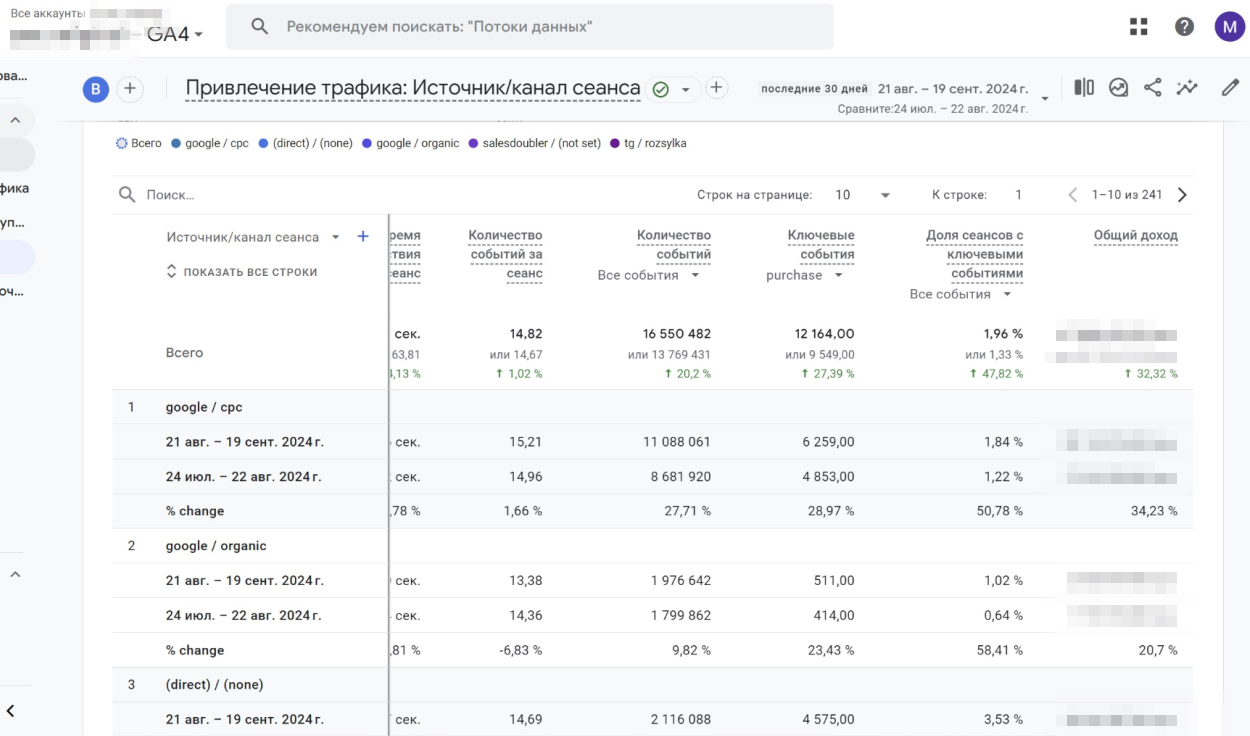
Fig. 1 – Traffic data by source
The Google CPC paid advertising channel provides the following insights:
- +50.78% in sessions with key events (conversions)
- +28.97% in the number of Purchase events
- +27.71% in the total number of all key events
- +1.66 in average events per session
We also observed a +34.23% increase in total revenue. In other words, the increase in advertising spend led to more user interactions with ads, which in turn drove more conversions, ultimately resulting in higher revenue for the client.
Overall results of campaign setup and optimization:


Fig. 2 – Campaign performance data
- 5,124,193 total interactions across all campaigns
- 21,235.08 conversions in the client’s account
- 0.42% conversion rate
- 266.69 UAH average cost per conversion
Comparison of the previous and current months of collaboration:
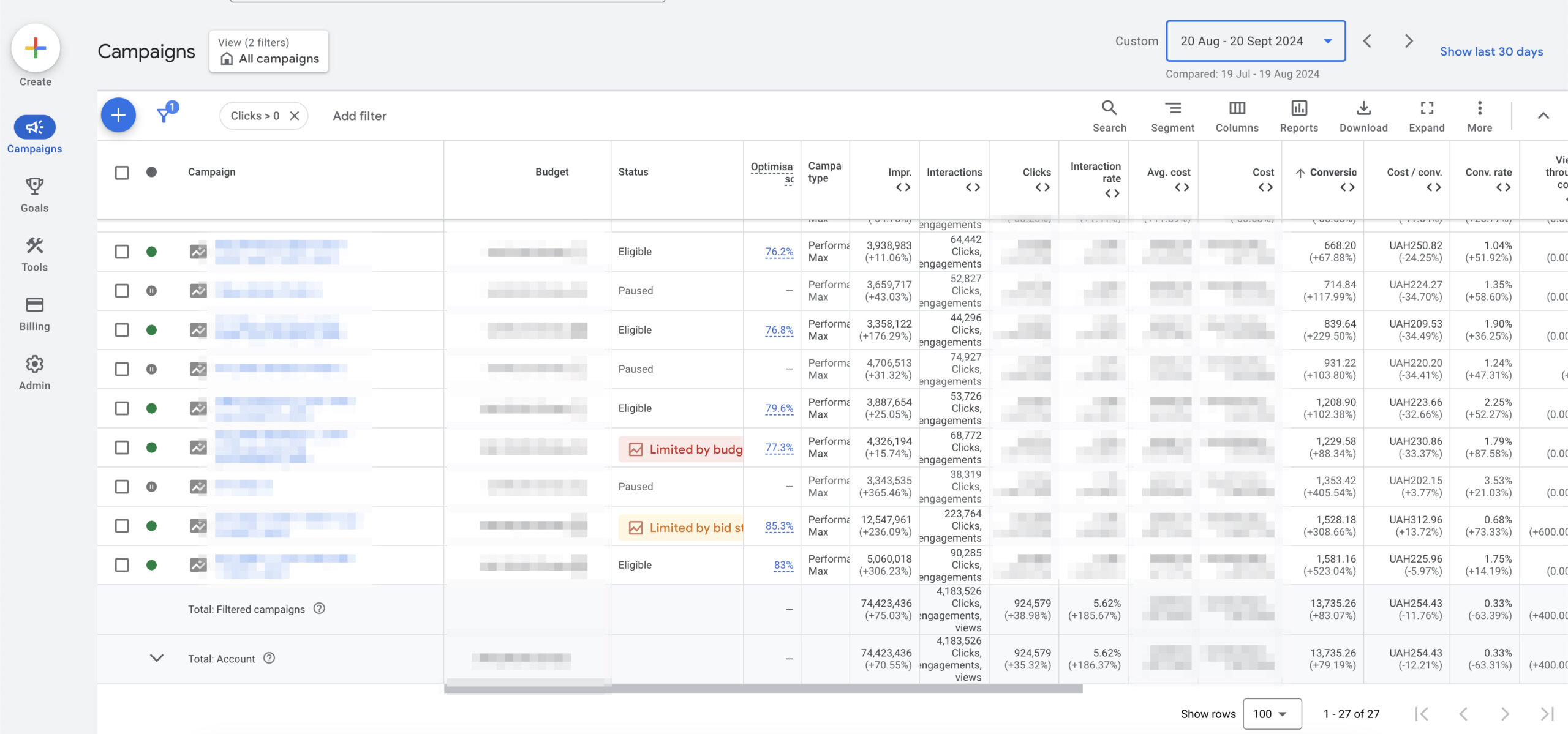
Fig. 3 – Comparison of previous and current months of collaboration
- +70.55% impressions
- –67.79% cost per click
- +79.19% conversions
- +57.32% ad spend
- –12.21% cost per conversion
- 661.99% ROAS.
Campaign performance in the context of conversion growth:
- +3,700% video campaign
- +537.23% search campaign
- from +229.5% to +523.04% across various PMax campaigns for different product groups.
Thanks to a well-crafted paid advertising strategy and carefully selected marketing tools, the client’s platform not only managed to compete with top market players but also carved out its niche and attracted new customers. This is confirmed by the results of the configured ad campaigns: through effective Performance Max segmentation, we achieved consistent growth in conversions. At the same time, the test video campaign launched on YouTube successfully fulfilled its objective, increasing brand awareness. Overall, we recorded a significant increase in ad impressions and a notable rise in the number of conversions, which serves as the main indicator of the effectiveness of the chosen paid promotion strategy.
By investing more in advertising and scaling our efforts, we increased ad visibility and grew the customer base. We also observed a decrease in cost per click. The overall performance of advertising campaigns improved: conversions, client revenue, and website traffic all went up, while the cost per conversion dropped by 12%.
However, to ensure further growth and achieve even better results, it is essential to resolve the issue with Google Merchant Center. Errors in the robots.txt file are causing continuous product disapprovals and limiting our advertising capabilities. We are currently actively working on fixing this issue to restore product visibility in ad campaigns.