Google Ads setup for a flower business in the United States




For the highly competitive US floral market, paid search advertising is one of the most effective promotion tools.
Our experience demonstrates that by focusing on unique selling propositions and leveraging the full potential of Google Ads, it is possible to achieve a substantial increase in conversions, maintain a steady flow of customers, and boost overall business profitability.
About the Client - Floriya Flowers
The company offers modern European-style floristry that combines high quality with affordable pricing. The shop’s assortment features a wide selection of flowers perfectly suited for any occasion.
Floriya Flowers aims to strengthen connections between people by conveying love and care through its bouquets. The mission is to create memorable, unique floral arrangements. The company emphasizes that its bouquets are available for any occasion at accessible prices.
Services and key highlights:
- Delivery:
- Same-day delivery.
- Early-morning and late-evening delivery options.
- Anonymous delivery with full confidentiality.
- Operating hours: Monday to Sunday, 9:00 am to 7:00 pm.
- Stores:
- Online store with a convenient catalog and fast checkout process.
- Offline store where customers can visit and explore products in person.
The client reached out to us based on a recommendation from a business partner who had already had a positive experience working with us. This demonstrates trust in our expertise and confirms that our services meet high-quality standards.
Niche specifics
The US market offers broader Google Ads functionality for Shopping campaigns, enabliing flexible work with product feeds.
Buyer mindset. Customers expect same-day delivery, transparent pricing, and discounts.
Competitors. The niche is highly competitive, with widespread use of coupons and promotional offers. Many competitors running Google Ads use template-based websites, offer lower-quality assortments, but maintain significantly lower prices.
Brand positioning and strategy specifics
- Unique selling proposition (USP). Instead of competing on the lowest price, the client’s brand is positioned as a provider of unique European-style floristry.
- Quality and service. The brand builds its reputation on high-quality flowers and premium service, including the option to create custom bouquets.
- Advertising focus. Due to this positioning, the advertising strategy emphasizes the unique selling proposition rather than price-driven messaging.
The main challenge in promoting the project lies in competing with mass-market players.
- Competitors. The market is dominated by large national players who actively use promotions and discounts.
- Difference in the client’s advertising strategy. Instead of competing in the low-price segment, our strategy focuses on promoting a premium service that highlights high product quality and a modern presentation of bouquets. This approach requires continuous optimization of advertising campaigns and consistent emphasis on the uniqueness and value of our offering rather than on pricing.
The client’s objective in this case was to attract online orders (cart purchases), phone calls, and in-store visits via map searches.
The promotion goal was to ensure steady growth in transactions and phone calls (secondary), reduce lead cost, and increase brand recognition in San Antonio and its surrounding areas.
Work process
Previous PPC experience
Before our collaboration, the client had no active Google Ads campaigns targeting the US market. The advertising account was created and configured from scratch by our team: we set up analytics systems (GA4, GTM) and implemented goal and event tracking.
Competitor analysis
The analysis of the floral market in San Antonio conducted at the project’s outset revealed clear segmentation.
Most competitors are intermediaries or companies with template-based websites offering ready-made products at significantly lower prices. Their offering is less flexible because they are not focused on custom orders. Only a few companies can be considered true competitors, as they provide more unique products and higher-quality service. The client supplied a list of these companies for a more targeted analysis and strategic planning.
The assessment of these competitors revealed several key differences:
- unlike competitors, the client’s website resembled the Ukrainian market more closely and required adaptation for the local audience;
- competitors actively used coupons, promotions, and promo codes, and offered more price and size variations for bouquets;
- the client’s average price was positioned closer to the luxury segment, while competitors covered a wider range (including budget-friendly options);
- a large share of search queries proved to be local (near me, nearby), which later became a key factor in shifting the focus toward local advertising and Google Maps.
Based on this, we gradually refined the promotion strategy:
- focused on a premium audience that values modern floristry, high service standards, and fast delivery;
- recommended optimizing the website for the US regional audience by adding price variations and integrating coupons and promo codes;
- added a stronger focus on local search queries and Google Maps advertising to attract in-store visitors;
- ensured flexibility in pricing;
- included discounts and promotions in the ad messaging.
- Website updates: recommended filling empty categories with content and removing outdated links (such as Christmas or Valentine’s Day bouquets).
Website updates: we recommended filling empty categories with content and removing outdated links (such as Christmas or Valentine’s Day bouquets).
General tasks completed during niche and competitor analysis:
- conducted a competitor and market analysis;
- compiled a semantic core for ad campaigns;
- prepared the campaign structure;
- simultaneously refined the client’s key USPs for further integration into ad creatives.
Next, we built a comprehensive promotion system that included search campaigns, Google Shopping, Performance Max, and local advertising.
Initial issues encountered
Merchant Center
We faced product disapprovals in Merchant Center due to a currency mismatch (euros vs. US dollars). As a result, all prices in the feed were updated from euros to dollars to match the website’s currency. After updating, we reuploaded the feed, which allowed us to pass Merchant Center moderation successfully and restore product ad visibility.
E-commerce issue
In March 2024, we discovered problems with the e-commerce setup (configured by the client’s team).
The issue:
- Incorrect transmission of e-commerce data to the advertising account was detected.
The Purchase event was not being sent correctly, making it impossible to track conversion value directly from the website.
The number of conversions and their revenue in the advertising account did not match the data in Google Analytics 4.
Workflow and solution
- Diagnostics. We checked the e-commerce setup and discovered that the online payment system was intercepting data, which caused the conversion value to be transmitted incorrectly.
- Source exclusion. To prevent inaccurate data transfer, we excluded the traffic source associated with the payment system.
- Issue resolution. Since the website only supports card payments, we could not manually configure e-commerce tracking via Google Tag Manager without performing a test purchase. To resolve this, we coordinated with the client’s team, and their developer configured the events to ensure the correct transmission of purchase data.
The issue with e-commerce data transmission was successfully resolved:
- The required tracking events were successfully implemented in Google Tag Manager.
Additionally, we configured the direct transfer of purchase value from the website to Google Ads. For comparison and verification, this setup was tested in parallel with data transmission through GA4.
We validated the Purchase event, and all data was transmitted correctly.
Input data for campaign setup
Geography: United States, San Antonio (Texas), and surrounding areas.
Ad schedule: 8:00 am to 8:00 pm.
Devices: mobile and desktop.
Budget: adjusted dynamically based on performance and seasonality, coordinated with the client.
Primary tracked goals (conversions):
- purchase completion on the website (Purchase);
- store visits (Store Visit);
- phone calls from ads and the website (Phone Call Lead).
Additionally, we track micro-conversions:
- add to cart;
- begin checkout;
- contact form submissions.
At the start, we tested all core Google Ads campaign types (Search, Performance Max, Shopping, Smart, Local). After evaluating their performance, we focused on the following formats: Performance Max, Search Campaigns, PMax Local, and Smart Campaigns.
The active campaigns underwent periodic adjustments as part of ongoing optimization:
Local Store – PMax campaign:
- budget adjustments;
editing and updating audience signals to improve performance;
adding specific neighborhoods to the target locations.
To set up the local Performance Max campaign, we connected the Google My Business profile, which helps attract nearby customers and track store visits.
Performance Max – Shopping campaign:
- switched back to the Maximize Conversions strategy with a focus on the Purchase goal to gather sufficient data;
- updated audience signals;
- improved ad quality;
- paused impressions for products irrelevant to the advertising strategy.
Search campaign:
- paused underperforming keywords that were not delivering the desired results.
Examples of created creatives:


To increase campaign efficiency, we conducted a series of optimization activities tailored to the business and the market specifics.
- Budget adjustments. The budget was adjusted based on seasonality and major US holidays (Valentine’s Day, Mother’s Day, Christmas, and others). This enabled us to respond to peak demand on time and attract as many customers as possible during periods of high interest.
- Testing local campaigns. We tested different radius options in local campaigns, which helped us determine the optimal audience reach around the physical store in San Antonio.
- Product feed configuration. We set up special rules and attributes in the product feed, such as “Get Today,” “free delivery,” and promotional offers. These attributes helped highlight the client’s products in Google Shopping compared to competitors.
- Ad schedule. We implemented a schedule aligned with the store’s working hours, accounting for the required delivery time. This ensured efficient budget use during the hours when the store could process orders.
Valentine’s Day 2025
Ahead of the holiday, we optimized the campaigns to increase sales for Valentine’s Day.
Performance Max (without feed)
- We created a new asset group, “Valentine’s Day,” featuring a relevant landing page and themed bouquet images.
- We increased the campaign budget.
Search_New_Delivery
- We increased the campaign budget.
- For the “Valentine’s Day flowers” ad group, we added more targeted keywords to expand audience reach.
Sales-PMax
- We added new products from the feed into rotation.
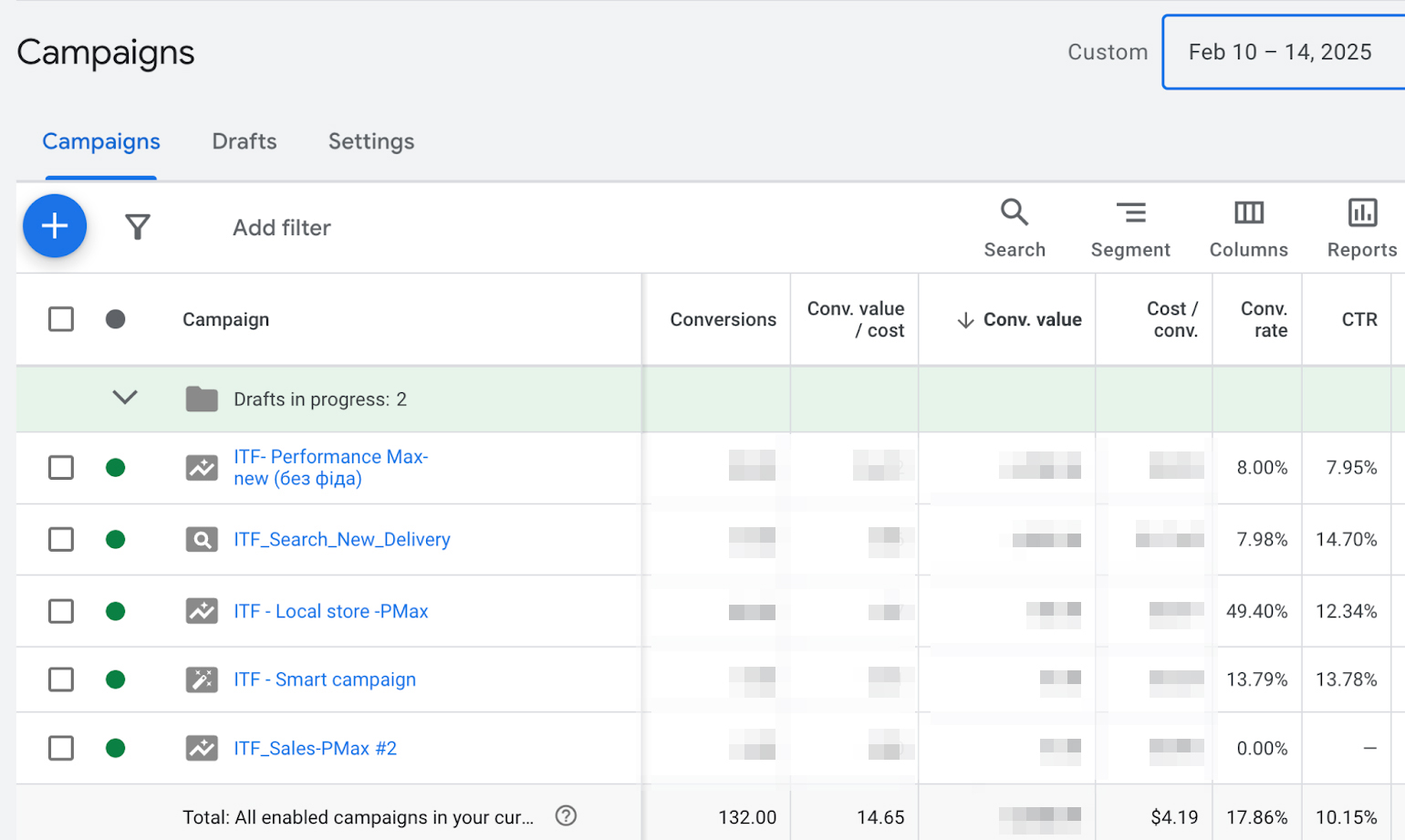
- 132 conversions;
- $4,19 cost per conversion;
- 14,65 ROAS;
- 10,15% CTR.
In the Local Store – PMax campaign, conversions are represented by phone calls and route requests. Achieving 83 conversions with relatively low value indicates that the channel effectively drives offline interactions but does not always lead to online sales.
Meanwhile, the Performance Max-new campaign (without a feed) became the top performer in both revenue and profitability, generating over 83% of the total conversion value.
When comparing the holiday period to the previous one:
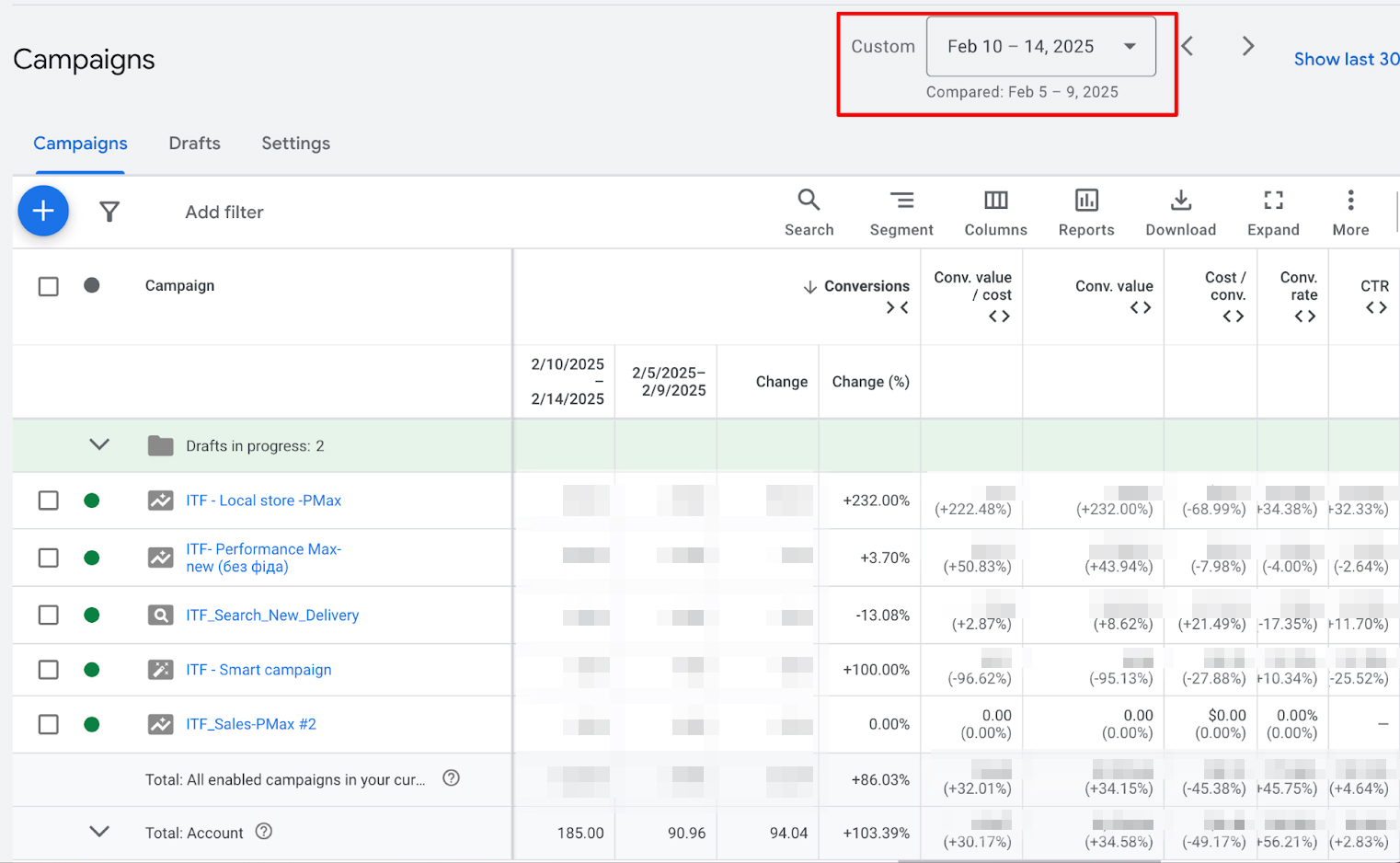
- +86.03% conversions;
- +34.15% conversion value;
- +30.17% ROAS;
- -49.17% cost per conversion;
- +45.75% conversion rate.
Overall campaign performance increased significantly during the holiday period, indicating strong preparation and a well-executed strategy. The configured campaigns successfully attracted the target audience during a high-demand season. The +45.75% increase in conversion rate shows that the ads and offers were highly relevant, making users far more likely to complete a purchase. The ROAS and conversion value metrics confirm that the campaigns not only became more effective but also generated more revenue for every dollar spent.
International Women’s Day
Ahead of the holiday, the client created a dedicated section on the website featuring bouquets curated specifically for the occasion. Our task was to create themed visuals for the campaign. In the ad copy, we highlighted the offer “Up to 20% off on pre-orders.” The promotion had a limited duration and launched on the 5th.
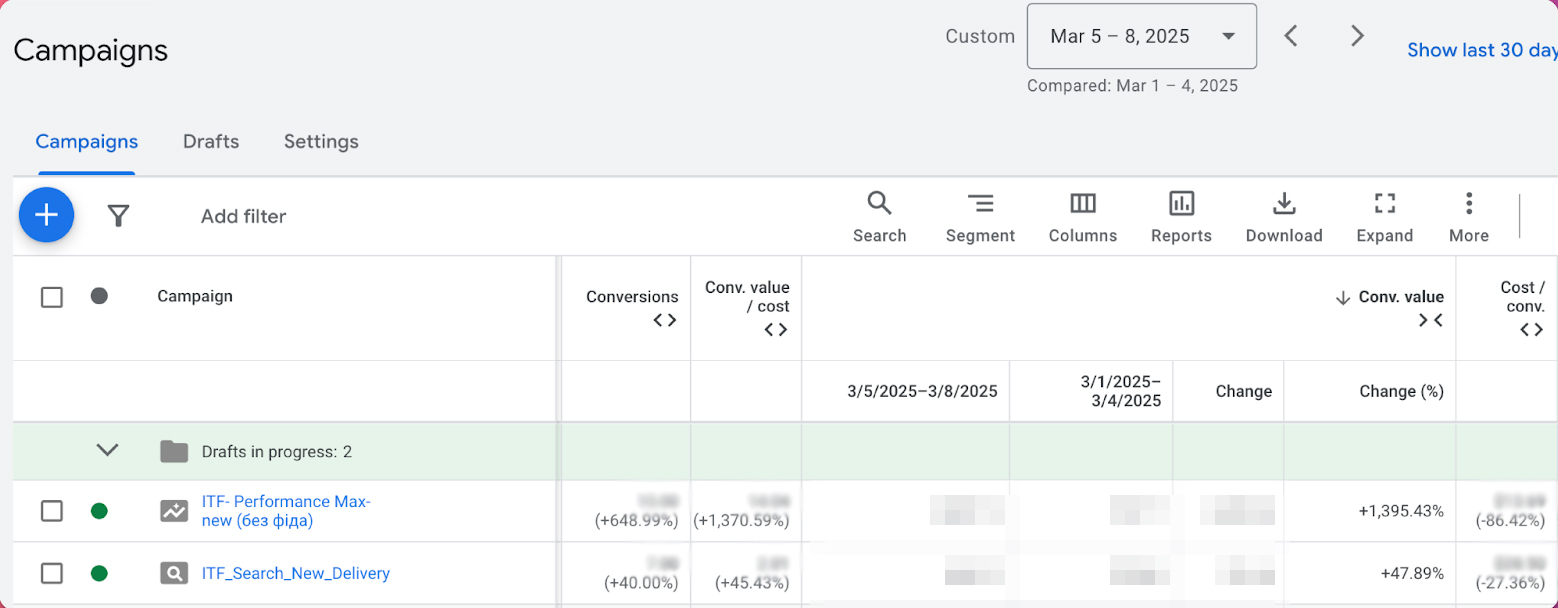
The most effective campaign was the PMax version without a feed:
- +648.99% conversions;
- +1370.59% ROAS;
- +1395.43% campaign revenue;
- -86.42% cost per conversion.
The Search_New_Delivery campaign also showed positive momentum, although with lower profitability.
Mothers Day
In April 2025, we conducted a series of preparatory activities for the Mother’s Day campaigns, which in the United States is celebrated on the second Sunday in May.
- Performance Max (PMax):
- ITF-Sales-PMax. We added a new asset group, “Mother's Day,” directing users to a dedicated landing page with themed bouquets and updated audience signals.
- ITF-Performance Max-new (without feed). We scheduled the launch of an additional asset group, “MDay,” and added another “Mother's Day” asset group featuring refreshed creatives.
- Search campaign (ITF_Search_New_Delivery):
- We added a new keyword group, “Mother's Day,” along with a corresponding ad and the client’s dedicated landing page.
- We improved ad quality within the “Mother's Day flowers” group.
- Ad extensions:
- We added a sitelink extension directing users to the “Mother's Day” category page.
- Promotional offers:
- Starting May 7, a 10% discount on Mother’s Day bouquets was applied on the dedicated landing page.
Results of the campaigns (promotion started on 05.05):
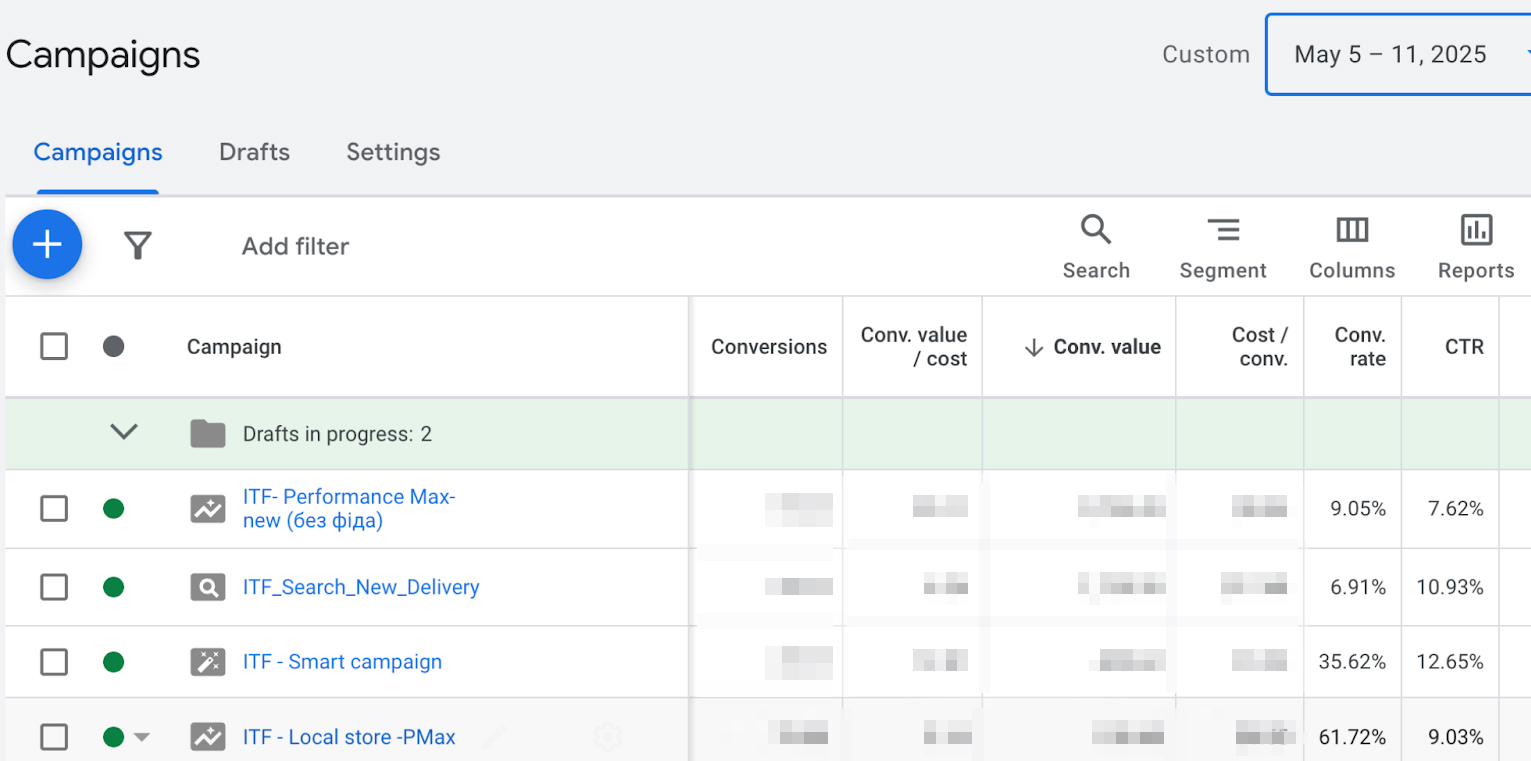
- 185.29 conversions;
- 10 average ROAS;
- 6.95 cost per conversion;
- 4.023 CTR.
The campaigns are effectively attracting the target audience and demonstrating strong profitability.
Comparison with the previous period:
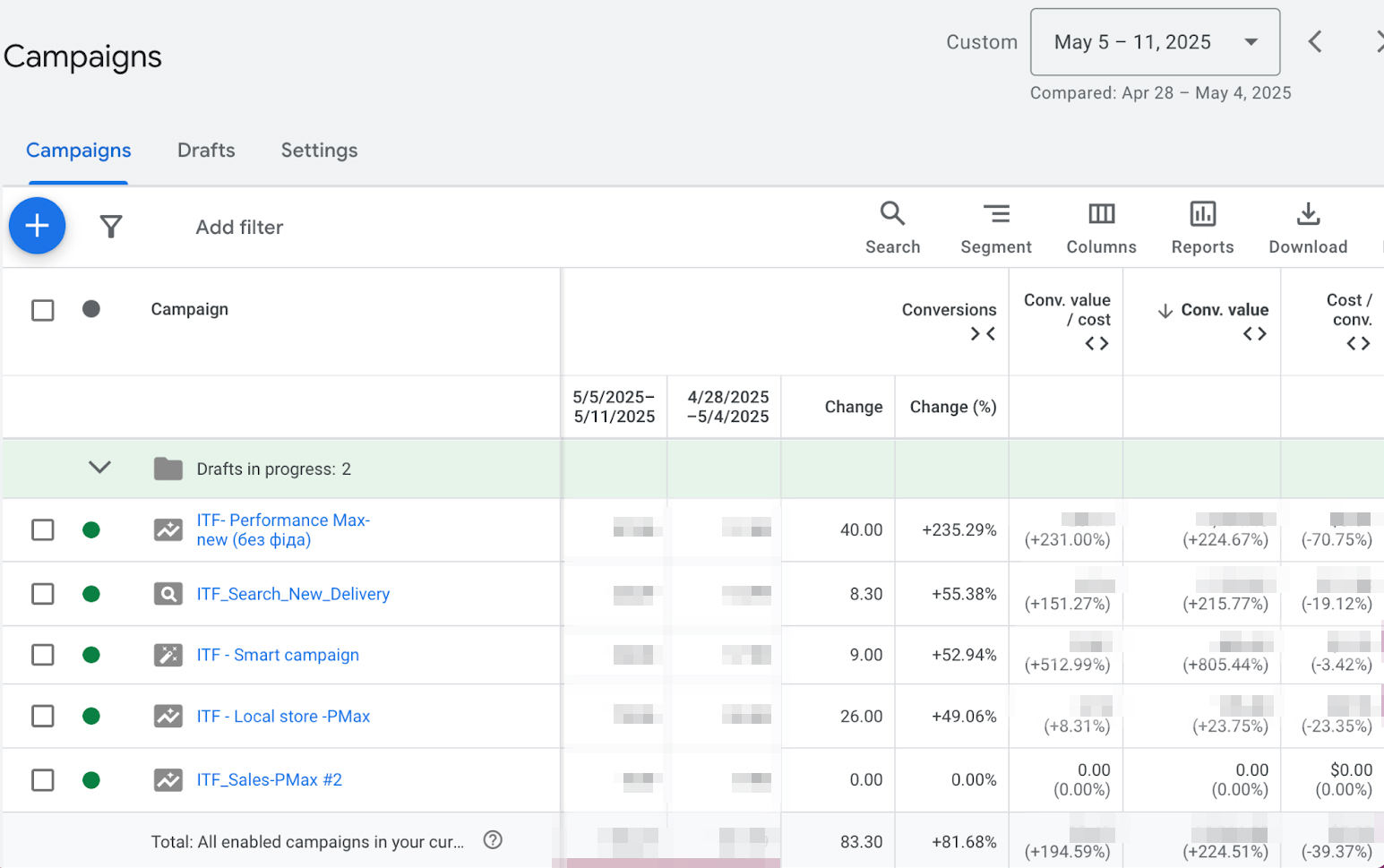
- +81.68% conversions;
- +194.59% ROAS;
- +224.51% conversion value;
- -39.37% cost per conversion.
The advertising campaigns demonstrated significant growth in performance. Conversions increased by 81.68%, while conversion value rose by 224.51%, indicating that a more valuable audience was reached. ROAS nearly tripled (+194.59%), reflecting a substantial improvement in return on ad spend. At the same time, the cost per conversion decreased by 39.37%, showing enhanced economic efficiency across the campaigns.
Going forward, we decided to focus on actual store visits: we paused the “Local actions – Directions” goal and shifted our attention to Store Visits.
- We launched A/B tests for ads with different creatives and USPs (such as “Get Today,” “Free Delivery,” “Anonymous Delivery”);
- We tested budget distribution across holidays and seasonal events (Mother’s Day, Valentine’s Day, Christmas) to maximize performance during peak periods;
- We tested different asset groups within Performance Max to identify which segments generated the highest number of orders;
- We experimented with product feed settings by adding special attributes (“Get Today,” “Free Delivery”) to enhance the client’s listings in Google Shopping.
Optimization of order volume
We continuously worked on optimizing the number of orders.
Search query analysis:
- Approximately 12–13% of queries were irrelevant, so we added them to the negative keyword list.
- We observed a high percentage of queries with geographic intent (“near me,” “nearby”), indicating strong interest in local search. Despite a high CTR, these queries generated relatively few conversions.
Completed optimization activities:
- Added call-only ads for testing.
- Redistributed the budget with a stronger focus on Performance Max, as it delivered better results than the Search campaign.
- Configured an additional product group for the PMax Shopping Campaign to run comparative testing between two variations.
- Added observation audiences to the Search campaign.
- Increased the overall campaign budget to ensure stable performance and broaden reach.
- Added account-level headlines and descriptions to improve ad quality.
In June, to enhance the tracking of incoming calls, we set up call tracking using the Google forwarding number. The “Clicks to Call” goal was removed from campaign tracking.
We also completed the following tasks:
Campaign pauses.
- We recommended pausing the Local Store – PMax campaign, as it had not generated any Store Visits in the previous 30 days.
- The ITF_Local store visits_PMax_15km campaign was also paused, and the primary focus was shifted to the main Local Store – PMax campaign.
Goal updates:
- For the ITF_Local store visits_PMax_15km campaign, we added the “Calls from ads” goal.
In August 2025, we configured the Local Product Inventory Feed and are currently awaiting Google’s approval. We also continued working on conversion tracking:
- Calls to a number on your website — we kept this goal active, as it tracks calls that occur after a user lands on the website.
- Contact Us — we have paused this on-site action goal because it duplicated other tracked events.
Thanks to the configured enhanced conversions and the use of a Smart campaign, Google automatically added key on-site goals, ensuring accurate tracking.
Tools used in the project
GA4 enables us to track user behavior on the website, analyze traffic from various sources, build sales funnels, and measure conversion value.
GTM simplifies the process of adding tracking codes and enables event-tracking setup, which is crucial for preecise Google Ads optimization.
Google Merchant Center helps maintain up-to-date product information, manage pricing and availability, and configure local feeds to promote offline stores.
GAds Keyword Planner and third-party semantic tools (such as Ahrefs) support in-depth keyword research, helping identify relevant queries, assess their popularity, competition, and potential bid levels.
Google Trends helps plan campaigns in advance, adjust budgets, and create relevant ads, particularly for seasonal periods and holidays.
Looker Studio enables analysis of campaign performance, tracking key metrics, and delivering clear, client-friendly performance reports.
Google Gemini helps automate routine tasks.
The client consistently supports our initiatives and recommendations, which enables us to implement new strategies effectively. Moreover, they actively contribute their own list of tasks for optimization, helping drive continuous improvement. As a result, this collaboration allows us not only to complete tasks but to jointly develop the project, respond quickly to market changes, and achieve stronger performance outcomes.
Results
In this case study, we will review the period from January 1, 2025, through August 2025.
Traffic acquisition channels
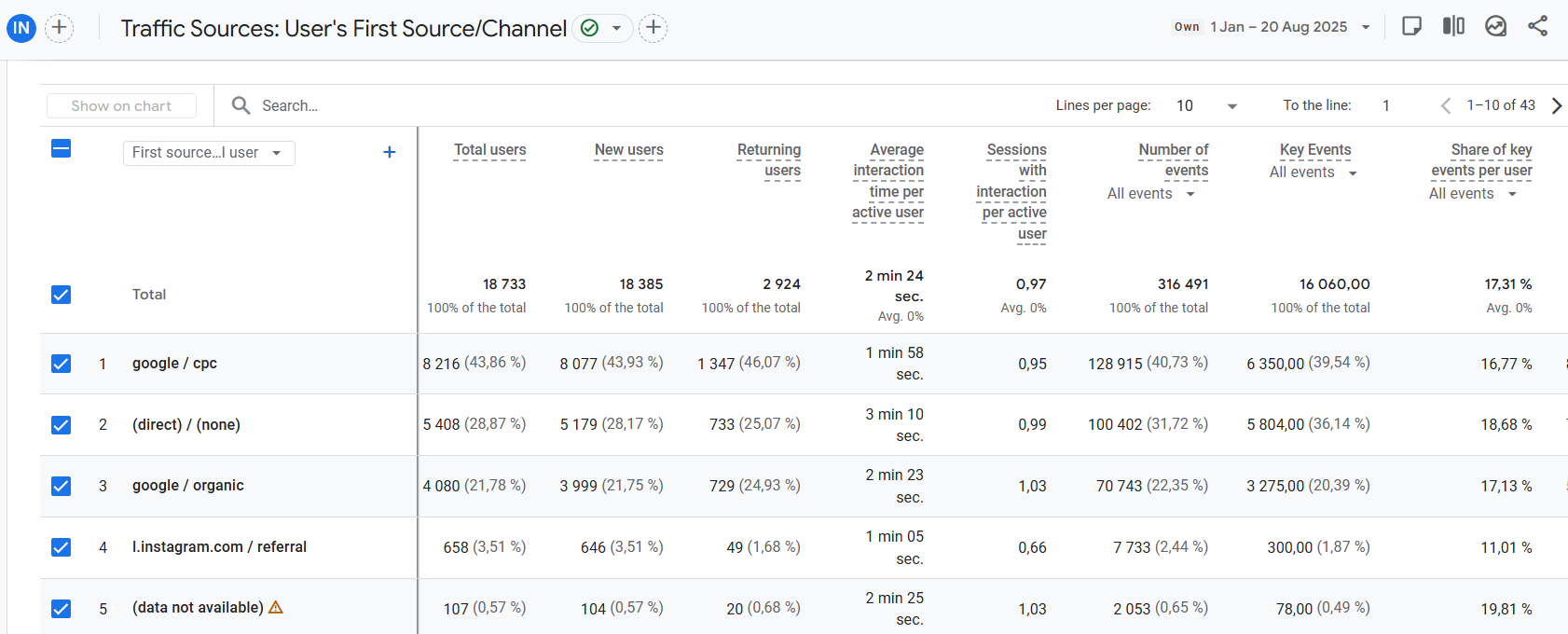
- 43.66% of users were acquired through the CPC channel, making it the primary traffic source and bringing in nearly half of all website visitors.
- 46.07% of returning users came back via the CPC channel, indicating strong audience re-engagement.
- 1.58 minutes is the average engagement time per user.
- 40.73% of all events were generated by paid advertising.
- 39.54% of key events (conversions) came from the CPC channel.
Paid advertising is the most effective channel in terms of both user acquisition and the number of conversions generated.
User journey to conversion
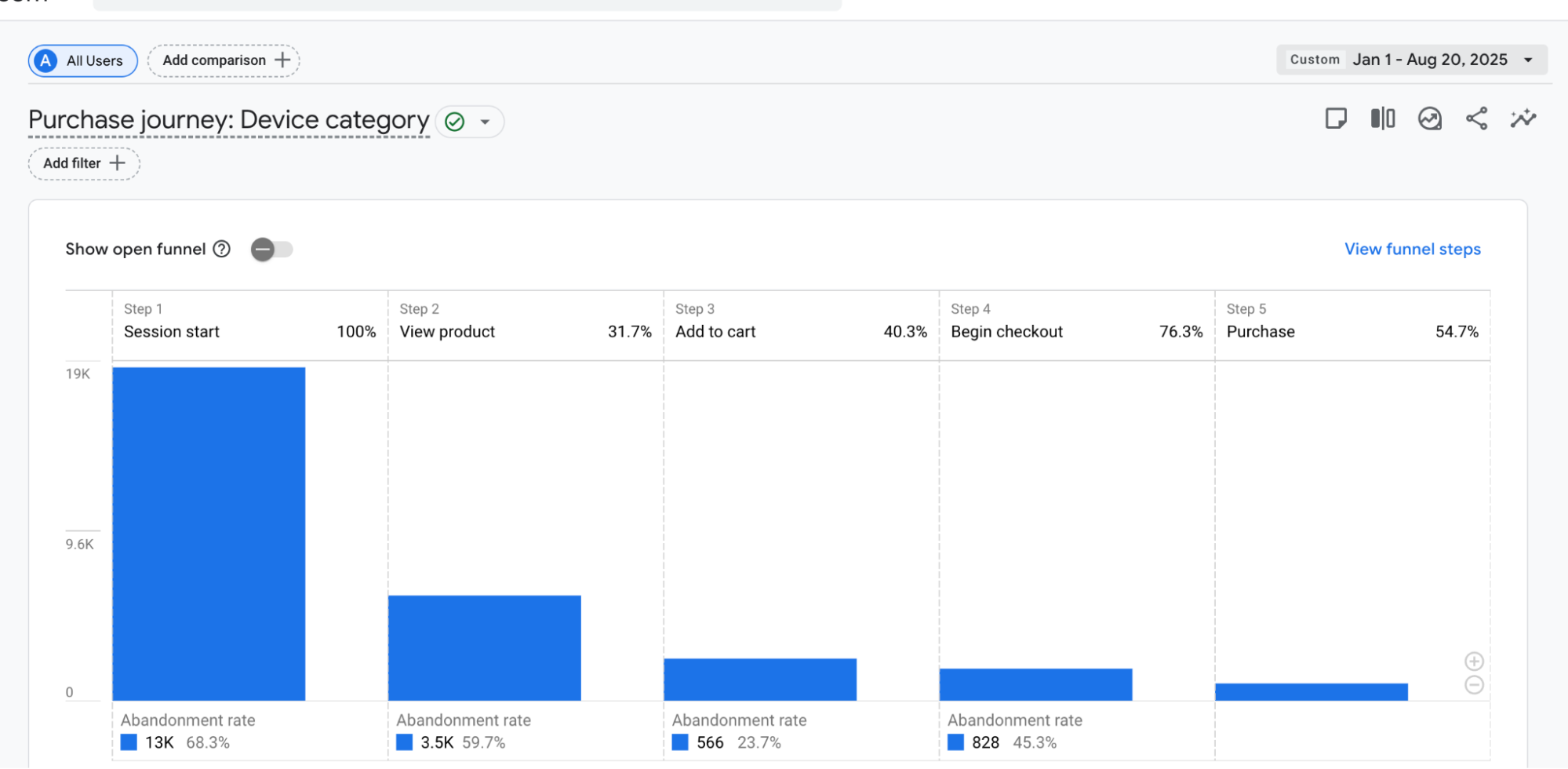
19,000 users began interacting with the website, representing 100% of all visitors. 31.7% of users (around 6,000) proceeded to view products. 40.3% of those who viewed products added an item to the cart (about 2.4K users). 76.3% of users who added an item to the cart initiated checkout - a powerful indicator of audience interest. 54.7% of those who began the checkout process completed their purchase.
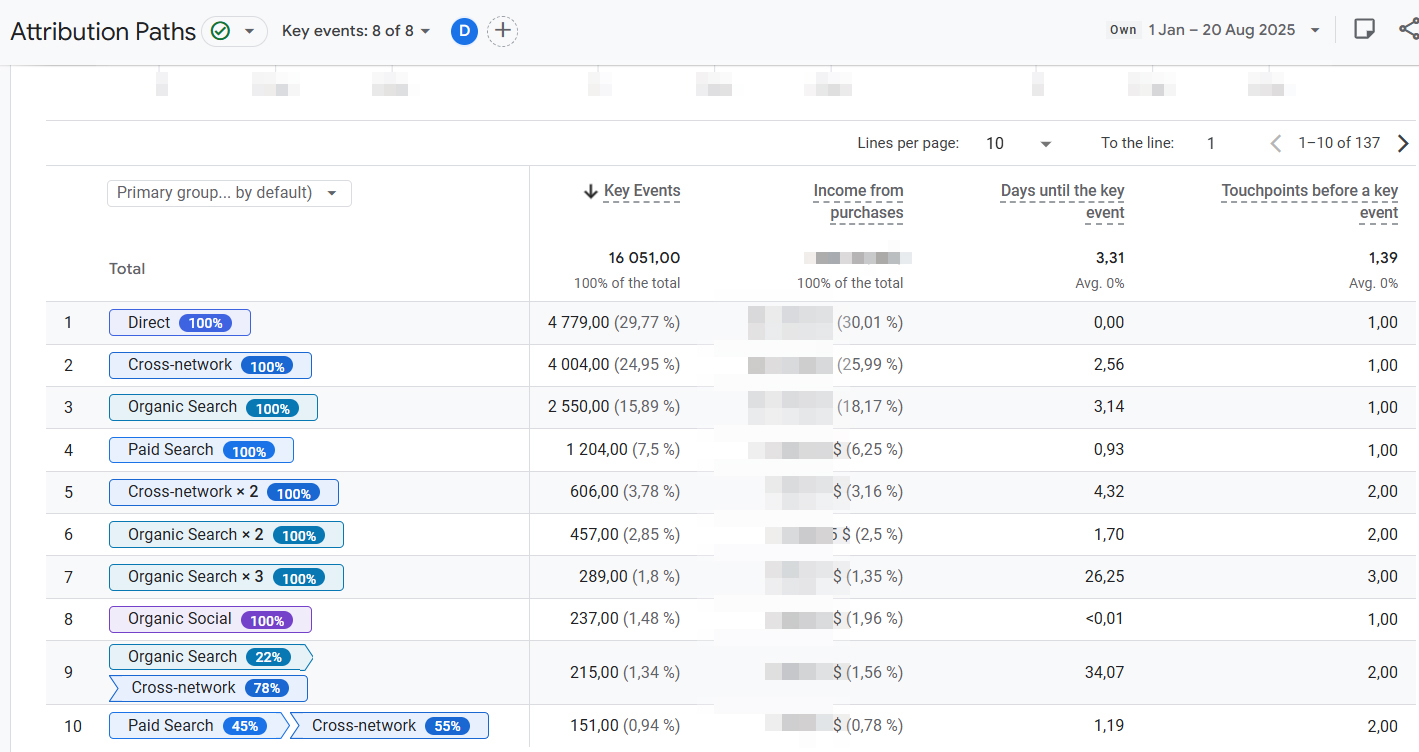
Cross-network campaigns:
- 24.95% of key events.
- 25.99% of revenue.
Campaigns that span multiple Google networks are highly effective, delivering substantial conversions and revenue.
Paid Search:
- 7.5% of key events.
- 6.25% of revenue.
Paid Search attracts highly targeted users, but its revenue contribution is slightly lower than that of Direct or Cross-network channels.
Together, the Paid Search and Cross-network channels account for 32.45% of all first visits — a higher share than Direct or Organic traffic. Cross-network is also one of the primary channels, including repeat visits, that initiates the conversion journey.
The combined Paid Search + Cross-network path shows that 45% of users who initially arrived via paid search later interacted with Cross-network campaigns before completing a purchase. This highlights the importance of a comprehensive strategy and the use of multiple channels to guide the customer along the conversion path.
Effectiveness of the configured advertising campaigns
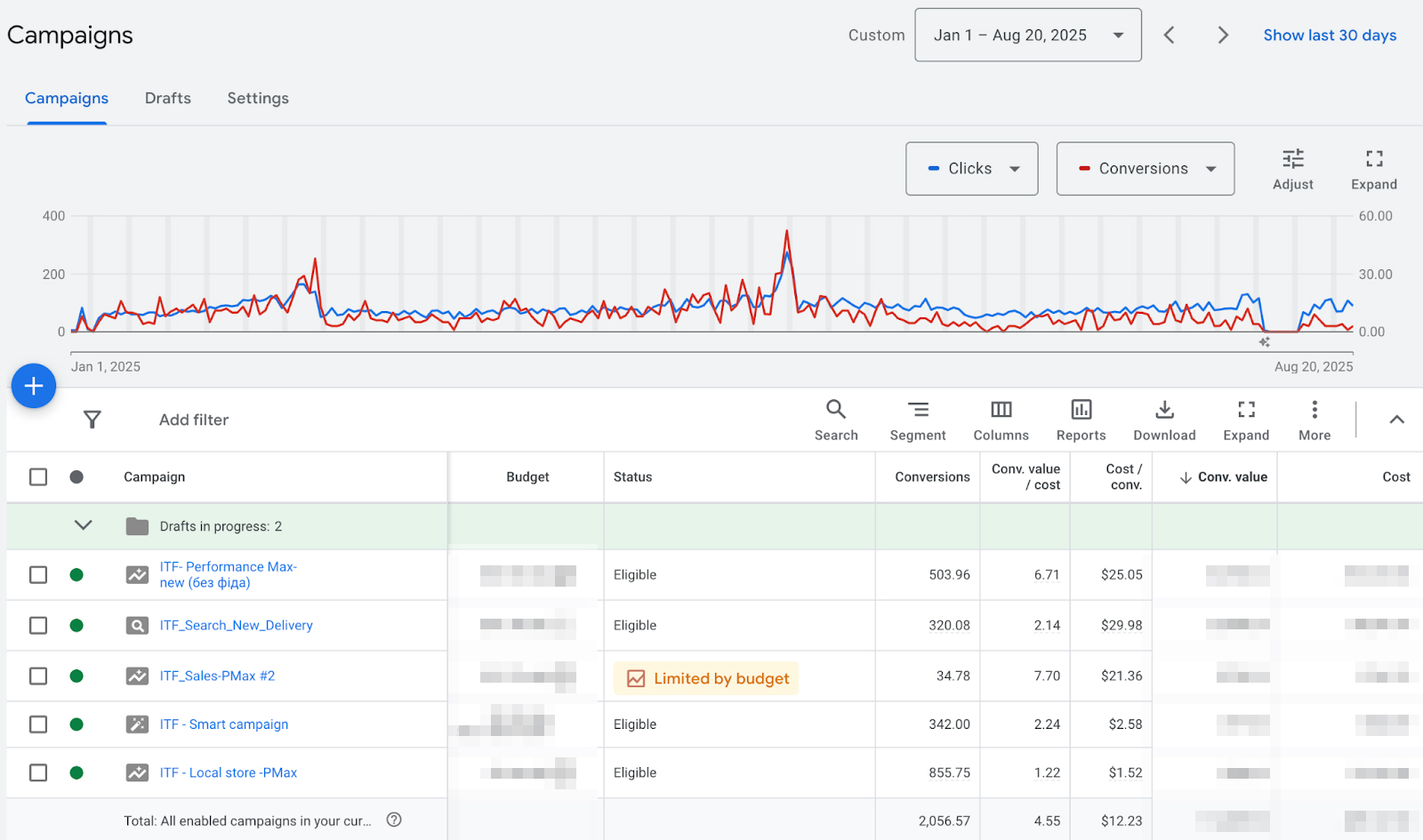
- 2,056.57 conversions
- $12.23 cost per conversion
- 4.55 conversion value/cost (ROAS - meaning every dollar spent generated $4.55 in revenue)
It is important to note that each campaign tracks a different set of conversions: for example, some track route requests, while others record actual purchases. These actions differ significantly in both meaning and value.
Additionally, certain campaigns such as Performance Max do not track phone calls. Therefore, let’s focus specifically on the conversion metrics recorded across the configured campaigns.
Local store - PMax. This campaign generated the highest number of conversions (855.75). In local campaigns, conversions represent phone number clicks and route requests. This means the campaign performs exceptionally well in driving offline interactions; however, since these conversions are not direct paid purchases, they should be viewed as indicators of local interest and foot-traffic potential rather than a primary revenue source.
Performance Max-new (without feed) is highly effective. It generated a substantial number of conversions (503.96) and maintains a strong ROAS. This campaign is a key driver of online revenue.
Smart campaign and Search_New_Delivery are stable conversion sources (342 and 320.08 respectively). These campaigns effectively support the overall strategy by ensuring a consistent flow of targeted actions. The Search campaign, in particular, serves as a foundation for capturing users with specific intent-driven queries.
Sales-PMax #2. This campaign has the highest ROAS at 7.70, yet the lowest number of conversions. This indicates that the quality of these conversions is exceptionally high (each transaction generates significant revenue), making the campaign highly profitable.
Comparison with the previous period
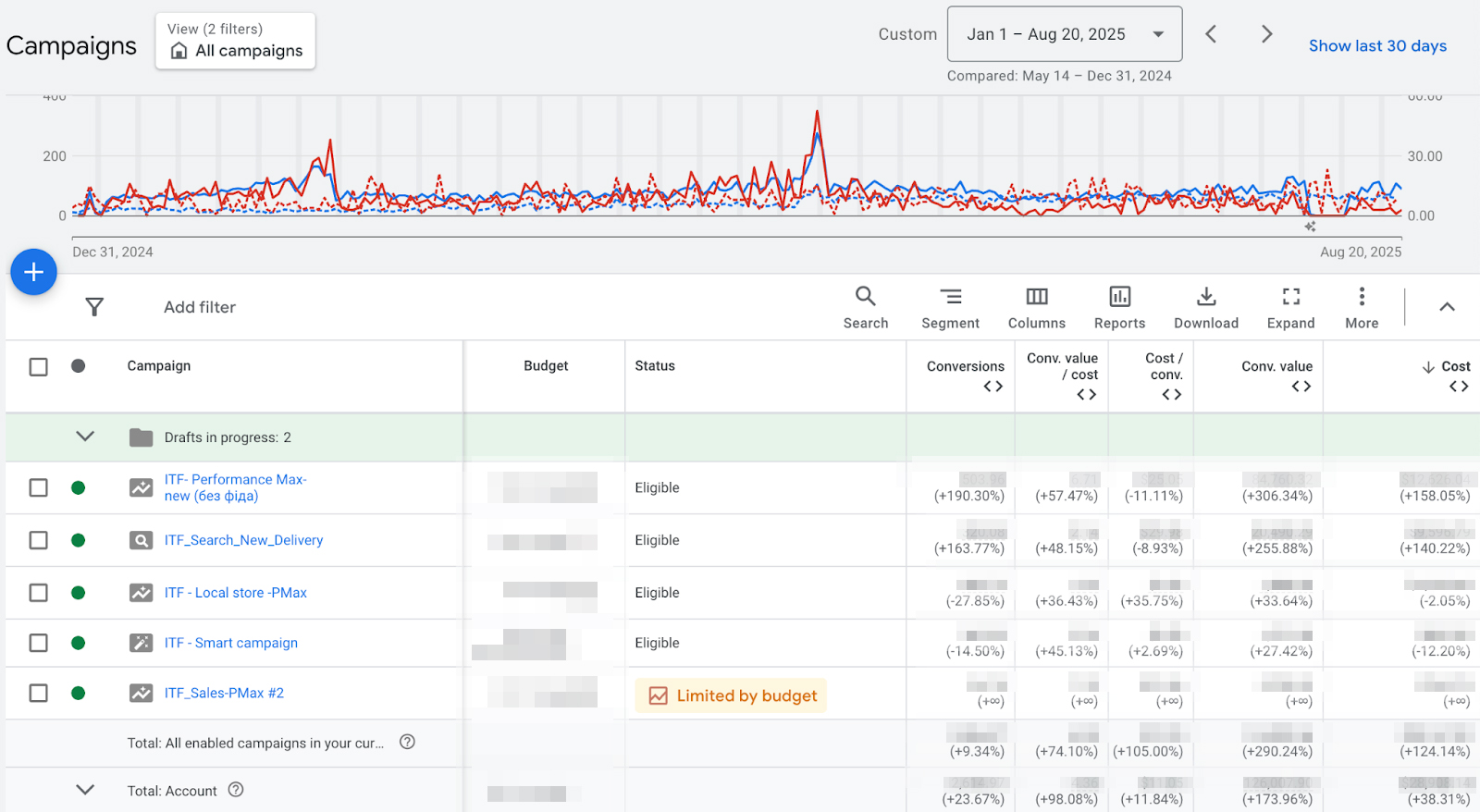
- +23.67% conversions
- +98.08% ROAS
- +11.84% cost per conversion
- +173.96% conversion value
- +38.31% ad spend
A 98.08% increase in ROAS shows that every dollar spent now brings in nearly twice as much revenue as in the previous period.
The 173.96% growth in conversion value (revenue) indicates successful campaign optimization, attracting more high-value customers.
Conversions increased by 23.67%, demonstrating improved ability to drive targeted actions.
Ad spend rose by 38.31%, and cost per conversion increased by 11.84%. This is an expected result, as we scaled the most successful campaigns that deliver significantly higher revenue. Despite higher costs, the efficiency remains justified due to the strong ROAS.
Revenue
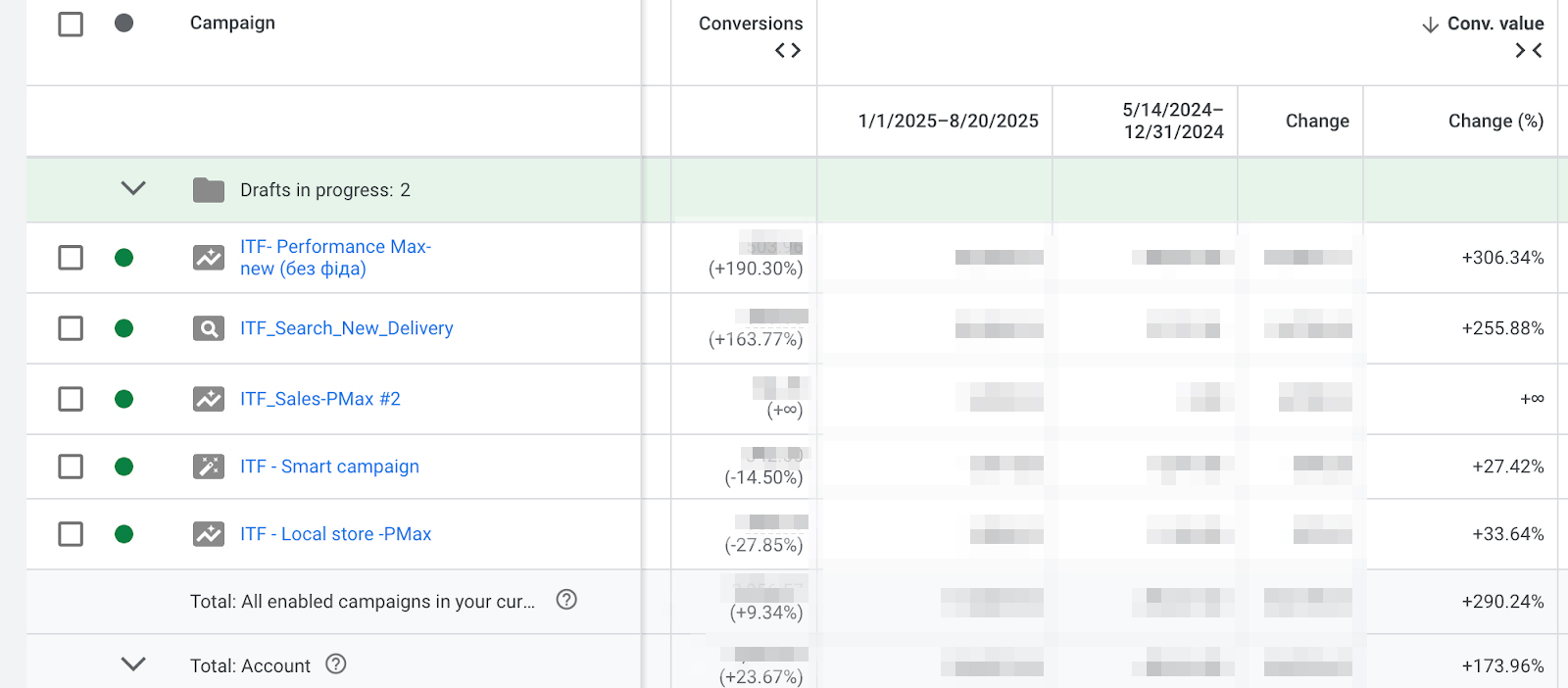
- +306.34% revenue growth in the Performance Max-new (without feed) campaign - this campaign is the clear leader in revenue increase. It also delivered +190.30% more conversions.
- +255.88% revenue growth in Search_New_Delivery, indicating strong keyword and ad performance.
- +173.96% total account revenue growth, demonstrating a significant improvement in financial results and a high return on advertising investment.
Most profitable campaigns
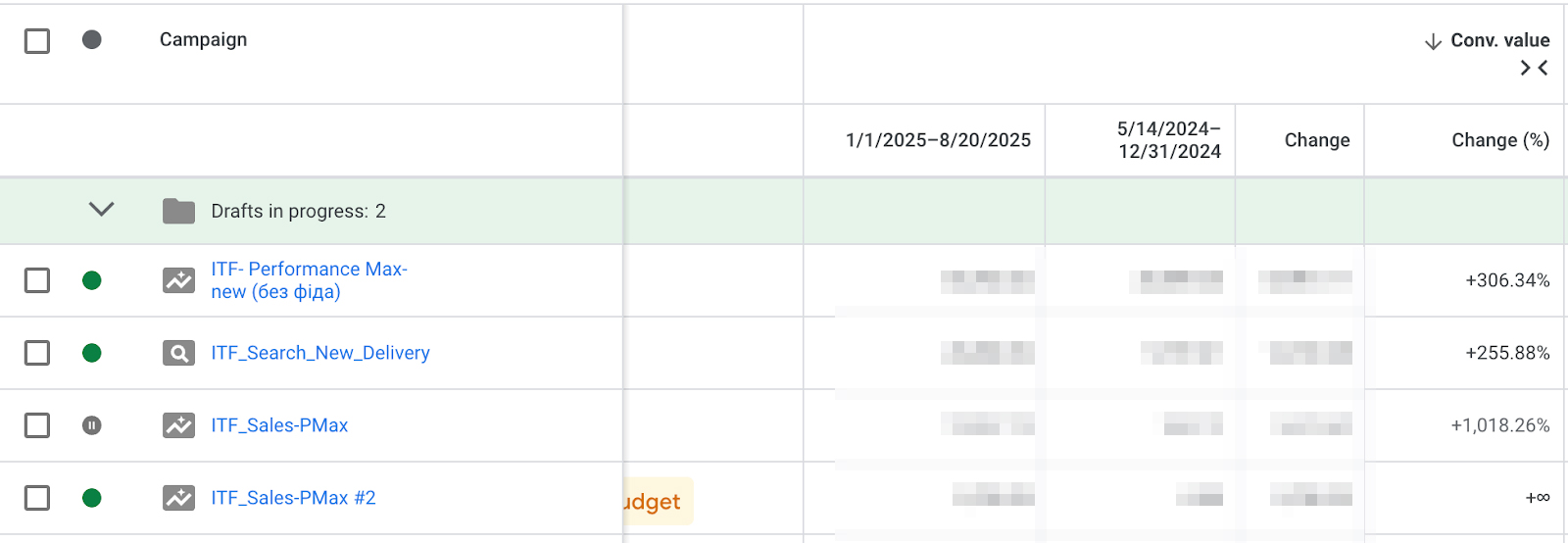
We have already reviewed the performance of Performance Max-new (without feed) and Search_New_Delivery.
+1018.36% revenue growth in Sales_PMax - this campaign is the undisputed leader in revenue increase.
The implemented changes and optimization efforts led to significant performance improvements. The campaigns not only attract more customers but also generate substantially higher revenue, demonstrating a successful and highly effective advertising strategy.
For example, looking at the effectiveness of the Purchase goal (excluding important goals such as Store Visit and Calls from ads) across campaigns:


With increased budget, we achieved substantial growth in transaction volume (+24.41%) and purchase value (+176.14%), alongside a notable improvement in ROAS (+99.51%). The cost per click decreased by 0.41%, while the cost per conversion increased by 11.25%, which is an expected outcome since the client received more purchases of higher value. In other words, the additional advertising spend was fully justified: customers not only purchased more frequently but also spent more per transaction. Overall, advertising became nearly twice as profitable.
Between January and August 2025, we achieved a significant improvement in the effectiveness of Google Ads campaigns.
- The number of conversions increased by +190% (2,615 conversions compared to the previous period), indicating a substantial increase in targeted actions on the website.
- Advertising revenue grew by +290%, proving that the campaigns attracted not only more users but also higher-value customers.
- The cost per conversion (CPA) decreased by -11%, making the advertising efforts more profitable.
- ROAS (return on ad spend) increased by +74% (across active campaigns), reaching 4.55, meaning every dollar spent generated $4.55 in revenue.
The most effective campaign was ITF-Performance Max-new (without feed), which brought in more than 60% of total revenue with the best cost-to-value ratio. It significantly boosted the client’s key business metrics.