



Contextual advertising is a key component of online promotion, especially in the highly competitive beauty and health products segment. It enables you to present your offerings to users who are actively searching for solutions to their needs, whether it is anti-aging skincare or immune support products.
Thanks to the high relevance of the ads, contextual advertising can become a primary source of high-quality conversions, as users are already interested in your product category. Well-configured campaigns can significantly increase an online store’s revenue by attracting motivated buyers. As a result, investing in contextual advertising for beauty and health products is a strategically important step for business growth.
About the Client
The company specializes in distributing a wide range of German-made products based on aloe vera across the health and nutrition, skincare and haircare, anti-aging, aesthetic device skincare, premium cosmetics, and exclusive perfumery segments.
The full catalogue includes more than 500 product items available in 29 European countries. Customers in Ukraine can also benefit from free delivery on orders starting from 1800 UAH.
The primary objective of the advertising activities is to drive sales of the products featured on the client’s website. The key task is to effectively promote these items to the target audience to increase overall sales volumes.
Work process
Our cooperation began in March 2024 and has continued uninterrupted to this day. ITForce is the first team to manage PPC promotion for this project. As part of our work, we initially created all the necessary accounts from scratch: Google Ads, Google Analytics, Google Tag Manager, and Merchant Center. In addition, we conducted a detailed website audit and provided the client with recommendations for optimizing Merchant Center.
In parallel, we launched the first advertising campaigns, specifically: a dynamic search campaign (DSA) with a product feed, a Google Shopping campaign, and a Performance Max campaign. The advertising setup covered all product categories. For geographic targeting, we selected the entire territory of Ukraine, monitoring performance and making subsequent adjustments. The campaigns were configured for round-the-clock ad delivery and to reach users on both mobile devices and desktops.
To track key user actions on the site, we set up a Google Analytics 4 property and the transmission of key events, including:
- click on the phone number;
- click on the email address;
- adding a product to the cart;
- redirect to the Viber messenger;
- redirect to the Telegram messenger;
- redirect to Instagram;
- submission of the completed form on the “Contacts” page;
- visit to the cart view page;
- visit to the checkout page;
- visit to the “thank you for your order” page for orders paid upon delivery.
The client informed us that new promotional products would be added on the 1st and approximately the 15th of each month. Therefore, we created a separate product feed for promotional offers. Later, at the client’s request, we set up a test branded Search campaign as well as dedicated Shopping and Performance Max campaigns for top products.


Fig. 1 – Examples of configured ads
General work plan for the first month of cooperation:
- Thorough processing of recommendations provided by the advertising systems.
- Analysis of user search queries to identify irrelevant terms and expand the list of negative keywords.
- Continuous monitoring and evaluation of bid strategy performance with subsequent adjustments when necessary.
- Flexible budget management for advertising campaigns, including reallocating budgets to achieve optimal results.
- Timely addition of new product feeds and configuration of transformation rules in line with assortment updates or promotional offers.
- Launch of a dynamic search campaign (DSA) immediately after successful moderation of the website page feed.
- Launch of a Performance Max campaign once sufficient data on user conversion actions has been accumulated.
- Systematic identification and pausing of underperforming advertising campaigns or ad groups.
- Diagnostics of potential issues or violations that may occur on the website or in advertising accounts (particularly in Merchant Center), followed by recommendations for their resolution.
In April, the configured campaigns were in the learning phase. Throughout the month, three main campaigns were actively running: the Google Shopping campaign, the dynamic search campaign (DSA), and a separate Shopping campaign focused on the highest-demand products (“Shopping TOP”).
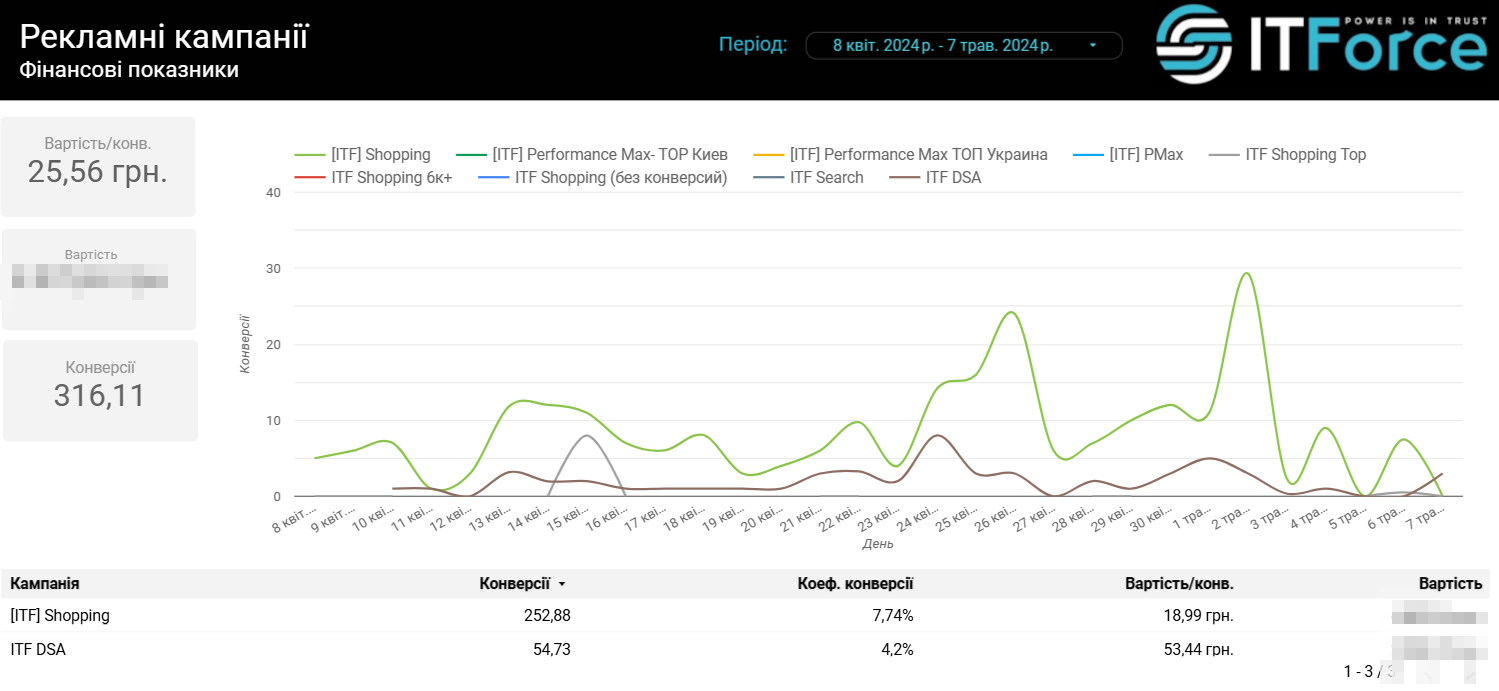
Fig. 2 – Financial performance indicators for the first month of cooperation
- 316,11 conversions;
- 25,56 UAH cost per conversion.
The Shopping campaign shows a significantly higher number of conversions (252.88) compared to the other campaigns. At the same time, its cost per conversion is the lowest at 18.99 UAH, making it the most efficient in terms of the cost of acquiring a single conversion. The conversion rate in Google Shopping is also the highest, meaning that the Shopping campaign converts clicks into target actions more effectively.
What can be said about the traffic sources during the first month of work?
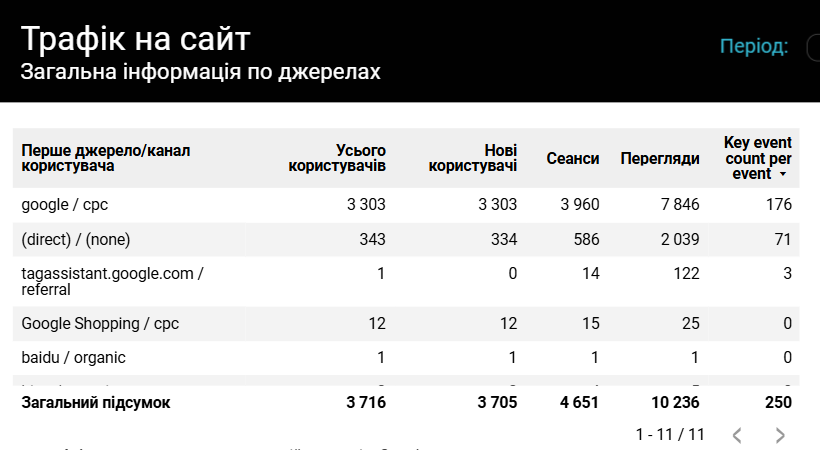
Fig. 3 – Information on traffic sources for the first month of cooperation
The total number of users is 3,716, of which 3,705 are new. The total number of sessions is 4,651, and the number of page views is 10,236. The number of key events per event is 250. CPC is the main channel for acquiring visitors and conversions, indicating the high effectiveness of paid Google advertising. In other words, contextual advertising started effectively.
In June, we configured a branded campaign. The key conversion actions used to track campaign performance were:
- successful purchase completion (purchase);
- click on the phone number (phone_click);
- redirect to Telegram (tg_click);
- redirect to Viber (viber_click).
We continued optimizing the existing campaigns and created new ones when necessary.
General work carried out throughout the cooperation:
Account and campaign optimization:
- Processing system recommendations to improve the account quality score.
- Adjusting campaign budgets.
- Adjusting campaign bid strategies.
- Analyzing and refining search queries, including collecting brand-related semantics and adding target queries to the keyword list.
- Expanding the list of negative keywords based on non-target queries.
Optimization of product ads and feeds:
- Adjusting and verifying the data feed in Merchant Center.
- Periodically exporting disapproved products from Merchant Center and manually resubmitting them for remoderation.
- Checking and removing non-functioning URLs in the feed.
- Excluding non-target feed URLs in DSA.
- Adding new product items to the ad rotation.
- Disabling underperforming products.
- Pausing outdated promotions and adjusting current ones.
Setup and launch of new campaigns/segments:
- Launch of Performance Max with a separate feed.
- Configuration and launch of branded Search.
- Configuration and launch of Performance Max for top products.
- Segmentation of Performance Max Top by GEO.
- Setup of a separate test Shopping campaign for products without conversions.
Targeting optimization:
- Adding the primary purchase conversion to the account and setting the purchase goal in ads for tracking as the main conversion. The begin_checkout and thankyou_page goals were excluded from the account.
- Excluding underperforming devices (tablets, desktops) from ad delivery.
- Adding an audience for observation and ads with audiences.
- Adding ads without audiences, without search themes, and without assets.
- Adding additional search themes.
- Enabling search partners.
Ad optimization:
- Improving ad quality, including responsive ads.
- Adjusting ad assets.
- Replacing and updating creatives.
- Disabling automatic video asset creation.
Other:
- Submitting appeals for a disapproved logo.
- Periodically adding new extensions and adjusting existing ones.
- Disabling underperforming campaigns.
Additionally, difficulties sometimes arise with displaying certain products in Merchant Center due to Google’s requirements, which require our attention and joint adjustments with the client to product descriptions in order to restore visibility.
Niche specifics
The client’s niche consists of health and beauty products, a category in which purchasing decisions rely heavily on customer trust. Before buying, users often carefully analyze product composition, reviews, and recommendations, which influences the decision-making cycle. It is important to highlight expertise, quality, and reliability through creatives, as this helps build trust among potential customers.
Therefore, to attract customers, we used various types of campaigns:
- DSA with feed - dynamic search ads generated based on the product feed, allowing relevant ads to be displayed without the need to add individual keywords.
- Shopping - campaigns that showcase products in Google Shopping and in ad placements on Google search results pages, helping attract interested users and contributing to higher conversion rates.
- Performance Max - a comprehensive approach that combines search, display, and video advertising, helping identify the most targeted audience based on provided audience signals.
- Branded search campaign - launched at the client’s request to attract users who are already familiar with the brand and search for it directly.
- Dedicated Shopping and Performance Max campaigns for top products - aimed at increasing sales of the most popular items.
Using a variety of campaigns allowed us to reach both new users interested in health and beauty products and a loyal audience already familiar with the brand. The combination of DSA and Shopping ensured broad product visibility in search results, while Performance Max expanded reach across multiple advertising channels. Separate campaigns for the brand and top products were aimed at increasing conversions among targeted segments.
Results
The client trusts our expertise and responds promptly to recommendations and proposals for campaign optimization. This contributes to effective collaboration and enables the rapid achievement of established goals and KPIs. Therefore, let’s review the results of our advertising setup.
Traffic acquisition sources for the client's website
Traffic by source since March 2024:


Fig. 4 – Traffic channels to the client's website
All three contextual advertising channels (Paid Shopping, Cross-network, Paid Search) are the largest source of website traffic, accounting for 83.28% of all visitors.
As for the number of key events from the CPC channel:
- 39,94% Cross-network;
- 22,94% Direct;
- 21,66% Paid Shopping;
The distribution of engaged sessions across channels is similar to the distribution of total sessions, indicating relatively stable traffic quality from different sources: Cross-network generates the highest revenue (40.37%), followed by Direct (25.04%) and Paid Shopping (20.25%). The low engagement time and key event rate for Paid Shopping, despite its high spend and revenue levels, may suggest that users quickly find the products they need and make purchases, but interact less with other site content. Organic Social and Unassigned generate the lowest revenue for the client. Overall, Paid Shopping and Cross-network are the key channels in terms of traffic volume and revenue.
Path to purchase
The user journey from the moment of visiting the site to the final conversion, segmented by device category:

Fig. 5 – User path to purchase
The total number of users who started a session is close to 34,000:
- 84,4% of them proceeded to view a product;
- 9,1% of those who viewed products added an item to the cart;
- 68,5% of those who added a product to the cart began the checkout process;
- 73,2% (approximately 1,551 users) of those who started checkout completed a purchase.
The total number of users who progressed from opening the site to completing the final conversion is approximately 4.6%. This means that roughly every 22nd site visitor performed a conversion action.
The largest user drop-offs occur between viewing a product and adding it to the cart, as well as between starting a session and viewing a product. Although the drop-off rates at earlier stages are significant, the percentage of successful purchases among those who begin the checkout process is quite high (73.2%).
The high percentage of successful purchases among users who start checkout indicates that those who reach this stage have a strong intent to buy, yet certain barriers still prevent them from completing the purchase. Overcoming these barriers requires improvements to the website (both technical and content-related) and addressing audience pain points (for example, the product page may not fully answer visitors’ questions).
Google Ads conversions
To assess the effectiveness of contextual advertising, we compare the periods September/August 2024:
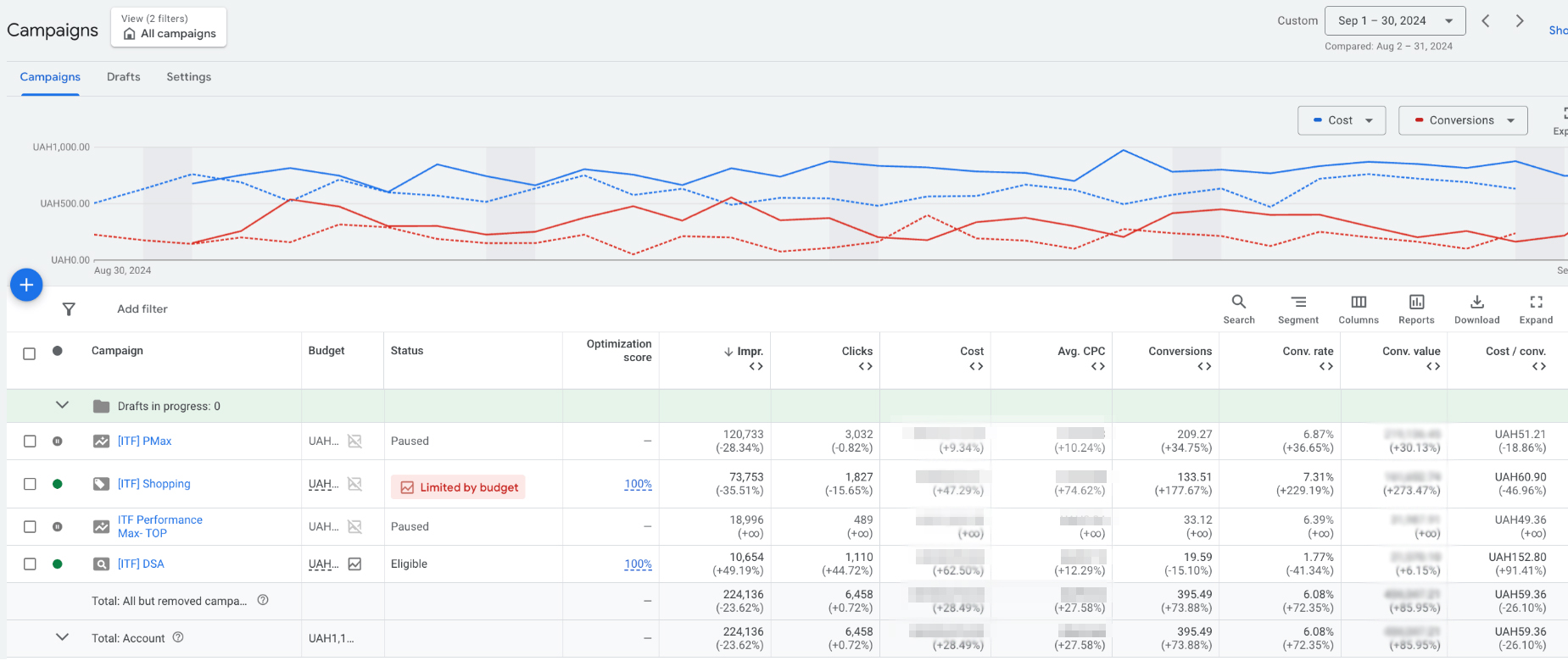
Fig. 6 - Google Ads data on advertising performance
- +73,88% total conversions;
- +85,95% conversion value;
- -26,1% cost per conversion.
We observe a 28.49% increase in advertising spend, driven by the growth in the number of conversions (+73.88%) and conversion value (+85.95%). The cost per conversion decreased by 26.1%, which is a positive indicator and suggests improved advertising profitability. The rise in conversion value means the campaigns are performing better and delivering more results for the same or even lower cost per conversion.
The Performance Max campaign shows strong momentum: more conversions with moderate spend growth.
Shopping demonstrated an increase in spend and conversion value, as well as higher conversion volume, while the cost per conversion decreased by almost 47%. Impressions decreased while conversions increased. This indicates that the ads are highly aligned with user intent.
Performance Max-TOP was launched recently and shows strong results: 33.12 conversions with a CPA of 49.36 UAH. This means the new experiment is successful and the campaign can be scaled.
DSA also showed an increase in spend and clicks; however, the number of conversions decreased slightly, and the cost per conversion increased.
Account ROAS data:

Fig. 7 - Account ROAS
- 1850,14% return on advertising investment (an increase of 571,70% compared to the previous period);
- 59,36 UAH average cost per conversion.
We observe a significant increase in the number of conversions and in advertising profitability (ROAS) compared to the previous period. This indicates improved campaign performance: every 1 UAH invested in advertising generated 18.5 UAH in profit for the client. The rise in the conversion rate to 6.08% (meaning 6 out of 100 clicks lead to a result) shows that traffic has become more qualified — users not only click on ads but also complete key actions. At the same time, the cost per conversion decreased by approximately 21 UAH. Overall, advertising has become not only more effective but also more cost-efficient - less is spent per customer while profit increases. There is also strong potential for campaign scaling.
Overall advertising effectiveness:
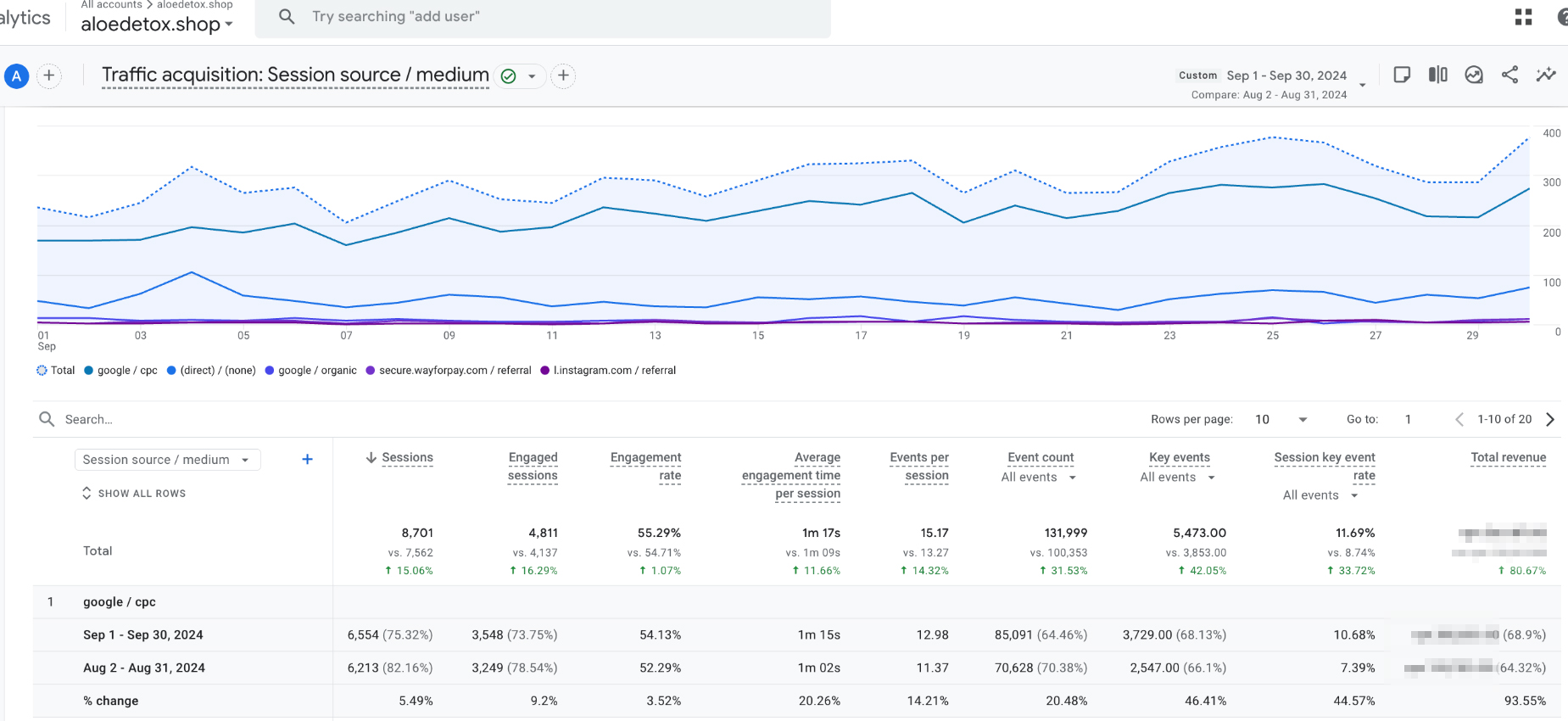
Fig. 8 - Google Analytics on advertising effectiveness
- +9.2% engaged sessions;
- +3.52% engagement rate;
- +20.26% session duration;
- +14.21% events per session;
- +46.41% key actions;
- +93.55% revenue.
We observe positive dynamics across all key website performance metrics. The increase in average engagement time per session (+20.26%) and events per session (+14.21%) indicates that users coming from paid advertising have become more interested and more active on the site. The CPC channel is genuinely effective, with contextual advertising generating substantial revenue growth (+93.55%) and a higher number of key actions. A slight increase in total sessions (+5.49%) alongside a significant rise in revenue (+93.65%) from the Google/cpc channel may indicate improved traffic quality and greater conversion potential. The primary goal has been achieved - promoting the client’s website products.
We regularly adjust bid strategies and are currently focusing on the tROAS. This type of strategy requires additional time to adapt after changes, as the system gradually learns under new conditions and results improve with a certain delay. This is expected when working with algorithmic bidding strategies. Our contextual advertising efforts continue - if you also aim to achieve similar results, now is the right time to order contextual advertising.