




Google Ads advertising attracts buyers who are already interested in a product or service to the website. Internet advertising is also effective for notifying the audience about a new brand and creating demand. This type of attraction, among the other things, we used in this case of setting up contextual advertising for a Сhildren's goods store.
1. Client - online store of goods for children
The customer, a store of branded goods for children, approached us with the task of setting up contextual advertising in October 2016. The Client had not used this promotion channel before and wanted to test it to solve his problems.
The store offers 1000+ products for newborns from birth. Online store website assortment:
- baby strollers;
- high chairs;
- cribs and bed linen;
- tables and chairs;
- swing chairs and sun loungers;
- clothes;
- walkers;
- car seats;
- children's transport (bicycles of various configurations, scooters, pushcars, etc.);
- toys and constructors.
Competition in the niche of children's products is very high on the market. The main advantage of a children’s goods store over its competitors is price. Our customer also offers clients the following convenient features:
- high-quality certified products from well-established official representatives of famous brands;
- product reservation is valid for 24 hours;
- delivery time for goods is 1-2 days;
- availability of cash on delivery after receiving the order;
- sending orders by Nova Poshta or courier.
Let's move on to setting up advertising.
Setting up Google Ads for a Children's goods store
The Client's website was developed using CMS Drupal. At the beginning of our cooperation, we created and configured Google Analytics and Google Ads accounts. The next step is setting up advertising goals.

Fig. 1 – Advertising goals in a Client’s account with Google Analytics
Next we moved on to setting up advertising campaigns:
- on the search network;
- on the Display Network;
- Remarketing to reach and attract those users who have already visited the website with the goal of returning them to complete the purchase.
The PPC specialist set up advertising campaigns for certain priority categories of goods provided to us by the Client. Display region: Ukraine (except Lugansk, Donetsk regions and Crimea).
Subsequently, our work consisted of:
- Analysis and processing of search queries;
- Analysis of keywords in exact and phrase match, as well as removal of expensive keywords that do not convert;
- Adding negative keywords to campaigns;
- Adjusting bids by location, age/audience, and in specific areas and cities, breaking campaigns into narrower segments;
- Adding new placements for remarketing and cleaning up placements;
- Expanding the audience for remarketing;
- Adjusting or stopping ads on devices with high cost per conversion and low CTR compared to others;
- Stopping ad groups that did not convert;
- Adjusting prices in ads when they change on the website;
- Setting up the "Prices" extension;
- Adding responsive search ads and emojis in them;
- Working on increasing the quality score of the account;
- Replacing sitelinks and setting up sitelinks for each campaign;
- Adjusting attribution models.
We deal with these tasks on an ongoing basis.
Problematic issues in the settings
During the cooperation, the ITForce team encountered some issues that complicated the effectiveness of working on advertising. This concerned:
- certain problems with setting up e-commerce;
- issues with the Client replacing the URL of landing pages on the website and changing the categorization of products;
- issuance of goods on the website at zero price.
Due to the specifics of the Client’s CMS, we had certain problems setting up the ecommerce block, so we worked with a static conversion value for a long time. After setting up e-commerce, the situation in the account improved and the picture for further optimization became clearer. For other problems we have found a solution.
During 6.7 years of coooperation with the Client, we also tested the following settings:
- remarketing on Facebook;
- search remarketing for DSA;
- Discovery Ads campaigns.
The Client runs promotions several times a year, including on Black Friday and New Year's, so we responded to these events in a timely manner with separate ad settings. Also, the Client introduced a new brand to the product range, and we had to accept it, introduce it to the audience and create demand among customers. The task was completed successfully thanks to our setup.
Next we moved on to the Shopping campaign settings. There are certain conditions that must be met to successfully pass ad moderation to launch Merchant Center shopping campaigns:
- the website must work via the https protocol (the Client moved to it in October 2018);
- the product return policy must be specified (i.e. under what conditions, how and where to send the return - indicating the physical address);
- the ability to pay for an order online (if the website’s functionality does not provide for online payment through a shopping cart, the seller’s details must be indicated using which you can pay for the order);
- address delivery (the order card must contain a field in which the customer can enter the address to which the goods should arrive).
We have fulfilled all the specified conditions for launching advertising, passed verification in the Merchant Center and launched a Shopping ad. When advertising was running, we developed recommendations for setting up “Product Reviews” in Merchant Center. We used customer phone numbers and emails to optimize Smart Shopping campaigns for new customers.
Later, we set up dynamic remarketing. We also tested the parallel launch of a regular retail LCD and divided products into categories.
Shopping campaigns brought the greatest effect to the Client, so over time we decided to focus our advertising budget on it.
In January 2021, we started working with Performance Max campaigns:
- tested PMax items with and without audience cues;
- set up campaigns with and without creatives;
- campaigns were divided into language versions and without them.
Contextual advertising of the store went on pause on February 24, 2022 after the start of the war in Ukraine.
Resumption of work during the war
We resumed work with the Client’s account on May 6, 2022. The store was located in an area affected by military operations in the region. Therefore, the main goal of renewing cooperation is to increase sales of store goods.
To begin with, we included advertising campaigns in certain product categories. The entire territory of Ukraine was selected for the geography of displays to test consumer demand, with the exception of Donetsk, Lugansk, Kherson and Kharkov regions, as well as Crimea.
What the Client's advertisements look like:
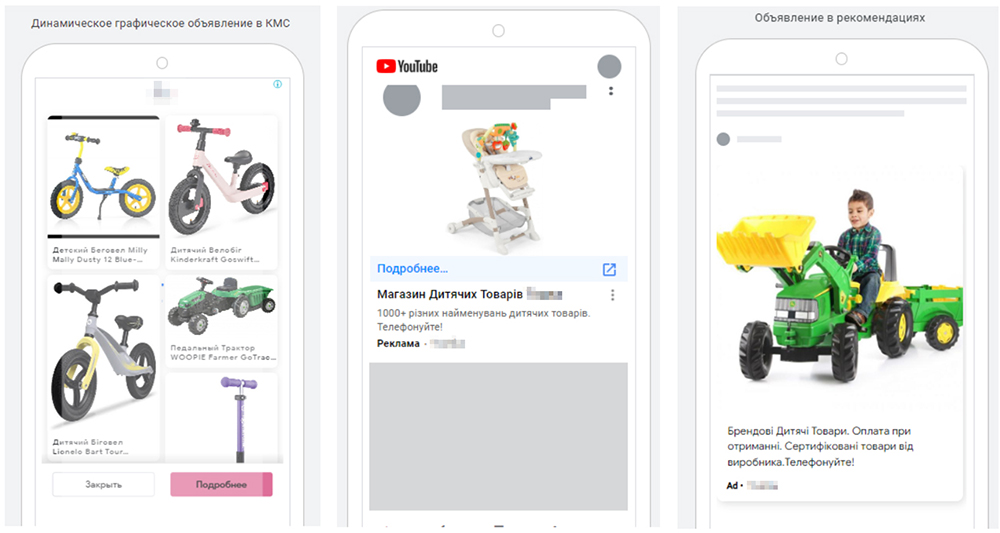
Fig. 2 – Examples of Client advertisements
Then we started working with campaigns with maximum efficiency Performance Max.
We set up a feed in Ukrainian and launched advertising with it. Then we adjusted the budget according to those product groups that began to receive more traffic. They also began to manually transfer Smart Shopping campaigns to Performance Max, because from September 1, 2023 Google had to turn off shopping campaigns.
Let's see what results we managed to achieve during the entire period of cooperation with the Client and after the resumption of work during the war in Ukraine.
Results of contextual advertising for a children's goods store
We have launched 72 advertising campaigns in the Client’s Google Ads account in total for over 6+ years of cooperation.

Fig. 3 – Advertising campaigns for a children's goods store over 6+ years of cooperation
Results of cooperation from October 2016 to April 2023:
- 84.16% of new users were attracted to the Client’s website;
- 72.97% of the revenue came from the paid advertising channel;
- 74.2% of total transactions were provided by paid advertising;
- 2.27 pages per session are viewed by the user;
- 1:24 minutes is the average session length.
Let's focus on the period February-April 2023. The Client currently had 10 advertising campaigns running: 9 Performance Max and 1 Google Shopping. Let's compare the performance of Google Ads campaigns with the previous period.
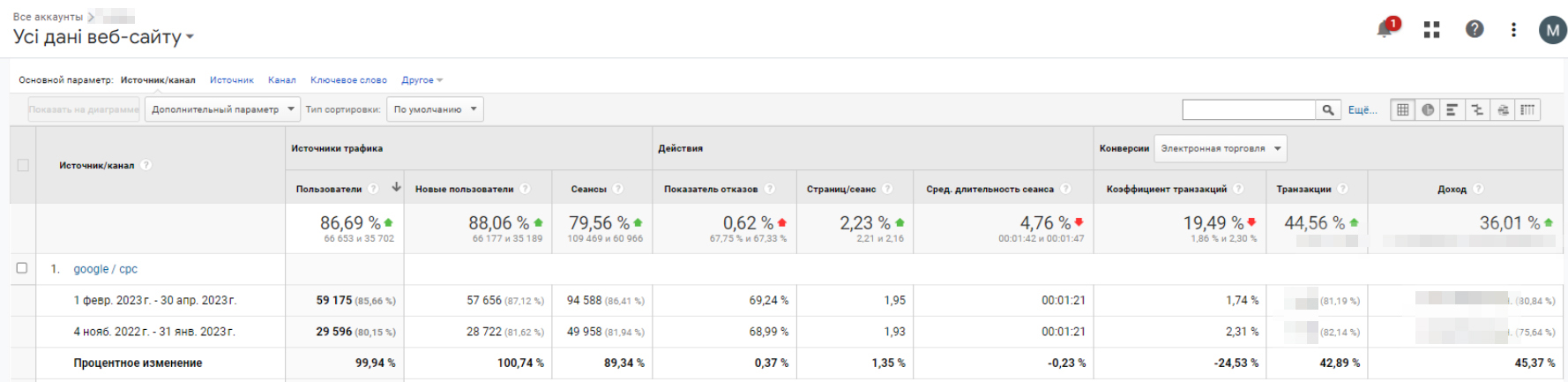
Fig. 4 – Paid traffic for the period February-April 2023/November-January 2023
- +86.69% of users went to the customer’s website through contextual advertising;
- +36.01% of revenue came from the paid advertising channel compared to the previous period;
- +44.56% of transactions were provided by paid advertising;
- Page views on the Client’s website increased by +2.23%.
That is our Client received more traffic to the advertising website on Google, a little more page views per visit, orders and income. In turn, there is a decrease in the transaction rate and average session length.
The transaction rate is the ratio of the number of purchases made to the number of sessions on the website for advertising. That is, the higher the coefficient, the higher the conversion from session to purchase.
In our case, this means that in the period February-April 2023, there were 24.53% fewer sessions with an uncompleted target action than in the period November-January 2023.
Let's take a look at the change in indicators by advertising campaigns.
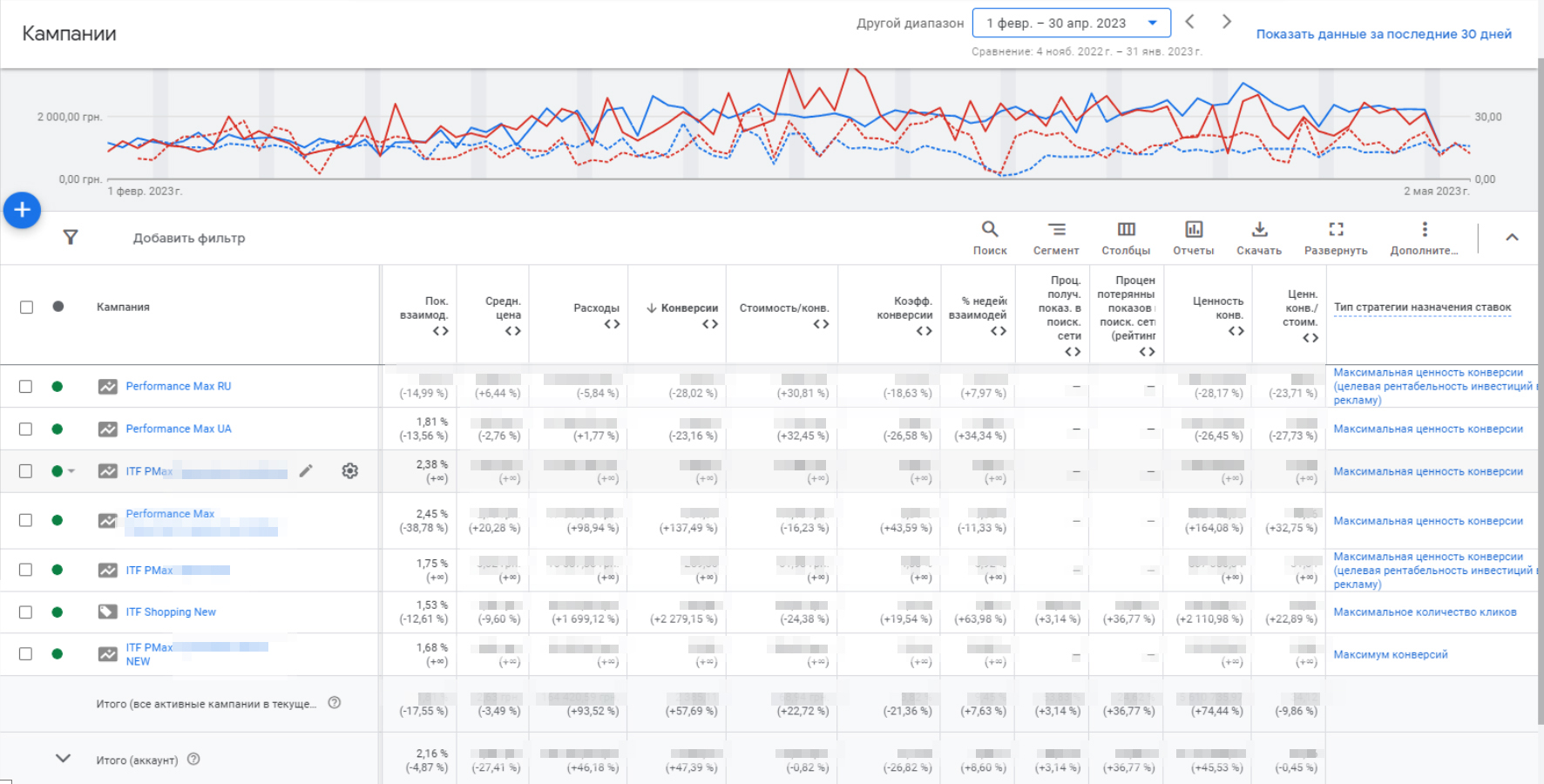
Fig. 5 – Comparison of the performance of advertising campaigns in a Client’s account
Performance Max for a certain product category is the leader in the account in terms of the number of conversions. Also, this type of campaign brings in the majority of revenue for all contextual advertising. We also managed to reduce the cost of conversion in the account by 0.82%.
Now let's take a look at the associated conversions on the site. They matter, because there is a group of users who place an order not from the first advertising event, but within 90 days after visiting.
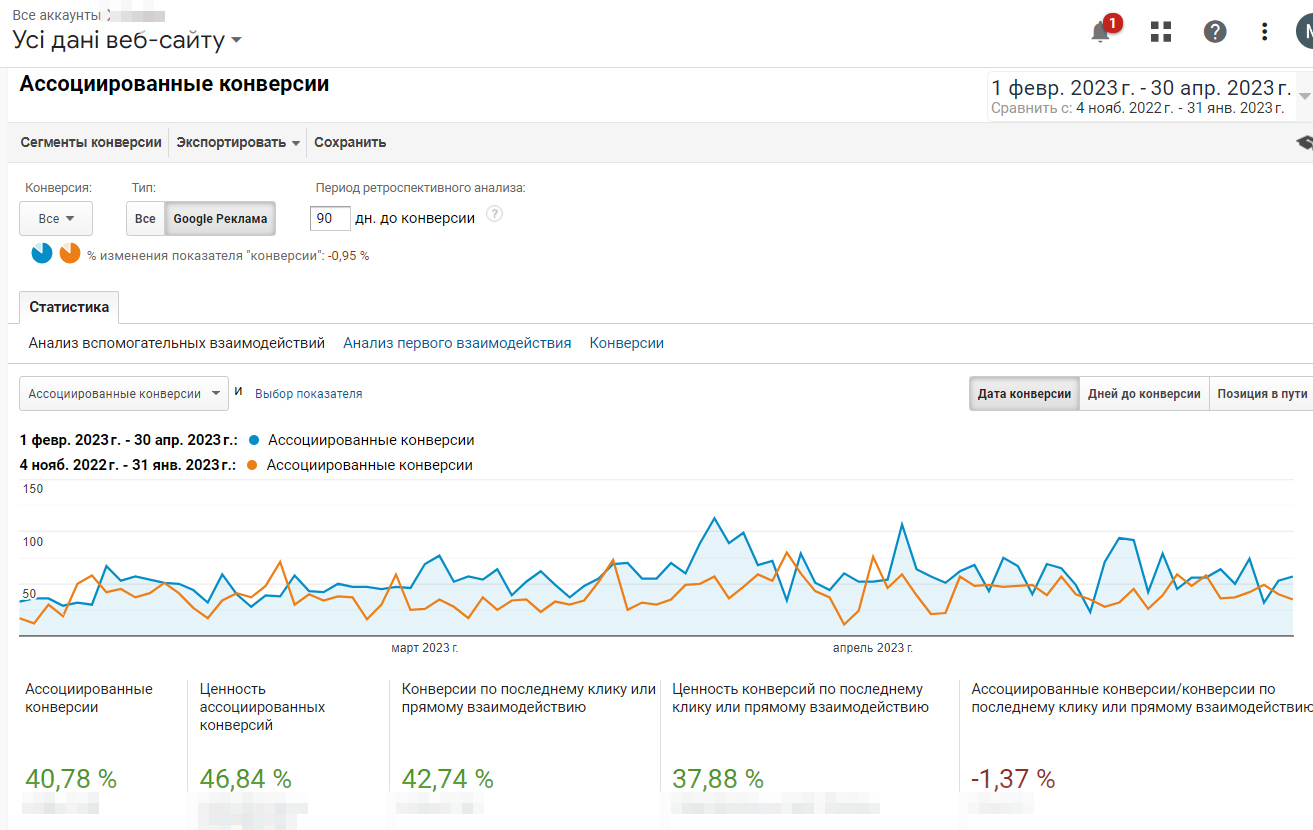
Fig. 6 – Number of associated conversions on the website of a children’s goods store
- +40.78% number of associated conversions;
- +46.84% to the value of associated conversions;
- +42.74% to conversions with last click or direct interaction;
- +37.88% in last click or direct interaction conversion value.
At the same time, we have a 0.01% decrease in assisted conversions from last click or direct interaction.
There is data on user behavior.
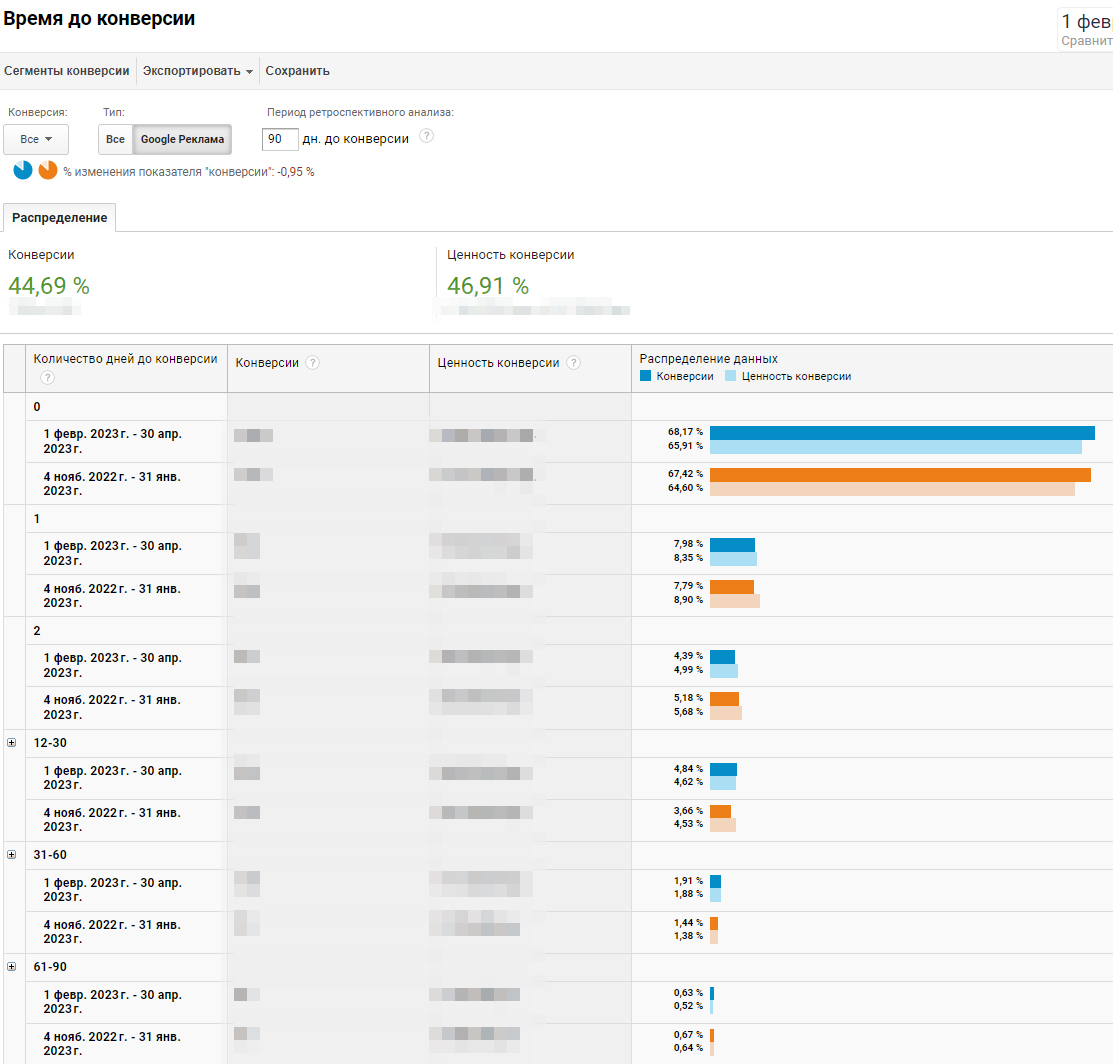
Fig. 7 – Time to conversion of visitors from Google Ads
68.17% of website visitors end their stay on the website with an order during their first visit to the website.
12.37% of visitors - over the next 2 days. The more time passes after the first visit to the website, the fewer conversions we have. Their number grows in the period of 12-30 days and then declines. That is, users make decisions about purchasing a product relatively quickly and enter the site with a formed desire and accurate knowledge.
The task of contextual advertising is to interest the user in the ad and bring it to the website. The task of the website is to meet the user’s expectations and provide him with maximum information about the products. We can say that both tasks are accomplished: customized ads attract the target audience to the website, at the same time, landing product pages respond to visitors’ queries, which leads to completed purchase conversions.
Today, customized contextual advertising works properly and brings tangible results to our Client. Overall, we have 47.39% more conversions than in the previous period, while reducing the cost of conversion by 0.82%.
Plans for the next period
As of June 2023, the following has already been done:
- tags were configured in GTM for Google Analytics 4;
- system recommendations have been worked out (advice on keywords and ads, adjusting conversion parameters and LCD budgets, adding new groups of objects to PMax campaigns, adding and removing products from individual campaigns, viewing and changing bidding strategies, adjusting tROAS and CPA, adjusting GTIN, disabling ineffective locations, adding audience signals to supervision, etc.);
- conversions were created in GA4.
Now we have set up the ecommerce block for Google Analytics 4, because Google announced that from July 1, 2023, the Universal Analytics resource will stop processing data. Therefore, we already collect data on the client’s transactions and income from contextual advertising.
Work plan for the following periods:
- analysis of the performance of Performance Max campaigns: replacing ineffective ones, adding new creatives and audiences;
- analyzing the effectiveness of strategies, making adjustments to rates and budgets;
- exclusion of ineffective places in campaigns based on the results of the month;
- working to increase the account quality score (processing keywords and negative keywords, adjusting ad groups, ads and CTAs in them, adjusting prices according to data from the Client, reviewing audience targeting, working with ad extensions, etc.).
We continue to work for the results.